3 hr
Easter
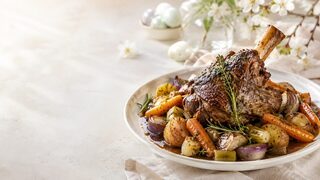
Braised lamb shanks with vegetables
The meat is ready when it dissolves slightly from the bone; the sauce is only reduced and tasted after the taste has been tasted.

Plan an Easter table with dishes that can be prepared without a last-minute rush. Browse sweet breads, egg dishes, fresh salads, asparagus recipes, festive mains and desserts for family and friends.
Recipes
The meat is ready when it dissolves slightly from the bone; the sauce is only reduced and tasted after the taste has been tasted.

Vanilla cream is bound with gelatine, filled in glasses and served after cooling with a fresh strawberry sauce. Gelatin must not cook; the strawberry sauce comes only on the fully gelled cream.
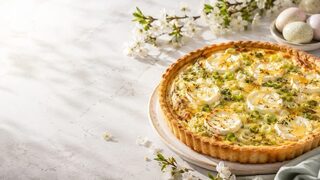
Spring onions and goat cheese come to the tarta bottom and are baked with egg-sah cast, thyme and little honey. The soil remains crisper when the spring onions are short-sweated and the casting is not filled to the edge.

A soft yeast dough is rolled out after rising, filled with quark, apricot jam and almonds, rolled up and braided to the wreath. Do not paint the filling to the edge and cool the roll before cutting for a short time so that the wreath keeps its shape.

wild garlic is finely cut and mixed with cream cheese, yoghurt, lemon and olive oil to form a spread that can be spread spread. wild garlic does not process warm and let the spread be pulled short before after salting, because cream cheese already brings seasoning.

Smoked salmon is served with cucumber and lemon, plus an emulsified sauce of dill, mustard, honey and olive oil. The sauce should be sweet, sour and sensitively balanced; take the salmon out of the cooling just before serving.

Young potatoes are cooked in the shell, marinated still warm with vinegar-mustard dressing and later mixed with egg, radishes and herbs. Warm potatoes take on the dressing better, while eggs and radishes are added only after cooling.

grated carrots are stirred with eggs, oil and sugar, flour, almonds, cinnamon and baking powder are only taken short and baked as muffins. Raz the carrots finely and stir the dough not long after adding the flour so that the muffins remain loose.

After walking time, a sweet yeast dough is formed into hare bodies, coated with egg and baked with raisins. Weigh the dough pieces in the same size and press the joints well to keep the shape in the oven.
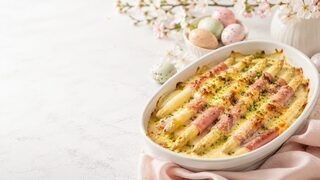
Pre-cooked white asparagus is wrapped in ham, poured with a mustard-and-sacre sauce and garnished under Gouda. The asparagus should drain well so that the sauce does not water and the cheese actually browns.

Leaf salad, radishes, cucumber and boiled eggs are served with a vinaigrette of oil, apple vinegar and mustard. Salad and vegetables must be dry and the dressing is only added immediately before serving.

A yeast dough made from flour, milk, yeast, sugar and butter is kneaded with raisins and orange, formed after walking time and baked with almonds. Use milk only lukewarm and dry raisins well; the dough needs sufficient walking time before and after forming.

Carrots, onion and ginger are sautéed, softly cooked in broth and finely puree with coconut milk. Dose ginger sparingly at first and balance the sweetness of the carrots with lemon juice and salt at the end.
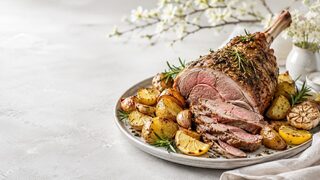
The lamb leg is seasoned with garlic, rosemary and lemon, slowly cooked with a stock and finished with rosemary potatoes. A meat thermometer and the rest time after the oven are more reliable than a rigid minute indication.

Quicheteig is covered with green asparagus and spring onions, covered with egg-and-cream cast and baked under mountain cheese. Cook asparagus and onions briefly and leave them to steam dry to make the soil crispy and the cast cut.

Hard boiled eggs are halved, the egg yolks are stirred creamy with mayonnaise, yoghurt, mustard and herbs and filled back into the egg white halves. The filling is smooth when the egg yolks are finely crushed; dose lemon juice and salt only afterwards.

Rasped carrots, walnuts, oil and a seasoned stirred dough are juicyly baked and coated with fresh cheese frosting until completely cooled. Frosting remains firm when cakes and cream cheese are cool and the powder sugar is only stirred for a short time.

From flour, yeast, lukewarm milk, sugar, butter and egg a soft yeast dough is produced, which is braided after rising and baked with almonds. Milk and butter can only be lukewarm; a well kneaded and twice passed dough produces the loose crumb.

Mix butter, sugar and eggs creamily, add flour, baking powder and lemon briefly, and bake the dough in the greased Easter lamb mould. Carefully grease and flour, fill only two-thirds and let the cake stabilize completely before falling.

Eierlikör-Tiramisu is a creamy Easter dessert without baking. Mascarpone, quark, egg liqueur, espresso and spoon biscuits are layered and put cold for several hours.
Guide
An Easter dinner can look quite different. Some families start the holiday with a cosy Breakfast, others plan a large Easter brunch or serve to Lunch a festive menu.
For breakfast, Easter bread, yeast plait, Easter bunny rolls, spreads and filled eggs fit. In a brunch, you can combine sweet pastries with quiche, salads, a salmon plate and small warm dishes.
For a classic Easter dinner are suitable Lamb's leg, stewed lamb witches, asparagus dishes and spring-like side dishes. Cake, Panna Cotta or Tiramisu then ensure a festive conclusion.
An Easter brunch combines breakfast and lunch. Therefore, the selection can be both sweet and savoury. Especially practical are dishes that can be prepared in advance and served easily on a buffet.
For example, a varied Easter brunch fits:
You don't have to offer anything from everything. A combination of two sweet recipes, two to three hearty dishes and a fresh component is usually perfect for a relaxed Easter brunch.
For many, yeast dough biscuits simply belong to Easter. A classic yeast zopf, a filled yeast wreath or an Easter bread with raisins can be well shared and fits with butter, jam, honey or a sweet spread.
Carrot cake is also a popular Easter classic. Rasped carrots make the dough particularly juicy and harmonise well with almonds, cinnamon, lemon and a creamy cream cheese frosting. As smaller portions, beetroot muffins are particularly suitable for brunch and buffet.
An Easter lamb cake is a nice eye-catcher on the coffee table. Desserts such as egg liqueur Tiramisu or Panna Cotta with strawberries can be prepared the day before and only have to be garnished before serving.
In addition to bread and sweet pastries, hearty little things are part of a successful Easter breakfast. Eggs often play the main role: Filled eggs with herbs can be prepared in advance and served in portions.
A bear's garlic-fresh cheese spread brings fresh spring aromas to the table. This includes rolls, baguettes, raw vegetables and boiled eggs. A salmon plate with dill-mustard sauce complements the buffet with a festive fish component.
Also Potato salad with egg and herbs, a asparagus quiche or a goat cheese tart can be prepared in advance and taste warm or lukewarm.
Lamb and asparagus are particularly popular ingredients for a festive Easter meal. A lamb leg with rosemary potatoes is well suited as a main dish for several people. Although lamb haxe takes some time, it can be prepared in advance and cooks extensively without additional work.
Asparagus brings a fresh, seasonal note to the Easter table. It tastes in quiche, salad and oven dishes or burnished with ham and Cheeses This can be done with potatoes, fresh herbs, egg, salmon or a light spring salad.
If you don't want to serve meat, a hearty goat cheese tart, asparagus quiche or carrot ginger soup can be used as the vegetarian centrepiece of an Easter meal.
For a festive Easter menu, three well-coordinated courses are enough. Choose a light starter, a main dish that can be prepared as well as possible, and a dessert from the fridge or an already baked cake.
You can bake carrot cakes, beetcake muffins and Easter lamb cakes the day before. Creamy desserts such as Panna Cotta and Tiramisu need time to cool and soak anyway.
Decorations, fresh fruit and delicate herbs should be added as soon as possible before serving.
Yeast plait, yeast wreath, Easter bread and Easter buns need sufficient time to rise. Plan the rest periods in addition to the actual working and baking time.
You can bake the pastry completely the day before and warm up briefly the next morning. Alternatively, depending on the recipe, the dough can be slowly stored in the fridge.
Spreads, sauces, boiled eggs and lots of salads can be prepared in advance in advance. Keep them covered in the refrigerator until served.
Crispy ingredients, fresh herbs and salad dressings are only added shortly before the meal, so that taste and consistency are preserved.
With a larger brunch, not all dishes should come out of the oven at the same time. A warm quiche or tart is often enough if bread, salad, eggs, spreads and cakes are also offered.
Children are particularly pleased with small, handy food and recognisable Easter forms. Easter bunny bunnies, beetroot muffins and Easter lamb cakes therefore fit well on a family-friendly Easter table.
Also filled eggs, small pieces of quiche, vegetable sticks and mild spreads can be easily eaten. Children can help with decorating muffins, cakes or rolls.
FAQ