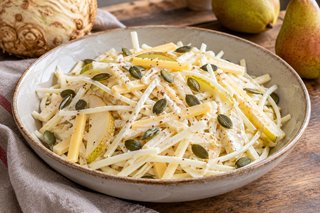
20 min
European
Celeriac pear salad with Gouda and pumpkin seeds
Fine raw celeriac sticks, pear and Gouda in yogurt mustard dressing, scattered with pumpkin seeds.
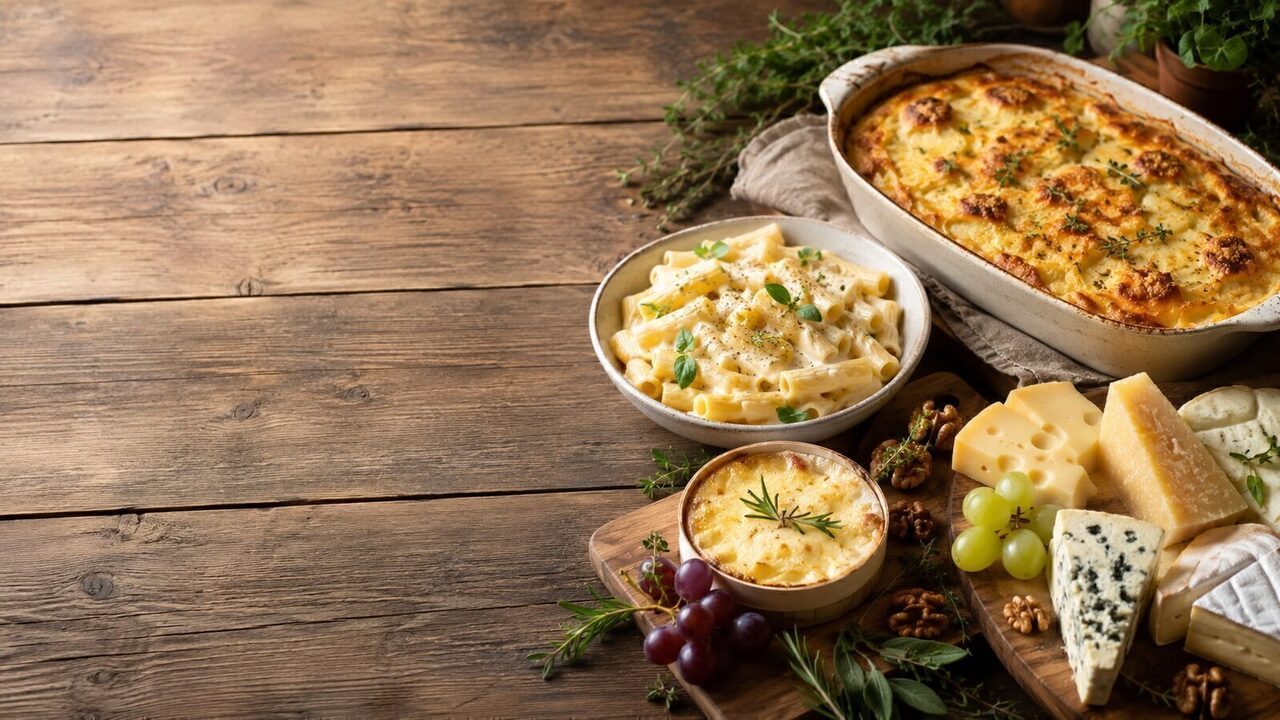
Choose cheese according to whether it should melt, brown, crumble or be served cold. These recipes pair different varieties with pasta, vegetables, potatoes, breads and fresh salads.
Recipes
Fine raw celeriac sticks, pear and Gouda in yogurt mustard dressing, scattered with pumpkin seeds.
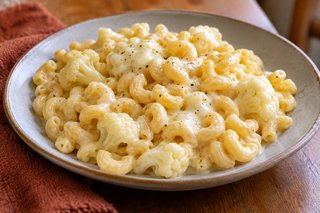
Macaroni and small cauliflower florets combine with a mild milk sauce made with Gouda and mustard.
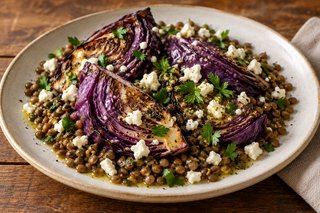
Roasted red cabbage wedges sit on warm brown lentils with lemon mustard dressing, feta and parsley.
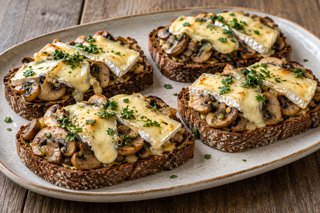
Hearty rye bread with sautéed mushrooms, mild mustard and soft melted Camembert makes a quick oven meal.
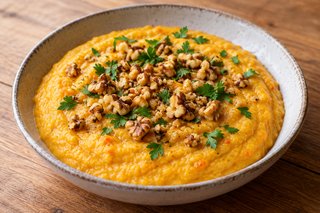
Creamy polenta with finely mashed Hokkaido pumpkin, melted Gouda and toasted walnuts makes a warming autumn meal.
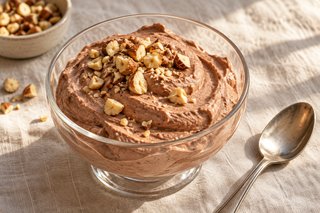
A quick, airy quark cream with cocoa, whipped cream and toasted hazelnuts, made without raw eggs.
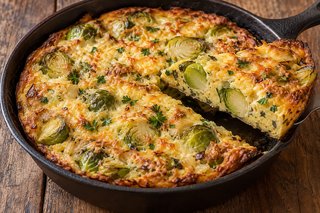
Parboiled Brussels sprouts meet a savoury egg mixture and golden cheese in this easy vegetarian oven dish.
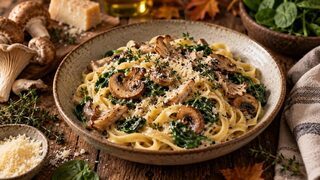
Deeply browned mushrooms combine with spinach, thyme and a light cream sauce in this quick autumn pasta.

Roasted pumpkin, eggs, feta and spinach become a juicy frittata that works for breakfast, lunch or an easy dinner.
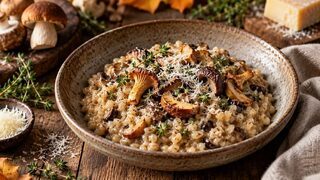
Pearl barley turns creamy in stock while keeping a gentle bite; deeply browned mushrooms, Parmesan and thyme finish the dish.

Tart apples sit on a creamy quark cheesecake filling beneath a crisp golden cinnamon crumble topping.

A crisp shortcrust pastry base holds a juicy filling of slowly cooked leek, Alpine cheese, eggs and cream.

Crisp Flammkuchen is topped with crème fraîche, thin pear slices, goat’s cheese, red onion and walnuts.
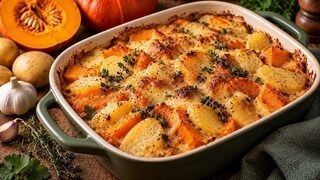
Thin layers of potato and butternut squash cook in a nutmeg-scented cream mixture beneath a golden Alpine cheese crust.

Hokkaido squash, browned minced beef and tomato cream sauce bake beneath cheese until the pumpkin is tender and the top is golden.

Creamy Parmesan polenta cooks gently in the oven while a mushroom, leek and thyme ragout develops rich roasted flavours on the hob.

Orzo cooks directly in stock with grated pumpkin, then Parmesan, lemon and sage turn it into a creamy dish without cream.

Short pasta cooks with Hokkaido squash, stock and herbs in one pot; feta and spinach make the sauce creamy at the end.

Quesadillas with black beans, corn and cheese are crispy on the outside in the air fryer when the tortillas are securely folded and thinly oiled.

pizza pinwheels made from finished pizza dough become golden brown outside in the air fryer when tomato sauce and cheese are sparingly dosed.
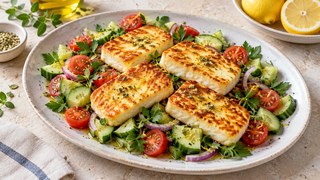
Halloumi gets golden brown edges in the air fryer and remains elastic inside when thick slices are thinly oiled and cooked only briefly.
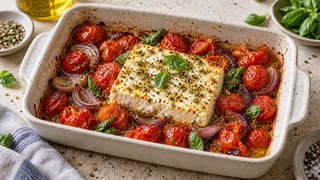
Feta and cherry tomatoes cook with garlic, oregano and olive oil in a small baking pan until the cheese is soft and the tomatoes are burst.

Warm Camembert is cooked creamy in a small oven-proof baking pan and served with honey, thyme and walnuts directly from the air fryer.
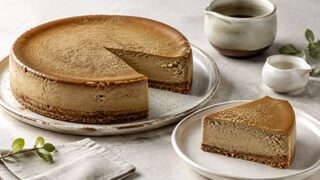
Hojicha cheesecake combines a crisp biscuit base with a creamy filling and the nutty, toasted flavour of Japanese green tea. Gentle mixing and slow cooling help keep the top smooth.
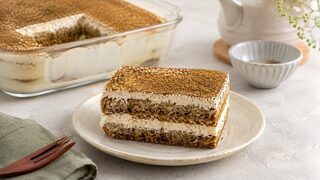
This hojicha tiramisu replaces coffee and cocoa with roasted Japanese green tea. Briefly dipped ladyfingers and an airy mascarpone cream set into clean, aromatic layers after six hours in the refrigerator.
Guide
Cheese can be creamy sauce, spicy filling, golden brown crust, fresh topping or the center of a dish. The decisive factor is the right variety: Mozzarella melts mildly and elastically, mountain cheese seasons vigorously, feta remains rather crumbly and cream cheese combines sauces and fillings.
On this page you will find cheese recipes for pasta, casseroles, potatoes, salads, snacks and sociable food. Combine them with ideas from the categories Vegetables, Noodles, Potatoes and Fruit.
Water content, fat, ripeness and production influence taste and melting behaviour. Young cut cheeses usually melt evenly, hard cheese provides strong spice and fresh or soft cheese ensures creaminess. Not every cheese forms threads or a smooth sauce.
Many young to medium-ripe cut cheeses are suitable for a uniform melt. Gouda, Emmentaler, Cheddar and Gruyère become soft and combine well with casserole or sauce. Mozzarella pulls threads, but can release liquid because of its high water content.
Feta and ricotta become warm and soft, but do not produce an elastic layer. Parmesan melts finely grated in sauce and risotto, but on its own forms a spicy crust rather than long threads. Very long matured or low-fat cheese can melt dry or less evenly.
A good casserole needs a cooked or almost cooked basis, sufficient sauce and a suitable amount of cheese. Potatoes, pasta, rice and solid vegetables are pre-cooked according to the recipe, so that the surface is not already dark, while the interior remains hard.
Spread grated cheese evenly and mix it for a crisper crust with bread crumbs, chopped nuts or some hard cheese. If the surface browns too early, the shape can be temporarily covered. For more spice, mild processed cheese can be combined with a small amount of mountain cheese or parmesan.
Finely rub cheese so that it distributes quickly. First prepare the liquid base or a tied sauce, then reduce the heat and stir the cheese in portions. Strong cooking can separate fat and protein, so that the sauce becomes oily or grainy.
Starch from a light roux, starch or some pasta water stabilizes many sauces. Too thick sauce helps a small dash of warm milk, broth or pasta water. Salts only after the cheese, because Parmesan, feta, blue cheese and mountain cheese already bring a lot of spice.
With pasta, starchy cooking water combines cheese and fat into a sauce. Take the pot from the direct heat with delicate recipes, add finely grated cheese and stir only as much water until the sauce wraps the pasta. This reduces the risk that the cheese will clump.
Ricotta and cream cheese are suitable for fillings of ravioli, cannelloni or lasagne. Mozzarella melts in oven pasta, parmesan seasoning. In Risotto cheese is only stirred in at the end together with butter, so that the creamy consistency is preserved.
Potato gratin, oven potatoes, roasts, cheese skewer with vegetables and filled potatoes combine a mild basis with spicy cheese. Emmentaler, Gruyère, Gouda or mountain cheese are suitable for Gratins. Fresh cheese and curd fit as dip, feta with oven potatoes and vegetables.
Broccoli, cauliflower, leek, spinach, pumpkin, tomatoes, zucchini and mushrooms harmonise with cheese. watery vegetables should be fried or well drained before baking, so that the sauce does not water down. Fresh herbs and lemon juice only come in after the oven.
Cheese gives vegetable dishes taste and structure, but should not remain the only component. Combine it with vegetables, potatoes, pasta, rice or legumes. This creates lasagna, quiche, filled peppers, vegetable casserole, halloumi bowl or salad with feta.
For a balanced dish, opponents such as tomatoes, herbs, lemon juice, vinegar, mustard or a crisp salad help. More meatless combinations can be found at Vegetarian dinner.
Feta, mozzarella, goat cheese, Halloumi, Parmesan and blue cheese set different accents. Feta matches cucumber, tomato and watermelon, mozzarella with tomato, peach or roasted vegetables, goat cheese with red beet and blue cheese with pear and walnut.
Give cheese to lettuce just before serving, so that dressing and salt do not soften the leaves too soon. Hard cheese is sliced, feta is roasted and soft goat cheese is distributed in small portions. Nuts, seeds, croutons and fresh herbs provide additional texture.
Ricotta, cream cheese, feta and grated cut cheese are suitable for dough pockets, quiche, strudel, puff pastry snails, filled mushrooms or peppers. A good filling must not be too moist. Let spinach, mushrooms and other water-rich vegetables cool down after cooking and squeeze out excess liquid.
For toast, quesadilla and sandwich, cheese is finely cut or grated and distributed between drier ingredients. Moderate heat melts it before bread or dough becomes too dark. A dip made of cream cheese or quark can be varied with herbs, vegetables, horseradish or spices.
For cheese fondue, mild and strong well-melting varieties are often combined. Finely grated cheese melts in the prepared liquid at controlled heat. Some starch can support the bonding. As soon as the mass is smooth, it is only kept warm and not cooked strongly.
For dipping, bread, pre-cooked solid vegetables, potatoes and raw vegetables are provided separately in the Raclette. In this way, cheese, vegetables, potatoes, bread, pickled ingredients and small toppings are provided separately.
A clear selection of three to five varieties is usually sufficient. For example, combine mild fresh or soft cheeses, a cut cheese, a strong hard cheese and, if desired, blue cheese or goat cheese. Different types of milk, ripeness and textures bring more variety than many similar varieties.
This includes bread, crackers, grapes, pear, apple, figs, nuts, olives, chutney or mustard. First take the cheese from the refrigerator for a manageable time before serving and then put leftover pieces back to cool. Use a separate knife for very strong varieties.
Naturally matured barks and the willed noble mould of Brie or Camembert are generally edible for healthy people. Coatings made of wax, paraffin or plastic are removed. In case of loose goods or unclear marking, the demand at the cheese counter helps.
The Counsellor of the Federal Center for Nutrition points out that pregnant women, the elderly, young children and people with a weakened immune system should carefully remove cheese bark and take into account specific recommendations on raw milk and lubricating cheese.
Cheese belongs covered in the refrigerator. Original packaging, cheese paper or a suitable can protect against dehydration and prevent odors from passing to other foods. Very aromatic and mold-ripened varieties are packaged separately.
Fresh cheese, mozzarella and other moist varieties are used particularly quickly after opening and removed with clean cutlery. Hard and cut cheeses usually last longer, but dry on open cut areas. Noteful consumption date, package indication and visible changes. In case of unexpected mold on dairy products, the BfR to dispose of the food concerned; the intentional precious mould should be distinguished from that.
Hard and cut cheeses can be frozen in portions or grated. After thawing, the texture can be more crumbly, which is why the cheese is particularly suitable for cooking and baking. Grated cheese can often be directly frozen on casserole or pizza.
Fresh and soft cheeses can change more when frozen. Only freeze amounts that are later used in sauce, filling or warm dish. Pack the cheese airtight, label it and thaw pieces covered in the refrigerator.
Small hard cheese residues give soup, risotto, pasta and sauce spice. Cut cheese fits in casserole, toast, omelet or stuffed vegetables. Feta and goat cheese complement salad and oven vegetables, cream cheese becomes dip, sauce or filling.
Finely rub various suitable cheeses for a residue crust and mix them with bread crumbs or nuts. Use very strong varieties only partially. Cool cooked cheese dishes quickly, keep them covered and later heat only the required portion.
With the right variety, controlled heat and a fresh opponent, cheese becomes a targeted flavour carrier instead of a heavy additional layer.
FAQ