50 min
European
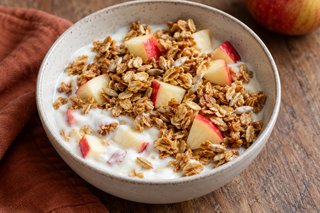
Oat and sunflower seed granola with apple yogurt
Golden toasted oats and sunflower seeds on plain yogurt with fresh apple cubes.
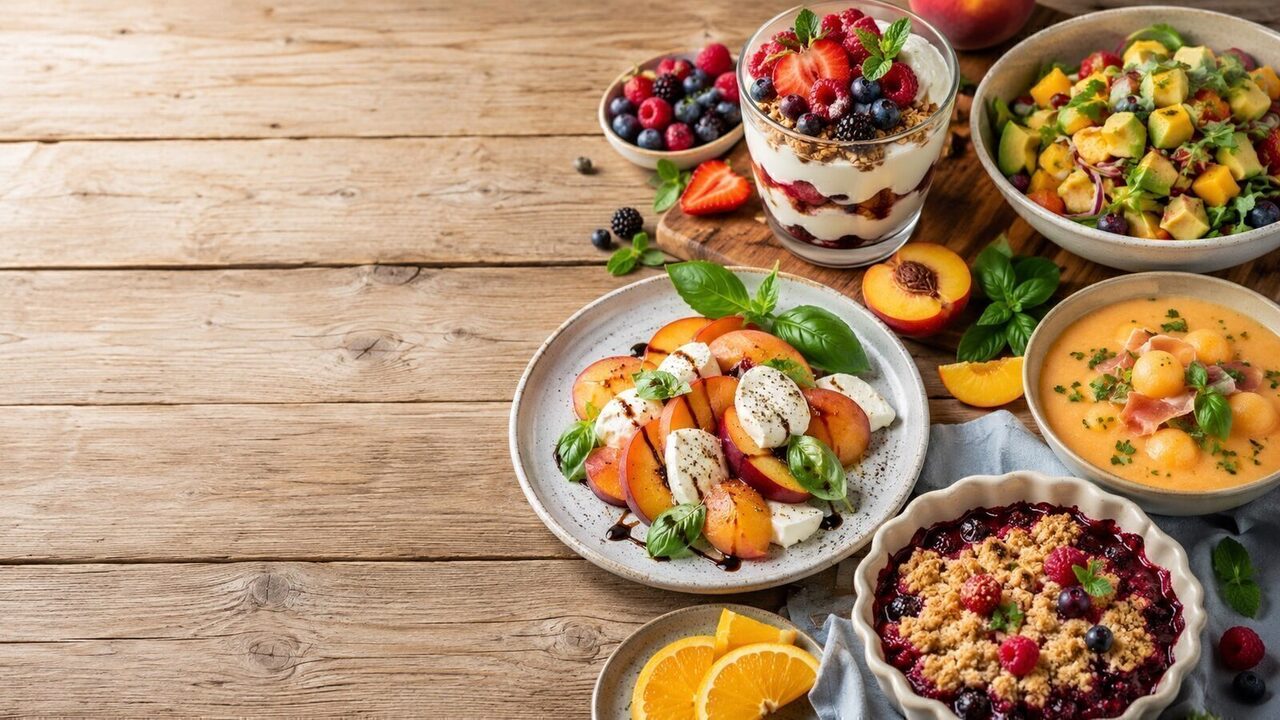
Use fruit at its best stage of ripeness, whether you are baking, blending, poaching or serving it fresh. This collection includes both familiar sweet recipes and savoury combinations with herbs, cheese and vegetables.
Recipes
Golden toasted oats and sunflower seeds on plain yogurt with fresh apple cubes.
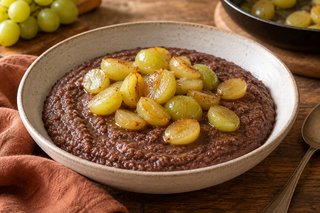
Creamy cornmeal with unsweetened cocoa and milk, served with pale grapes briefly warmed in butter.
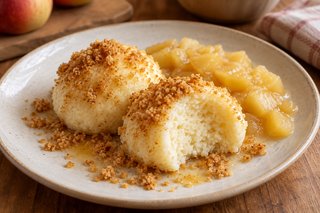
Unfilled quark semolina dumplings gently poach in water and are served with buttered breadcrumbs and warm apple compote.
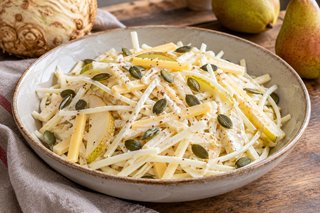
Fine raw celeriac sticks, pear and Gouda in yogurt mustard dressing, scattered with pumpkin seeds.
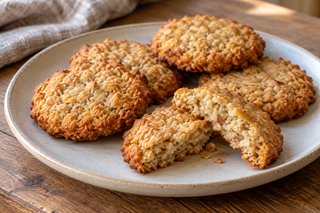
Soft oat cookies with finely grated pear and ground almonds, baked until golden in the oven.
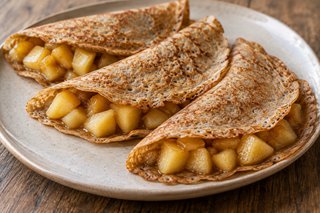
Thin buckwheat crêpes are filled with tender sautéed apple cubes for a warm autumn breakfast.
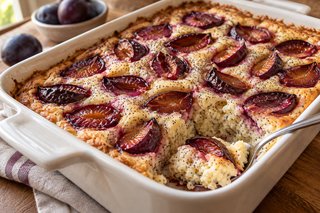
Creamy milk semolina with poppy seeds, egg and juicy prune plums bakes into a golden autumn dessert.
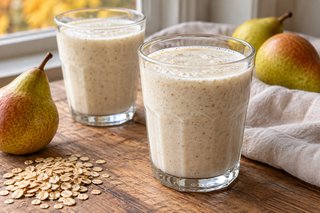
Ripe pear, chilled buttermilk, quark and fine oats blend into a creamy breakfast in a glass.
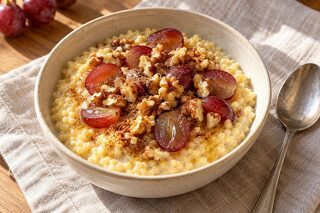
Creamy golden millet porridge with fresh red grapes, toasted walnuts and a hint of cinnamon for an autumn breakfast.
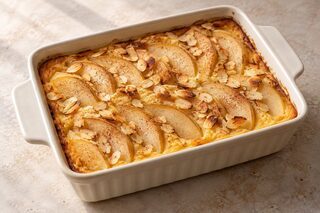
A soft milk-polenta bake with pear wedges, cinnamon and golden almond flakes. Served warm, it makes a sweet breakfast or small dessert.
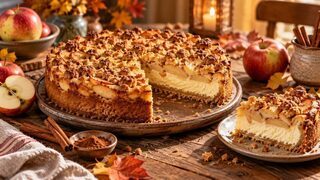
Tart apples sit on a creamy quark cheesecake filling beneath a crisp golden cinnamon crumble topping.
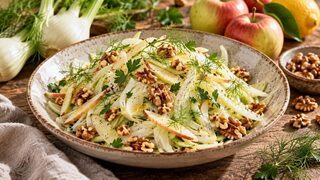
Crisp fennel, tart apple and toasted walnuts meet a bright dressing of lemon, orange juice and mustard.
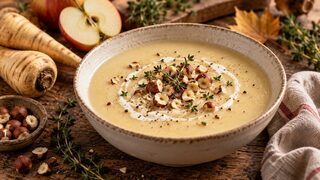
Parsnips and potatoes make a velvety soup, while tart apple and lemon balance the vegetables’ natural sweetness.
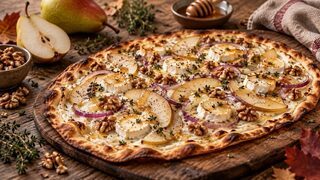
Crisp Flammkuchen is topped with crème fraîche, thin pear slices, goat’s cheese, red onion and walnuts.
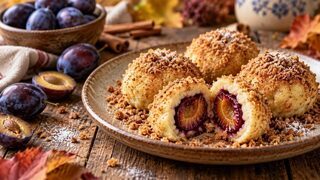
Ripe plums are wrapped in tender potato dough, gently simmered and coated in toasted cinnamon breadcrumbs.
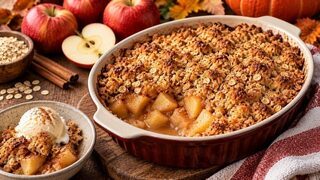
Tart apples bake beneath a crisp topping of oats, flour, butter, almonds and cinnamon in this simple autumn dessert.

Fluffy yeast dough surrounds a juicy apple and cinnamon filling, finished with a fresh lemon glaze.

Six loose blueberry muffins bake in stable silicone or metal barrels in the air fryer without slipping paper barrels in the airflow.
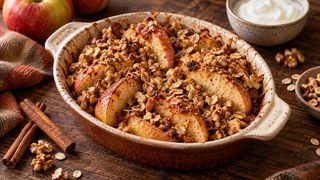
Warm apple clefts with cinnamon, oatmeal and walnuts cook in the air fryer for a quick dessert with soft fruits and roasted topping.
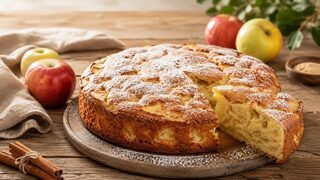
Russian Sharlotka is a simple, airy apple pie with lots of sour apple pieces and a biscuit made of eggs, sugar and flour.
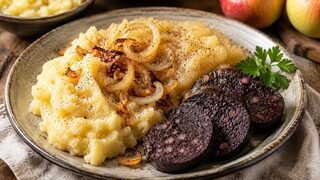
Heaven and earth combine potato puree from the earth with apple compote from the sky and serve fried blood sausage and roasted onions.
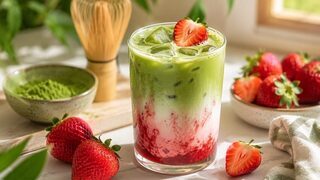
Fresh strawberry puree, cold milk and finely beaten matcha form a fruity Iced Latte with clear pink-green layers.

This raspberry cheesecake remains creamy and firm and hold their shape without oven. A butter biscuit bottom, lemon-fresh cheese cream and fresh raspberries bring clear textures.
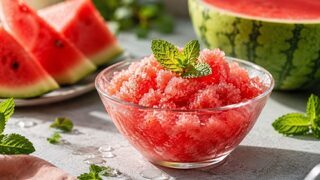
Watermelon granita does not need an ice machine. Lime, a light sugar syrup and repeated scratching turn melon into loose, refreshing ice crystals.
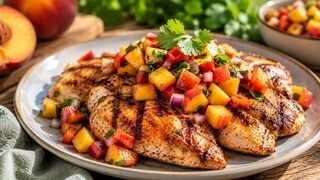
Juicy grilled chicken gets a sweet and sour summer contrast with peach salsa. Lime, red onion and coriander keep the ripe fruits fresh.
Guide
Fruits bring natural sweetness, acidity, juiciness and colour to many dishes. Apples and pears work in cakes as well as in savoury sauces, berries fit breakfast and dessert, while citrus fruit dressings and fish dishes refresh. Decisive are the degree of maturity, the appropriate texture and a recipe that does not cover the fruit with too many flavours.
On this page you will find fruit recipes for breakfast, cakes, desserts, salads, drinks and hearty dishes. Use the collection directly or combine fruits with ideas from the categories Breakfast, Vegetables and Cheeses.
Solid fruits retain their shape when cutting, baking and roasting. Soft, very ripe fruit, on the other hand, gives off a lot of juice and is better suited for puree, compote, smoothie or sauce. Acid and sweetness also differ depending on the variety and maturity, which is why it is best to sweeten after tasting.
Seasonal fruit brings variety and is often particularly aromatic when it has matured naturally in its growing region. Strawberries and fruity recipes with rhubarb begin in spring. The summer offers berries, cherries, apricots, peaches and melons. In autumn, apples, pears, plums and grapes characterise the cuisine. In winter, lager fruit and citrus fruits provide fresh aromas.
The exact harvest times depend on region, variety and weather. Season calendar of the Federal Center for Nutrition offers a current orientation. Matching recipe ideas can also be found under Spring recipes, Summer recipes and Autumn recipes.
Good fruit looks varietally coloured, smells pleasant and has no lazy or moldy areas. In the case of peaches, nectarines, pears and mangoes, a slight pressure test shows whether the flesh is already giving in. Berries should be dry, bulging and without spilled juice. In the case of apples and grapes, solid peel and crisp texture are good signs.
Not every fruit has to look perfect for every recipe. Pressure points can be removed generously, as long as no mold or unusual smell is recognisable. Very ripe fruits are ideal for compote, sauce, smoothie, crumble or fruit spread. For fruit salad, skewers and decoration firm specimens are needed.
Wash fruit under running water before cutting. Sensitive berries are rinsed briefly and carefully and then drained well. Remove stalks, seeds and stones only after washing, so that less water enters the flesh. Cut fruit is covered cleanly and kept cool.
Apples, pears, bananas and avocado quickly turn brown in the air. Some lemon or lime juice slows the discoloration. In fruit salad, it also helps to mix the cut pieces quickly with dressing or juice. Sensitive berries only come to the end so that they are not crushed.
Fruits complement porridge, yoghurt, quark, muesli, pancakes and spreads. For a good combination of textures you combine soft fruits with oatmeal, nuts, kernels or crispy granola. Fresh fruit and crispy toppings are only added when served, while compote and fruit sauce can be prepared in advance.
Beers fit overnight oats, apple and pear to warm porridge, banana in pancake dough and stone fruit to yoghurt or quark. A small pinch of cinnamon, vanilla, cardamom or lemon peel changes the aroma without covering the fruit.
When baking, the water content of the fruits influences the result. Very juicy fruit can make dough soft; therefore let the berries drain well and cut large fruits evenly. For cakes and tarts more solid varieties are suitable, while soft fruits can easily disintegrate into crumble and casserole.
Apples, pears and plums harmonise with cinnamon, vanilla, nuts and crumble topping. Berries are suitable for light stirred dough, quark and chocolate. Apricots and peaches bring mild acidity into tart and tin cake. Frozen berries are used directly frozen or drained before, depending on the recipe, so that the dough does not dilute unnecessarily.
A simple fruit dessert lives from the contrast: sweet and sour, creamy and crispy or warm and cold. Berries with yoghurt and roasted nuts, warm compote with vanilla cream or crumble with ice cream therefore work with few ingredients.
For compote, fruit is only cooked until the desired consistency is achieved. Solid apples and pears need longer than berries. Add sugar only after a first taste; ripe fruits often require less. Lemon juice, vanilla, cinnamon or ginger set an accent. Fruit sauces can be finely pureed or served with small pieces.
A good fruit salad combines different aromas and textures instead of mixing as many varieties as possible. Choose two to four fruits, such as apple, orange, grape and berries. Citrus juice ensures freshness and protects light fruits from browning. Mint, basil, ginger or roasted nuts give a clear contrast.
Cut firm fruit first and pick delicate berries, banana and very ripe pieces last. Prepare fruit salad as close as possible to serving. If it is to wait, keep it well covered in the fridge and add crispy ingredients only at the table.
Fruity sweetness can balance salty, bitter, sharp and strong aromas. Pears harmonise with walnuts and spicy cheese, apple with red cabbage, celery or mustard, peach with tomatoes and mozzarella, watermelon with feta and mango with chilli, lime and avocado.
So that a hearty salad doesn't taste like dessert, it needs acidity, salt, herbs and a supporting component. Leaf salad, vegetables, cereals, cheese, legumes, fish or meat give structure. Dressing and soft fruits are only added shortly before serving.
Apples, plums, cranberries and berries fit in sauces to savoury dishes. Mango, pineapple or peach make a fresh salsa with onion, chilli, lime and herbs. Chutneys are cooked longer and combine fruit with vinegar, spices and a balanced sweetness.
The Fish Citrus fruits, mango and apple; with strong meat plum, cherry or cranberry. Cheese harmonises with pear, fig, grape and fruit chutney. Dosage fruit sauces rather than contrast so that the main dish remains savoury.
For smoothies, two or three fruits are usually enough, plus a liquid such as water, yoghurt or milk. Bananas and mango make the mixture creamy, berries and citrus bring acidity. Start with little liquid and adjust the consistency only after mixing.
Very ripe fruit and frozen pieces are suitable for cold drinks. Herbs, ginger or a small pinch of spice provide variety. Citrus slices, berries or melons are only slightly pressed on for amniotic water and poured in with water.
Many fruits can be easily frozen. Wash, clean and crush them before and remove seeds or stones. Berries and small pieces can first be pre-frozen by far on a baking tray and then packed in a space-saving manner.
After thawing, fruit is often softer than fresh. It is especially suitable for compote, cake, smoothie, sauce or dessert. BENEFIT recommends that fruit be easy to prepare in advance, packaged and labelled as low as possible. For jams, jelly or boiled fruit, you should use a tried and tested recipe and work cleanly.
Some fruits continue to ripen after harvesting, including apples, pears, apricots, peaches, kiwis, mangoes and plums. Strawberries, raspberries, cherries, grapes, citrus fruits and pineapples, on the other hand, do not become sweeter or more mature after picking.
Pre-ripening fruits give off ethylene and can allow other fruits to age faster. Store apples, bananas and very ripe fruits are therefore separated if necessary. Berries belong dry and unwashed in the refrigerator and are rinsed only before use. Tropical fruits are often allowed to mature at room temperature and come into the refrigerator for a short time. Storage guide of BZfE.
Very ripe but flawless fruit can be processed with compote, smoothie, fruit sauce, ice cream, crumble or spread. Bananas sweet pancakes and cakes, soft berries fit in sauce and yoghurt, apples and pears in compote or oven dishes.
Cut only as much fresh fruit as is needed and freeze surpluses in portions. Fruits with mold, fermented smell or large areas of rotten areas are not used any more. With suitable storage and a flexible residual kitchen, ripe fruit is still an aromatic recipe instead of avoidable waste.
FAQ