
Use room-temperature ingredients
Cream cheese, sour cream and eggs combine smoothly without lengthy mixing when they are at the same moderate temperature.
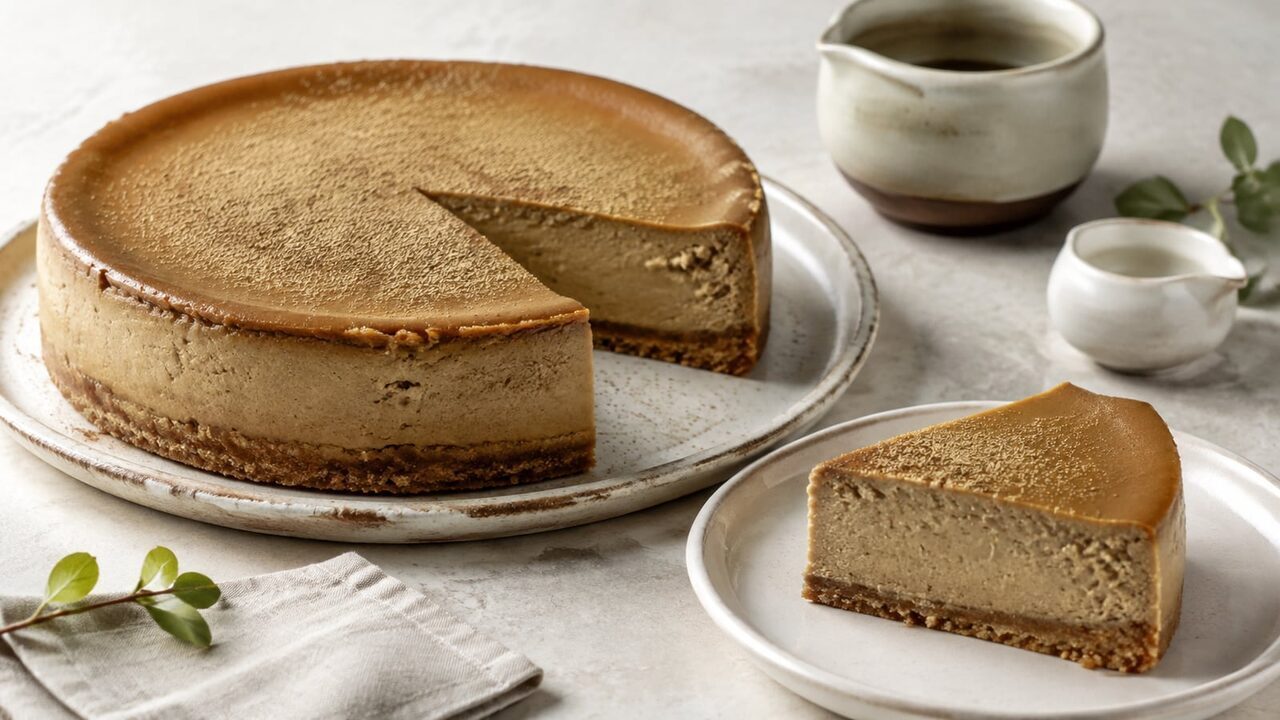
This baked hojicha cheesecake is made in a 20 cm springform tin. A smooth hojicha and milk paste flavours the cream cheese filling, while cornflour and controlled baking give neat slices.
Why this recipe works
The warm, lightly caramelised character of hojicha contrasts with the gentle tang of cream cheese. All filling ingredients should be at room temperature so they combine without prolonged beating. Too much trapped air makes a cheesecake rise sharply and crack as it cools. It is ready when the edge is set but a palm-sized area in the centre still wobbles slightly. The final creamy texture develops only after gradual cooling and several hours in the refrigerator.
Recipe
Hojicha cheesecake combines a crisp biscuit base with a creamy filling and the nutty, toasted flavour of Japanese green tea. Gentle mixing and slow cooling help keep the top smooth.
Preheat the oven to 175 °C conventional heat. Line the base of a 20 cm springform tin with baking parchment and lightly grease the sides.
Mix the biscuit crumbs and butter, spread them evenly in the tin and press firmly with the base of a glass. Bake for 10 minutes, cool briefly on a rack and reduce the oven temperature to 160 °C.
Stir the sifted hojicha into the warm milk, first making a thick paste and then loosening it until smooth. Mix in the cornflour without lumps and set aside.
Mix the cream cheese and sugar on low speed only until smooth. Briefly incorporate the sour cream, vanilla, salt and hojicha paste, then scrape down the bowl with a spatula.
Mix in each egg separately with a hand whisk or on the lowest mixer speed. Stop as soon as each egg is incorporated and do not whip the filling.
Pour the filling over the biscuit base and tap the tin gently on the worktop twice. Bake at 160 °C for 60 to 70 minutes, until the edge is set and the centre still wobbles slightly when moved.
Turn off the oven, open the door slightly and leave the cake inside for 30 minutes. Cool completely to room temperature, then refrigerate for at least 4 hours, preferably overnight.
Kitchen know-how
Cream cheese, sour cream and eggs combine smoothly without lengthy mixing when they are at the same moderate temperature.
Trapped air expands in the oven and can cause the cake to rise and crack. Mix only until each ingredient has disappeared into the filling.
The centre remains delicate after baking. Several hours in the refrigerator set the filling and make clean slices possible.
Variations
Values are estimates and may vary depending on the ingredients, brands, portion size and preparation method used.
Frequently asked questions
Keep cooking