
Keep filling dry
Tofu and vegetables contain a lot of water. Careful expression prevents loose filling and soft seams.
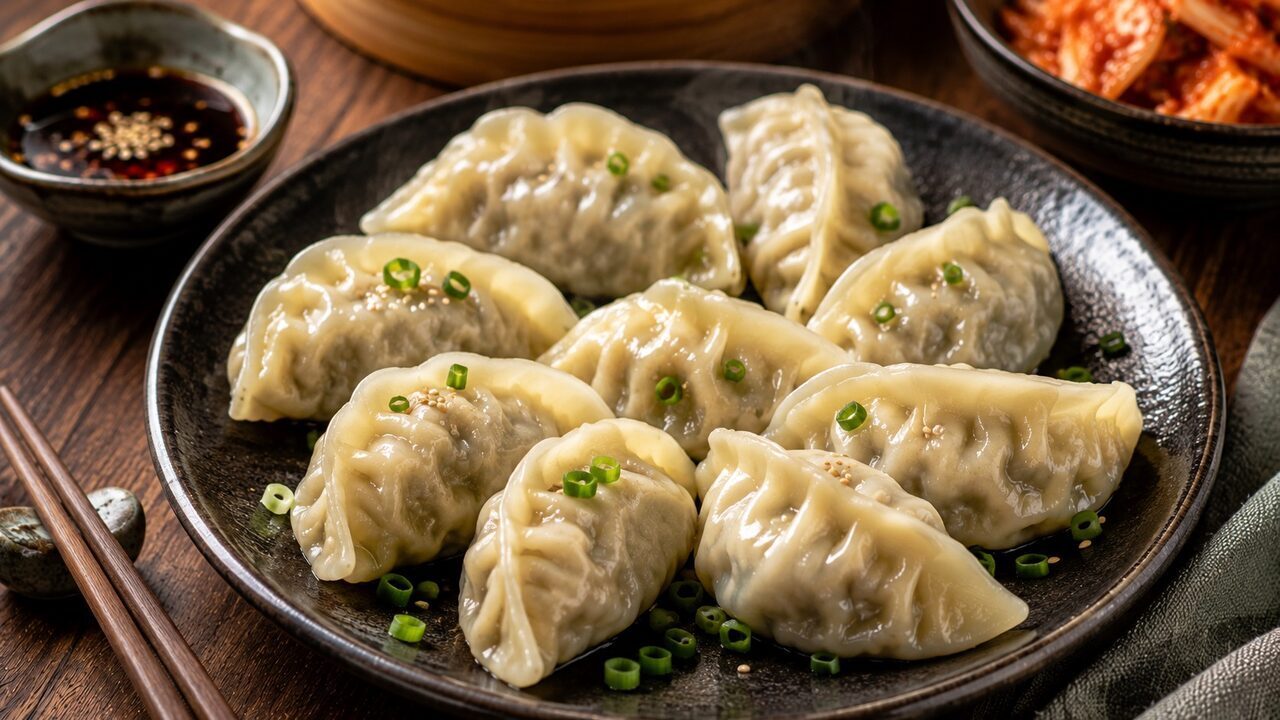
All water-rich ingredients are thoroughly squeezed dry before mixing. Thus, the filling remains bound and does not dissipate the thin dough covers.
Why this recipe works
Mandu is distinguished by its versatile filling of meat, tofu, vegetables and often glass noodles from many other dough pockets. The most important step is dewatering: tofu, salted cabbage and blanched sprouts must be dry. Thus, the filling can be packed tightly without opening the seams during steaming.
Recipe
Korean mandus are filled with pork, tofu, cabbage, mungbean sprouts, glass noodles and cut garlic and gently dampened.
Mix cabbage with salt and let it rest for 15 minutes. Blanch sprouts for 2 minutes and deter cold. squeeze dry both separately very thoroughly.
Mix minced meat with soy sauce, sesame oil, garlic, ginger and pepper for 2 minutes until it becomes slightly sticky. Add tofu, cabbage, sprouts, glass noodles and garlic.
Fry a teaspoon of filling in a small pan completely and season. Fill the raw mandu only afterwards.
Place about 20 g of filling on each leaf. Moisten the edge thinly with water, close to the crescent shape and merge the ends for the typical round shape.
Apply steam set with punched baking paper or cabbage leaves. Use mandu with a little distance, so that the steam can circulate all around.
Steam over strong boiling water for 10 to 12 minutes. Meat filling in the middle of a sample must reach at least 71 °C.
Mix soy sauce, rice vinegar and optionally gochugaru. Let Mandu evaporate briefly and serve hot with the dip.
Kitchen know-how
Tofu and vegetables contain a lot of water. Careful expression prevents loose filling and soft seams.
Mandu sheaths dry out in a few minutes and then tear when wrinkled. Only single leaves are always brought out under the cloth.
Variations
Values are estimates per serving and may vary depending on the ingredients, brands, portion size and preparation method used.
Frequently asked questions
Keep cooking