
Blanch ribs first
Short precooking dissolves blood residues and protein foam from bones and meat. The braising base therefore tastes clearer.
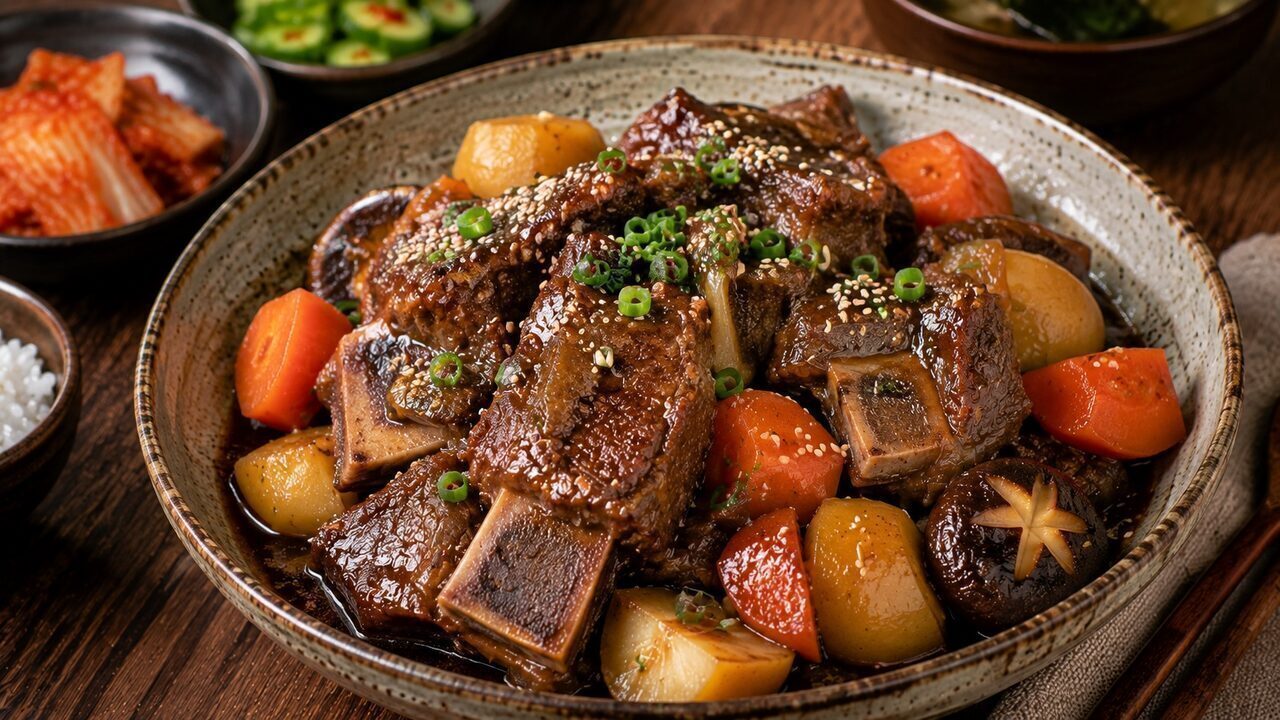
Blanchieren cleans bones and broth, long gentle simmering makes the meat tender. Vegetables and rest of seasoning sauce come later and retain their shape.
Why this recipe works
Galbi-jjim is a festive stew in which beef ribs are supposed to soften, but not completely disintegrate from the bone. Asian pear in the sauce provides mild sweetness and supports delicacy. To prevent radish, carrots and marons from being boiled, they are only added after the first long stew phase. The result is not soup, but meat and vegetables in a little concentrated, shiny sauce.
Recipe
Galbi-jjim stews beef ribs with Korean radish, carrots, shiitake and marons in a shiny sauce of soy sauce, pear, garlic and sesame.
Water ribs for 30 minutes in cold water, change water once. Then boil with fresh water, blanch for 5 minutes and rinse thoroughly.
Mix the pear, soy sauce, rice wine, sugar, onion, garlic, ginger, sesame oil and pepper smoothly.
Boil ribs with 1.2 liters of water and the first half of the sauce. Skimmer, cover and simmer gently for 70 minutes in a small heat.
Remove lids and skim off as much fat as possible from the surface. So the later sauce remains strong, but not oily.
Place radish, carrots, shiitake, marons and other sauces in the pot. Simmer for another 35 to 45 minutes half covered.
When the meat is soft, remove the lid and reduce the sauce for 10 to 15 minutes. Swirl the pot carefully so that the vegetables do not break.
Place Galbi-jjim in a deep serving bowl. Sprinkle with sesame and spring onions and serve with hot rice.
Kitchen know-how
Short precooking dissolves blood residues and protein foam from bones and meat. The braising base therefore tastes clearer.
Rounded radish and carrot pieces collide less strongly with long smithing and keep their shape better.
Variations
Values are estimates per serving and may vary depending on the ingredients, brands, portion size and preparation method used.
Frequently asked questions
Keep cooking