
Chunjang controlled roasting
The paste loses raw bitterness, but must not burn. Medium heat and constant stirring are more important here than strong tanning.
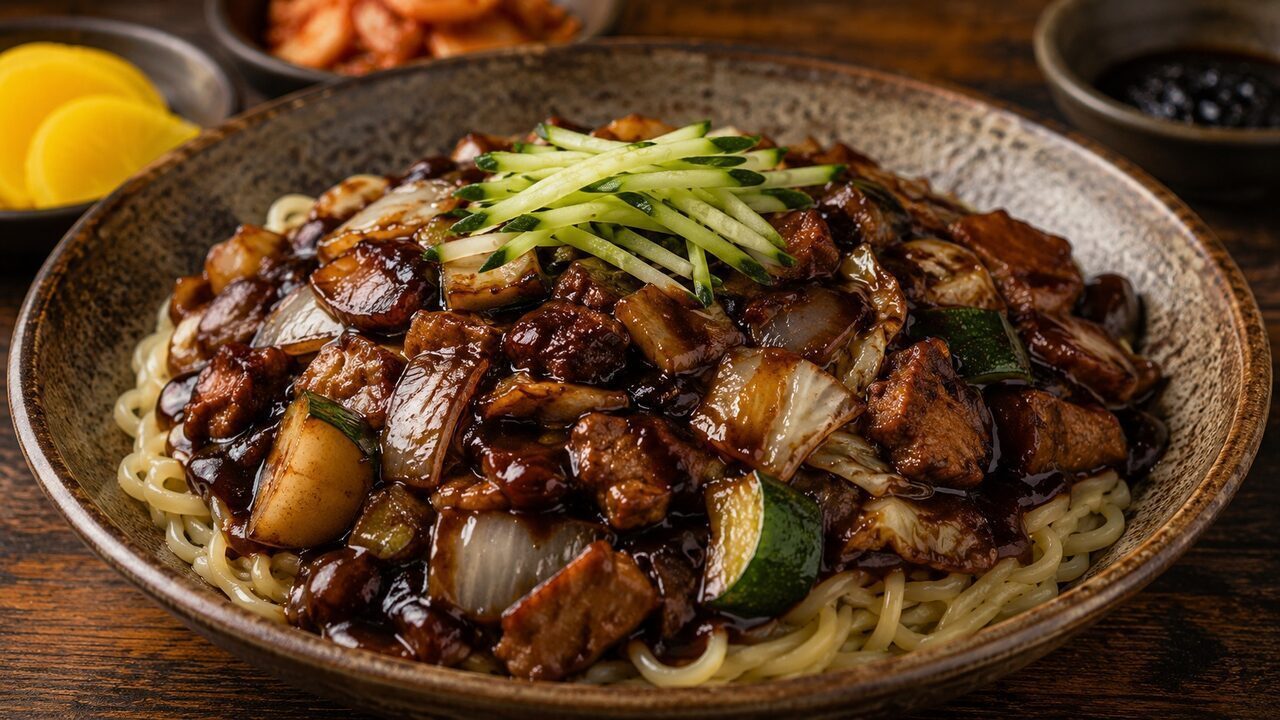
Chunjang is first roasted in oil so that the paste tastes rounder and less bitter. A starch mixture binds the vegetable sauce just before serving.
Why this recipe works
Jjajangmyeon developed from Chinese roots into an independent everyday Korean dish. Its sauce is based on Chunjang, a dark fermented paste made of wheat and soybeans. The paste must be fried in oil before broth and vegetables are added. Potato starch then ensures the typical shine and that the strong sauce adheres to the thick wheat noodles.
Recipe
Jjajangmyeon are Korean-Chinese wheat noodles with shiny black chunjang sauce, pork, lots of onion, cabbage, zucchini and potato.
Heat three tablespoons of oil in a wok over medium heat. Fry Chunjang in it for 3 minutes while stirring constantly, then put oil in a bowl.
Place the remaining oil in the wok and fry pork for 5 to 6 minutes until the cubes have all around colour.
Fry potatoes and onions for 4 minutes. Add cabbage and zucchini and stir for another 3 minutes.
Stir in roasted chunjang and sugar, pour in the broth and boil. Simmer open for 12 to 15 minutes until the potatoes are soft.
Mix the potato starch with cold water. Slowly stir into the boiling sauce and cook for 1 to 2 minutes until it is thick and shiny.
Garnish noodles in plenty of water. Drain thoroughly and spread directly onto four large bowls.
Add hot Jjajang sauce generously on the noodles and garnish with cucumber strips. Mix thoroughly at the table until all noodles are darkly covered.
Kitchen know-how
The paste loses raw bitterness, but must not burn. Medium heat and constant stirring are more important here than strong tanning.
Potato starch clumps in warm liquid. Stir until smooth with cold water and stir again immediately before pouring.
Variations
Values are estimates per serving and may vary depending on the ingredients, brands, portion size and preparation method used.
Frequently asked questions
Keep cooking