
Do not cook broth hard
Sprinkling water pulls the meat together and makes the surface dry. Gentle simmers cooks fat and connective tissue more evenly.
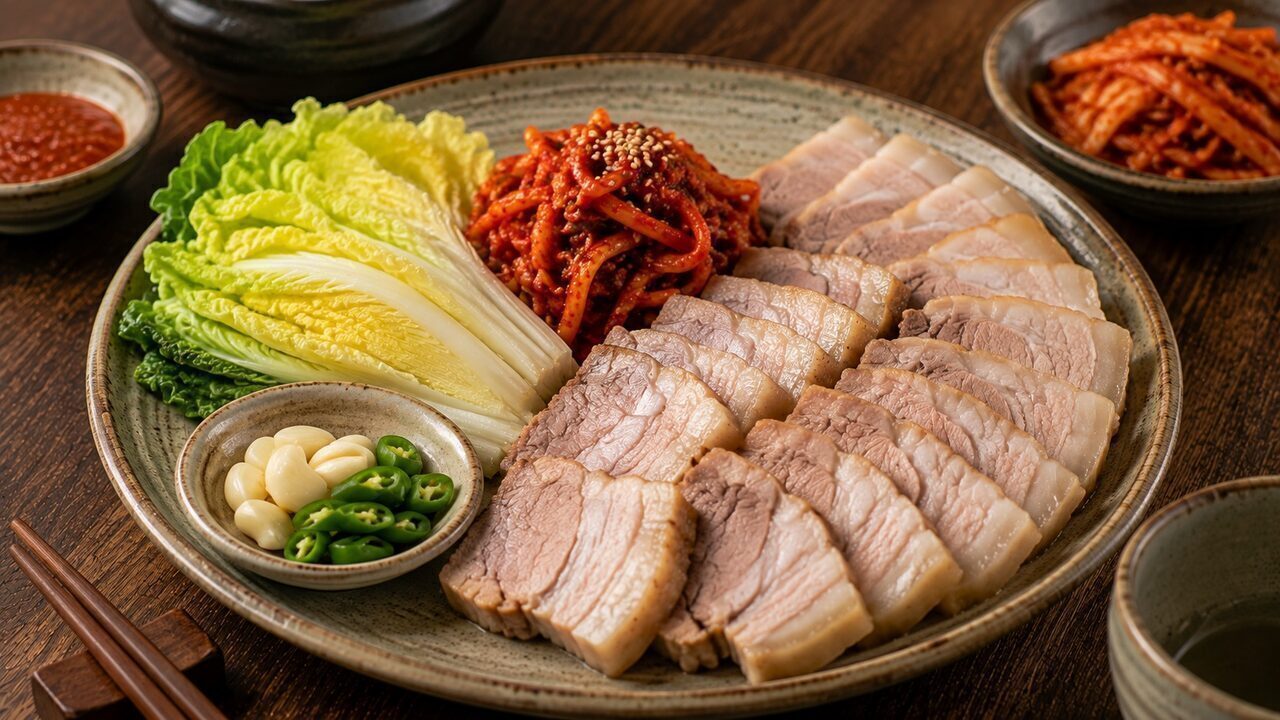
An aromatic Doenjang-Sud cooks the pig belly just below the boiling point. Short rest in the brew keeps the meat juicy and facilitates thin cutting.
Why this recipe works
Bossam describes the wrapping of cooked pork with leaves and spicy side dishes. Unlike saggyeopsal, the pig belly is not grilled here, but gently cooked as suyuk in an aromatic brew. A good bite contains meat, crispy leafy vegetables, kimchi and only little ssamjang. Thus fat, acid, freshness and fermented spice meet each other.
Recipe
Bossam serves gently gardened, juicy pork belly in salad and cabbage leaves with kimchi, garlic, chilli and strong Szamjang.
Boil water with doenjang, onion, spring onions, garlic, ginger and peppercorns in a wide pot.
Add meat, boil again briefly and reduce the heat immediately. Simmer gently for 55 to 65 minutes with a slightly open lid, do not boil.
A knife should slide into the meat with little resistance; at least 75 °C should be reached in the core. Cook very thick pieces for 10 minutes longer if necessary.
Pull the pot from the stove and let the pig belly rest in the broth for 10 minutes. Then lift out and pat the surface dry.
Cut meat into about 5 mm thin slices. Too thick pieces dominate the wrap, too thin disintegrate easily.
Place cabbage and lettuce leaves, kimchi, ssamjang, garlic and chilli on the table in separate bowls. Arrange the meat warm on a plate.
Cover one leaf with a slice of meat, little samjang, kimchi and optional garlic as well as chilli, fold compactly and eat as a bite.
Kitchen know-how
Sprinkling water pulls the meat together and makes the surface dry. Gentle simmers cooks fat and connective tissue more evenly.
Ten minutes in the hot brew balance the temperature and hold more juice in the meat when it is then cut open.
Variations
Values are estimates per serving and may vary depending on the ingredients, brands, portion size and preparation method used.
Frequently asked questions
Keep cooking