
Use cold rice
Fully cooled grains are drier and easier to separate. Pre-spread fresh rice flat and cool quickly.
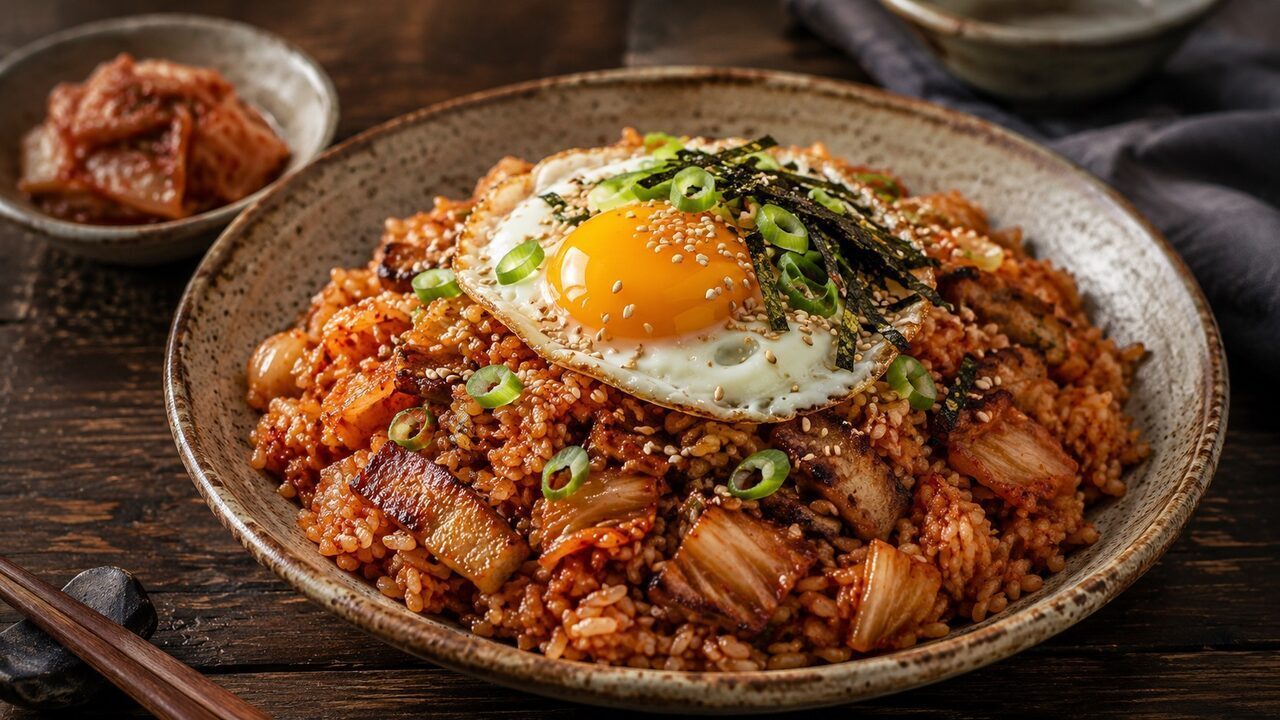
The kimchi is thoroughly fried in front of the rice and its juice boiled. This keeps the fried rice loose, gets roasted aromas and tastes balanced sour.
Why this recipe works
For Kimchi Bokkeumbap, strongly matured kimchi is better suited than a freshly prepared, still mild variant. Acid and fermentation aroma equal the exuberant pig belly. Cold rice from the previous day can be separated particularly well. So that the dish does not get wet, the kimchi cooks first, while kimchi juice and gochujang are briefly concentrated before the rice.
Recipe
Kimchi Bokkeumbap combines cold rice with well-ripened kimchi, pork belly and kimchi juice to strong Korean fried rice with fried egg.
Put on a large pan or a wok cold, add pig belly and fry for 6 to 8 minutes at medium heat until fat comes out and brown the edges.
Add onion and white spring onion rings and fry for 2 minutes. Stir in kimchi and fry for another 5 minutes until it is softer and slightly browned.
Stir in gochujang, soy sauce and kimchi juice. Boil for 2 to 3 minutes until there is hardly any free liquid in the pan.
Add cold rice, separate lumps with the pan turner and fry for 4 to 5 minutes under regular turning. Finally mix sesame oil.
In a second coated pan, fry the eggs as desired. For sensitive persons, allow egg yolks and egg whites to be completely set.
Spread frying rice over bowls and cover with one egg each. Add spring onion green, nori and roasted sesame and serve immediately.
Kitchen know-how
Fully cooled grains are drier and easier to separate. Pre-spread fresh rice flat and cool quickly.
Cook almost completely free liquid in front of the rice. Bokkeumbap stays fried and does not become a soft rice dish.
Variations
Values are estimates per serving and may vary depending on the ingredients, brands, portion size and preparation method used.
Frequently asked questions
Keep cooking