1 hr 45 min
Indonesian
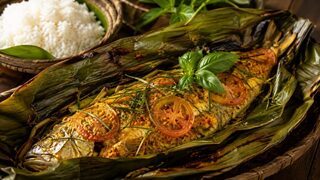
Pepes Ikan in banana leaves
For Pepes Ikan, mackerel is steamed with an aromatic paste of shallots, chilli, turmeric, ginger and kemirine nuts in the banana leaf and grilled briefly.
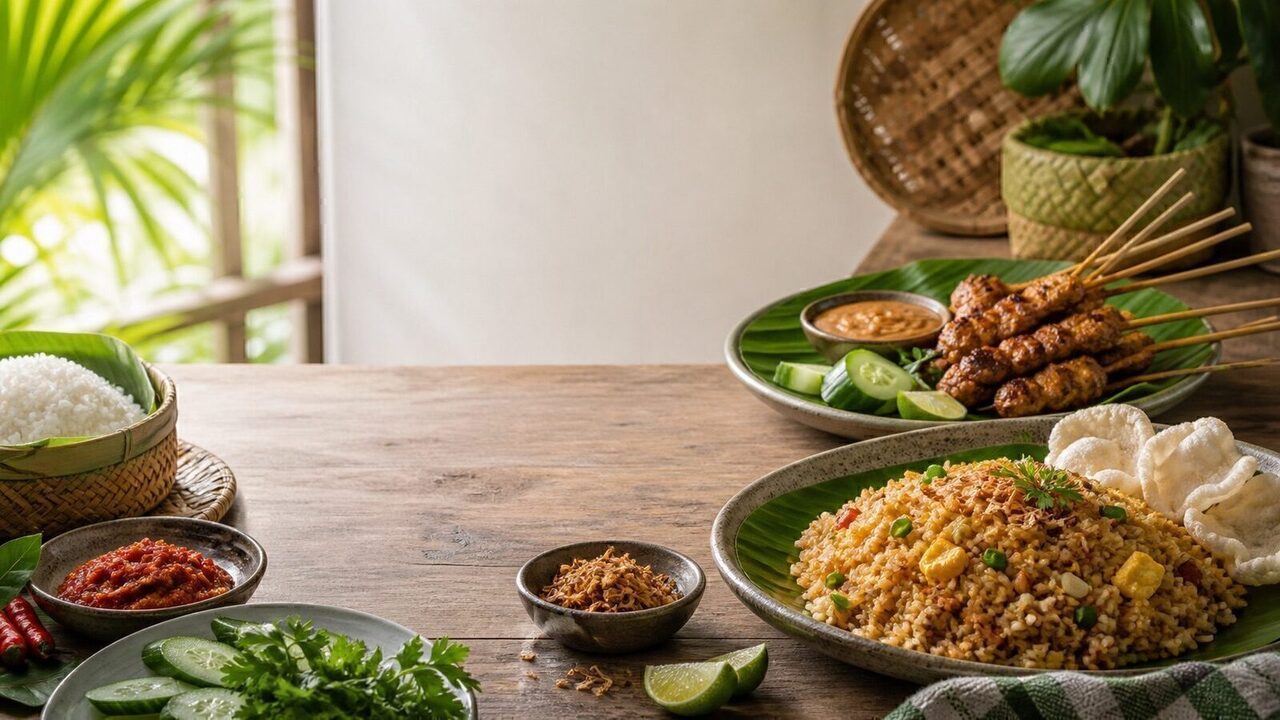
Sweet, salty, sour and spicy notes meet in richly seasoned Indonesian food. Try well-known dishes such as nasi goreng, gado-gado, satay and soto, with guidance on the sauces and aromatics that define them.
Recipes
For Pepes Ikan, mackerel is steamed with an aromatic paste of shallots, chilli, turmeric, ginger and kemirine nuts in the banana leaf and grilled briefly.
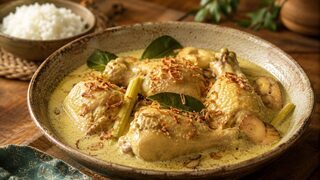
Opor Ayam is a mild Javanese chicken dish in coconut milk with kemirin nuts, coriander, lemongrass, galangal and makrut lime leaves.
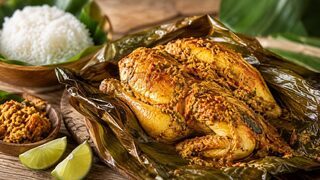
Ayam Betutu is Balinese chicken with a strong spice paste of shallots, chilli, turmeric, ginger, galangal, lemongrass and kemirin nuts.
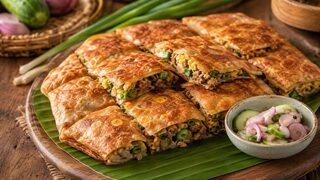
Martabak Telur is a crispy-fried Indonesian dough package with a juicy filling of eggs, seasoned beef chops and many spring onions.
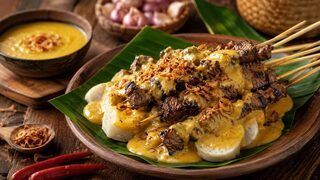
Sate Padang consists of seasoned, pre-cooked beef, which is grilled briefly over large heat and served with a thick yellow sauce of broth and rice flour.
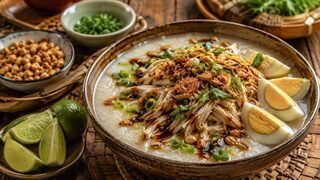
Bubur Ayam is a hearty Indonesian rice porridge with aromatic chicken broth, plucked chicken, spring onions, kecap manis and crispy toppings.
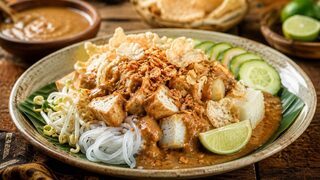
Ketoprak combines rice noodles, fried tofu, mung bean sprouts, cucumber and rice cake with a freshly stirred peanut sauce and kecap manis.
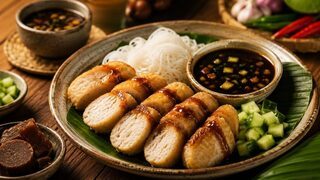
Pempek are springy fish chicks from Palembang, which are formed with tapioca starch, poached, golden brown fried and served with sweet-acid cuco sauce.
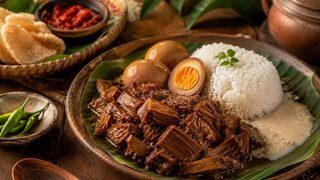
Gudeg from Yogyakarta stews young jackfruit slowly with coconut milk, palm sugar, kemirine nuts, galangal and Indonesian bay leaf leaves.
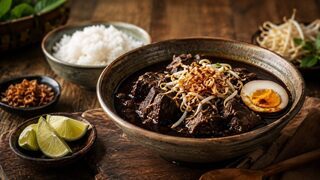
Rawon is an East Javanese beef soup with black keluak, lemongrass, galangal, kaffirlimette leaves and roasted spice paste.
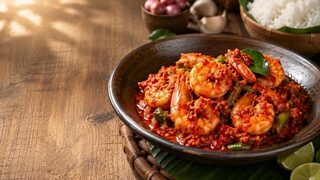
Sambal Udang combines shrimps with a sharp sambal sauce made of shallots, garlic, chilli, tomato, kecap manis and lime. Shrimps cook only briefly.
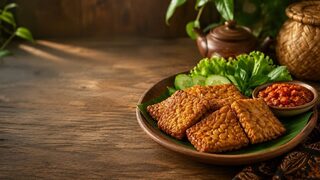
Tempeh Goreng is crispy fried Tempeh, previously marinated with garlic, coriander, turmeric and salt. It should remain golden brown outside, nutty inside.
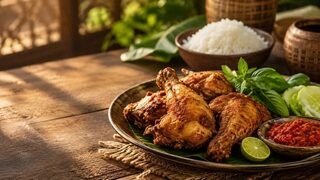
Ayam Goreng is first pre-cooked in a spice broth with turmeric, coriander, garlic, galangal and lemongrass and then fried crispy.
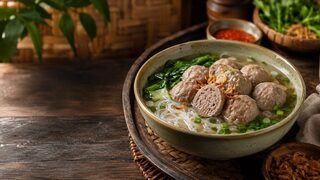
Bakso is an Indonesian meatball soup with elastic beef balls, clear broth, noodles, Pak Choi, spring onions and sambal.
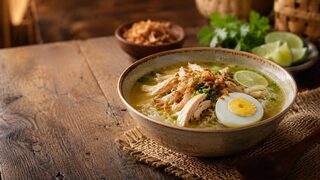
Soto Ayam is an Indonesian chicken soup with turmeric, lemongrass, makrut lime leaves, glass noodles, egg, sprouts and lime.
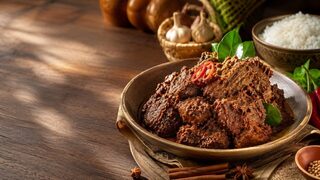
Rendang is a slowly stewed beef dish with coconut milk, lemon grass, galangal, chilli and spice paste. The sauce reduces until dark and concentrated.
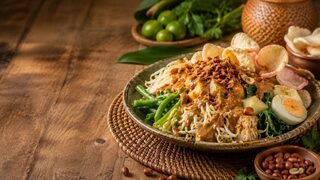
Gado-Gado is an Indonesian vegetable dish with potatoes, beans, sprouts, cucumber, egg, tofu or tempeh and warm peanut sauce.
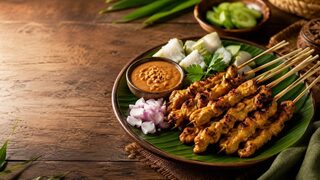
Satay Ayam are Indonesian chicken skewers with spicy marinade and creamy peanut sauce. Chicken club meat remains particularly juicy on grill or pan.
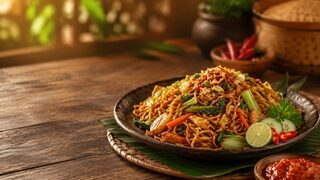
Mie Goreng are Indonesian fried noodles with vegetables, egg, kecap manis, soy sauce and sambal. The noodles are pre-cooked and then fried briefly in the wok.
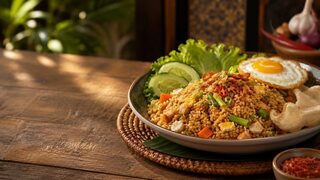
Nasi Goreng succeeds best with chilled rice from the previous day, kecap manis, sambal, egg and briefly fried vegetables. The rice should remain loose and not dampen in the wok.
Guide
Indonesian cuisine likes to work with rice, sambal, kecap manis, coconut, peanut, lime and fried components. Many dishes are particularly good when sweetness, heat and acidity are thought of at the same time.
Fried rice, satay, soto or gado gado need different textures: something warm, something crisp, a sauce and fresh herbs or cucumber to balance.
So Indonesian recipes remain strong, but not heavy.
Kecap Manis is a thick, sweet soy sauce and not directly interchangeable with light soy sauce. If it is missing, soy sauce can be approximated with little brown sugar. Sambal brings chilli, acidity, garlic or fermented aromas depending on the variety and should be dosed gradually.
Tempeh, tofu, eggs, chicken or shrimp are commonly used with Rice dishes Peanut sauce fits Satay and Gado-Gado, but should be set with warm water, lime or tamarind so that it remains pourable.
Thus, the individual textures are preserved and everyone can adjust sweetness and heat at the table.
FAQ