
Make leaves soft in advance
Cold banana leaves tear when wrinkled. Short heating makes it supple and strengthens its scent without cooking it.
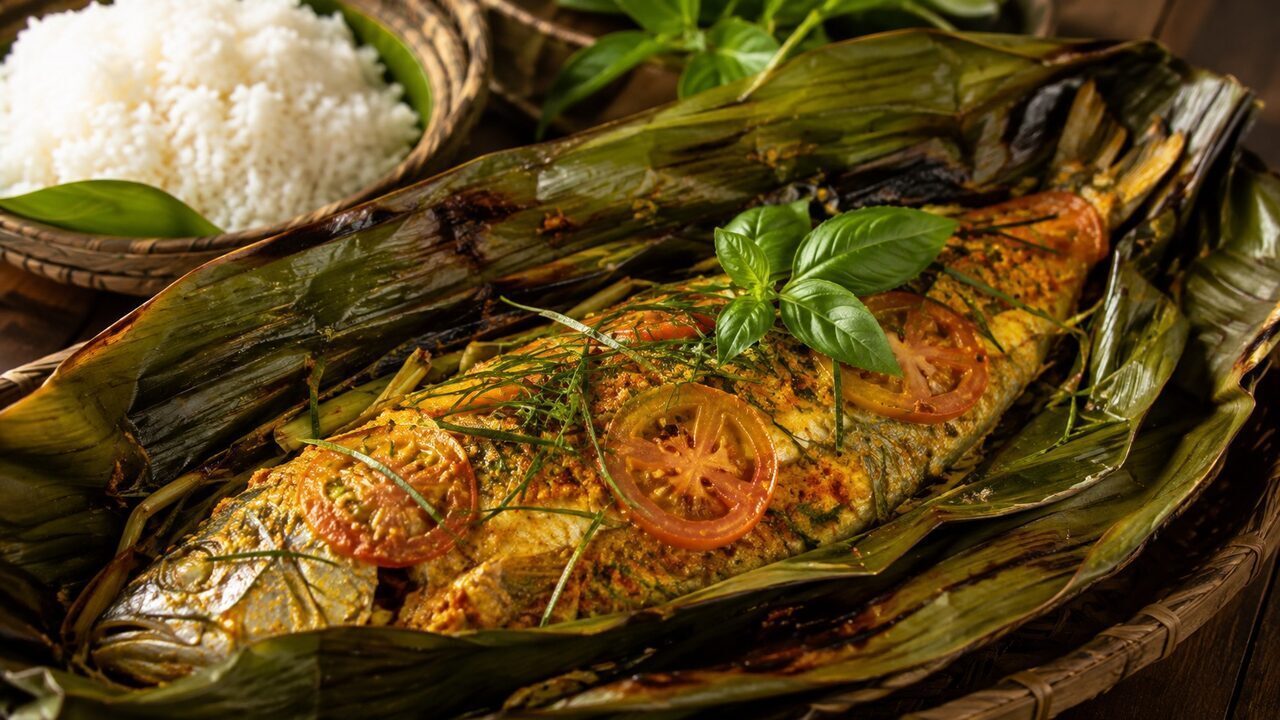
The leaf pack keeps the fish juicy while steaming and absorbs the fragrant herbs. Short grilling at the end roasts the banana leaf and brings a fine smoke aroma.
Why this recipe works
Pepes is a common cooking method for fish, tofu and other ingredients in Indonesia. Banana leaves form a damp shell, but are not intended for eating with them. Mackerel tolerates the intense spice paste particularly well. After steaming, the fish is already cooked; the short time on grill or grill pan serves only the aroma and the slightly roasted surface of the package.
Recipe
For Pepes Ikan, mackerel is steamed with an aromatic paste of shallots, chilli, turmeric, ginger and kemirine nuts in the banana leaf and grilled briefly.
Rinse mackerel cold inside and outside, pat dry very well and cut three times flat on each side. Rub in with lime juice and a teaspoon of salt.
Finely puree shallots, garlic, kemirin nuts, turmeric, ginger, chilli, coriander, palm sugar and remaining salt with two tablespoons of water.
Heat oil and fry spice paste for 7 to 8 minutes over medium heat. Stir in lemongrass and lime leaf strips in the last minute.
Clean the leaves and pull them over heat briefly or pour them over with boiling water until they become soft and flexible. Spread out two pieces slightly overlapping.
Put some tomato and basil on the leaves. Sprinkle mackerel inside and outside with paste, place on top and cover with remaining tomato and basil.
Fold long sides over the fish, fold down ends and secure with wooden skewers or kitchen yarn. Packages should be closed, but not tightened.
Put packets in a preheated steam set and dampen covered for 28 to 32 minutes. The fish is cooked when the meat is easily detached from the middle bone.
Cooked packages on hot grilled pan or grill each side to roast 2 to 3 minutes until the leaves get dark spots and smell.
Place parcels on plates and open away from the body as hot steam escapes. Do not eat banana leaf; serve fish with rice and lime clefts.
Kitchen know-how
Cold banana leaves tear when wrinkled. Short heating makes it supple and strengthens its scent without cooking it.
Steaming cooks the fish reliably and juicyly. The grill remains a short aroma step, so that leaf and spice paste do not burn.
Variations
Values are estimates per serving and may vary depending on the ingredients, brands, portion size and preparation method used.
Frequently asked questions
Keep cooking