
Keep water ice cold
Cold dough develops less glue and remains lighter when roasting. Small lumps are better than long smooth stirring.
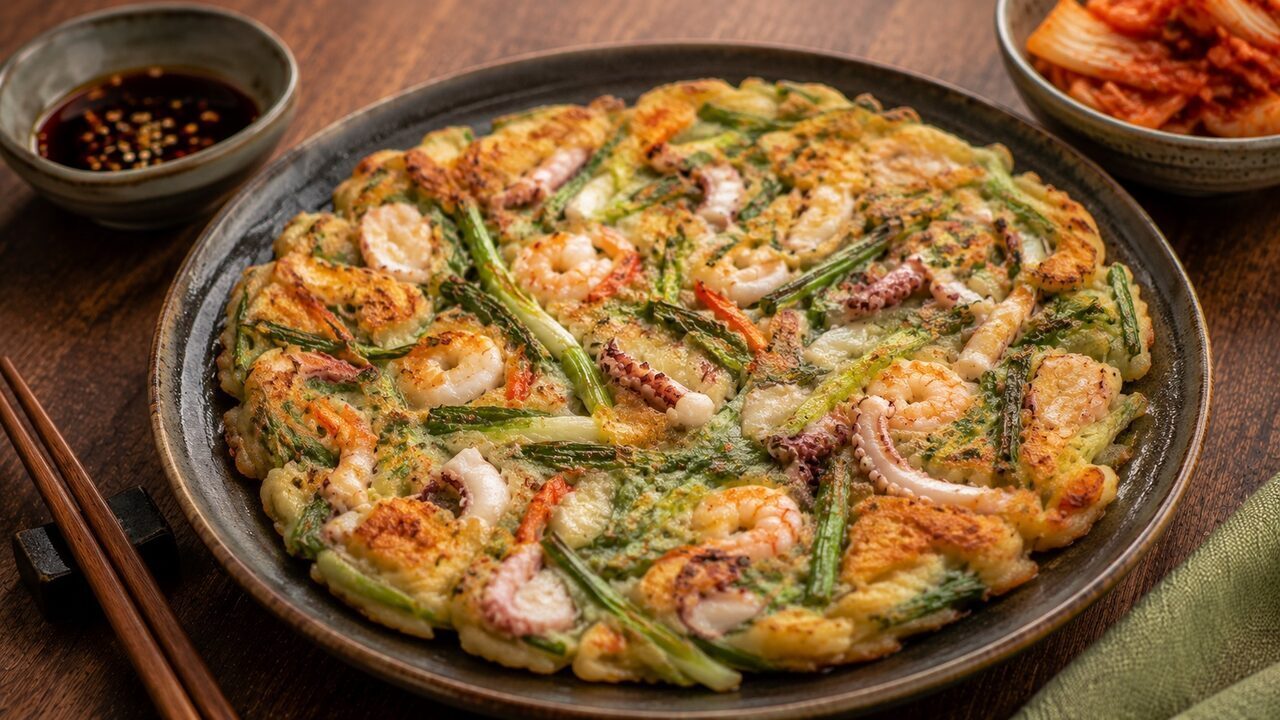
Icecold, only briefly stirred dough wraps the inlays thinly. Two medium sized pancakes fry more evenly and can be turned more safely than a large one.
Why this recipe works
At Haemul Pajeon, spring onions are not just spice, but form the basis of pancakes. Shrimps and squid come cut small over it before a thin dough joins everything. Sufficient oil ensures crispy edges, while the middle remains juicy. Dried seafood and a wide pan prevent the pancake from getting watery.
Recipe
Haemul Pajeon is a hearty Korean pancake with long spring onions, shrimp and squid, crispy outside and juicy inside.
Carefully dry shrimp and squid with kitchen paper. Crushing very large pieces so that they cook completely within the short frying time.
Mix flour, rice flour and salt. Stir in ice-cold water with a whisk until dry flour esters are no longer visible.
Heat four tablespoons of oil in a coated pan of about 26 cm. Place half of the spring onions close together in the hot oil.
Place half of shrimp and octopus each. Add half of the dough and spread a whirled egg thinly over the surface.
Fry at medium to high heat for 5 to 6 minutes. Move the pan occasionally and pour a little oil on dry edges.
Let Pajeon slide onto a plate, cover with the pan and turn over. Fry for another 4 to 5 minutes until seafood and egg are completely cooked. Prepare second pancakes as well.
Mix soy sauce, rice vinegar, water, sesame and optionally gochugaru. Let Pajeon rest briefly on a grid, cut into pieces and serve hot.
Kitchen know-how
Cold dough develops less glue and remains lighter when roasting. Small lumps are better than long smooth stirring.
Pajeon is fried flat in oil. Too little fat makes flour and onions dry instead of forming crispy edges.
Variations
Values are estimates per serving and may vary depending on the ingredients, brands, portion size and preparation method used.
Frequently asked questions
Keep cooking