
Check the thick base with a fork
Browned tips are not a sure sign for soft fennel. A fork test at the thickest lower part is more meaningful.
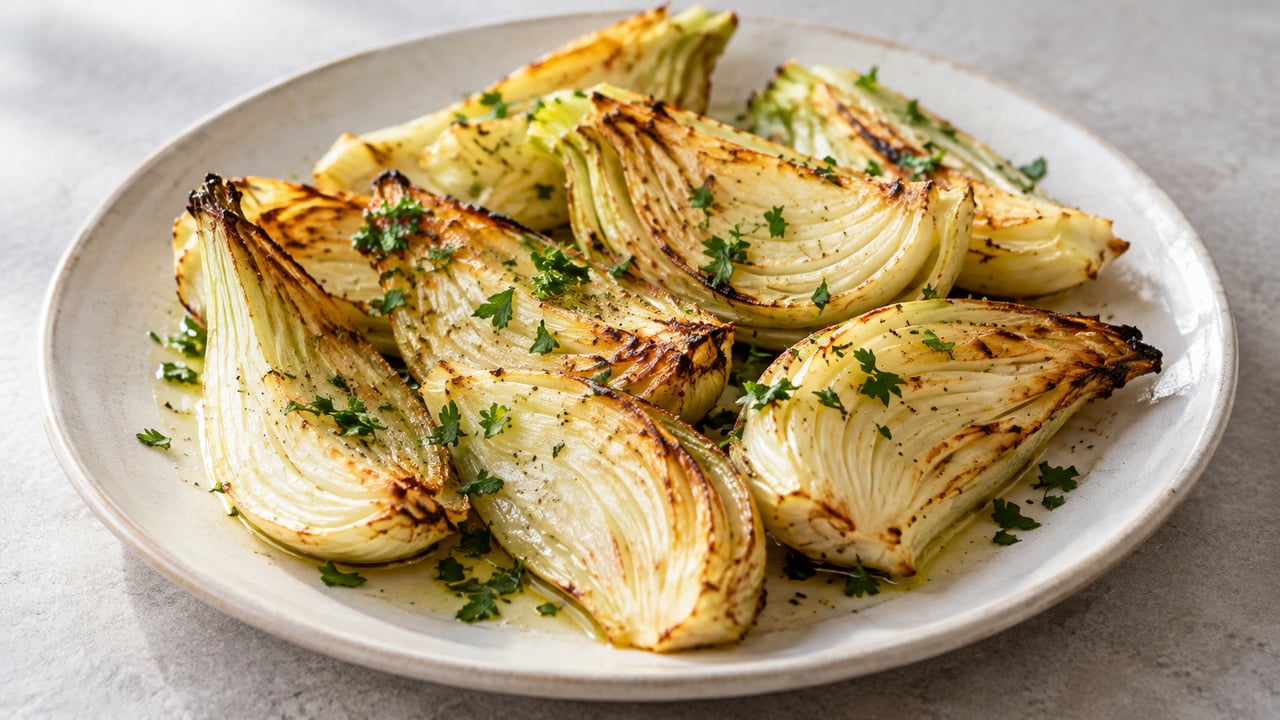
A fennel bulb is cut into narrow wedges and roasted with olive oil. A small part of the core remains as a connection so that the wedges hold together when turning.
Why this recipe works
The fennel leaves would otherwise easily fall apart. Wedges about two centimetres wide are easy to turn and soften more evenly than thick quarters. This recipe results in two vegetable side dishes, not a full main meal. Lemon and parsley are added after roasting so that their aroma remains fresh.
Recipe
Fennel wedges get browned edges and remain delicate inside. Lemon juice and fresh parsley complete it.
Halve the tuber lengthwise and cut into approximately 2 cm wide wedges. Leave a small part of the core on each wedge. Remove very woody core sections before.
Mix carefully with olive oil, salt and pepper. Prepare the device according to the manufacturer's specification, preheat it for 3 minutes to 180 °C if necessary.
Put the fennel loosely in a single layer in the basket. Cook at 180 °C for about 18 minutes and turn gently after 9 minutes. The thick bases must be soft; if necessary continue to boil for a few minutes.
Place on a warm plate and mix with lemon juice and parsley. Divide into two portions. Don't leave long in the closed hot device.
Kitchen know-how
Browned tips are not a sure sign for soft fennel. A fork test at the thickest lower part is more meaningful.
Small tongs or a spatula support the layered wedges better than vigorous shaking.
Variations
Values are estimates per serving and may vary depending on the ingredients, brands, portion size and preparation method used.
Frequently asked questions
Keep cooking