
Wash off surface thickness
The rubbing under cold water is more important for smooth, separate Soba than a long ice bath. Work carefully because Soba breaks easily.
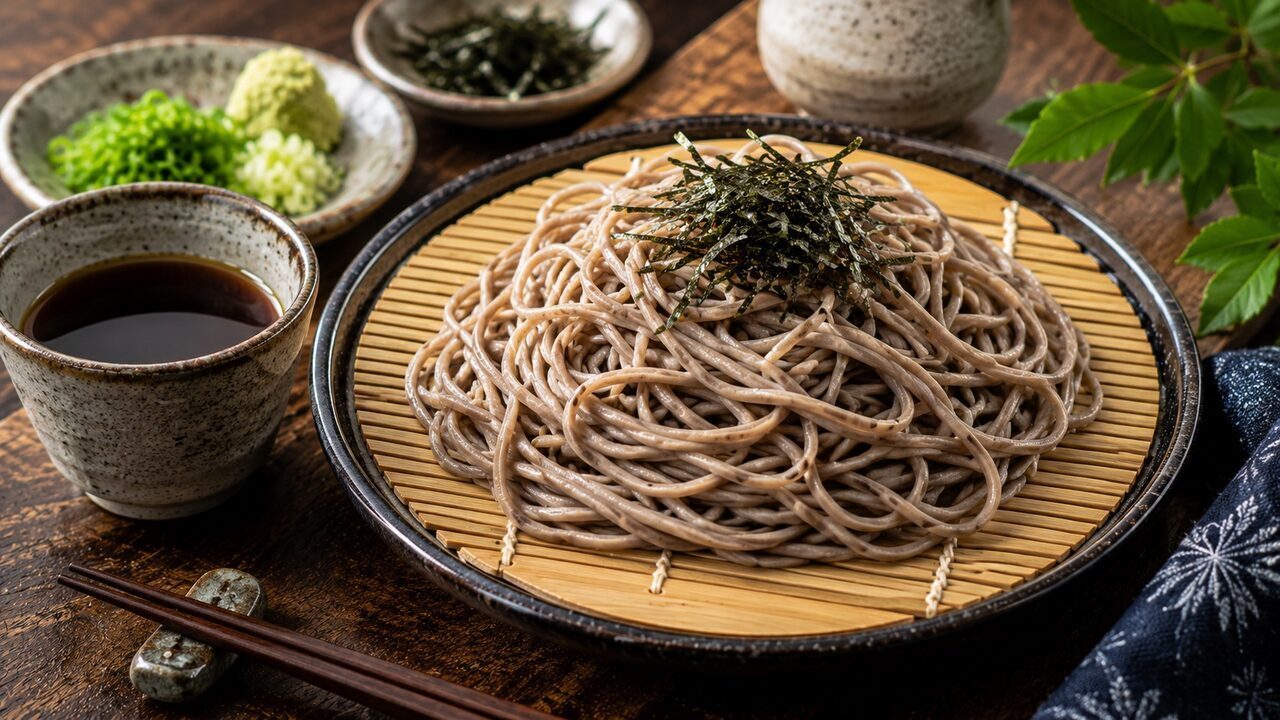
Rinse removes surface thickness and strengthens the pasta. The completely chilled dipsauce is based on Dashi, soy sauce, Mirin and sugar.
Why this recipe works
At Zaru Soba, pasta and sauce are served separately. Each portion is only briefly immersed in the strong Tsuyu, so that the nutty buckwheat aroma is preserved. Just as important as the dipsauce is the noodle technique: plenty of water, careful stirring and thorough washing under cold water give a smooth, elastic surface.
Recipe
Zaru Soba are cold buckwheat noodles that are thoroughly rinsed and served with concentrated Tsuyu dip sauce, spring onions, Wasabi and Nori.
Boil up water, soy sauce, Mirin and sugar. As soon as the mixture is boiling again easily, add Katsuobushi, allow to flush up briefly and turn off the stove.
Let Tsuyu cool completely and then pour through a fine sieve. Keep cool for at least 20 minutes until serving.
Fill a large pot with plenty of water without additional salt. Add Soba and loosen it gently, so that the noodles do not stick together.
Cook noodles according to the package. When foaming heavily, regulate the heat instead of pouring cold water.
Drain Soba immediately and gently rub with both hands under cold running water until the water remains largely clear.
Place noodles in ice water for a maximum of 30 seconds, then drain thoroughly. Loosely spread on bamboo mats or flat plates.
Place Nori over the Soba. Fill Tsuyu in small bowls and reach spring onions, Wasabi and optionally Daikon separately; the noodles only immerse easily.
Kitchen know-how
The rubbing under cold water is more important for smooth, separate Soba than a long ice bath. Work carefully because Soba breaks easily.
The sauce is deliberately concentrated. Just immerse the front end of a noodle portion briefly, instead of pouring the whole bowl over it.
Variations
Values are estimates per serving and may vary depending on the ingredients, brands, portion size and preparation method used.
Frequently asked questions
Keep cooking