
Observe fermentation
In a cool kitchen, the dough lasts longer; the decisive factor is volume increase, bubbles and a fresh acidic fragrance.
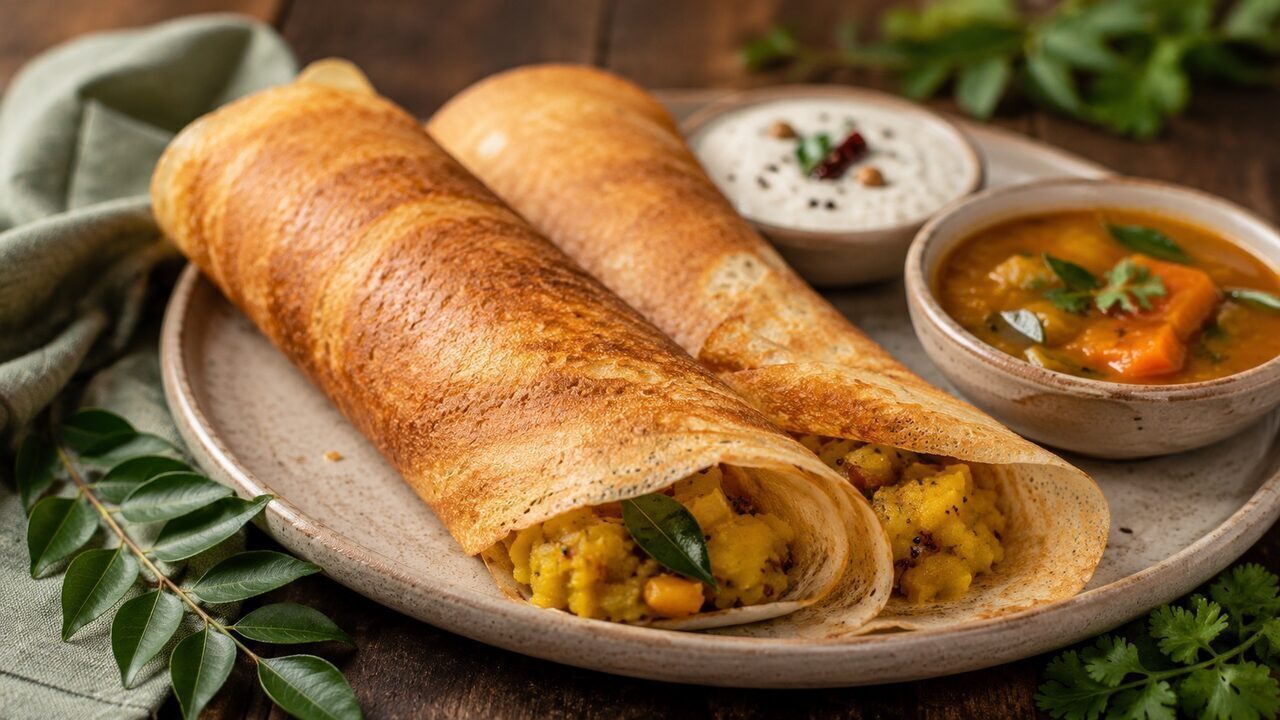
Rice and Urad Dal are soaked separately, finely ground and fermented overnight. On a hot plate, the dough is thinly spread out and filled with potato masala.
Why this recipe works
Good Masala Dosa takes time, but only a few special ingredients. During fermentation, rice and peeled Urad Dal become an airy-acid dough that can be spread thinly. A cast iron plate stores enough heat for a crispy base. The soft potato filling forms the classic contrast.
Recipe
Masala Dosa are crispy South Indian rice-lens crêpes with a spicy potato filling of mustard seed, curry leaves, ginger and turmeric.
Rinse rice thoroughly and cover with water in a bowl. Rinse Urad Dal, Chana Dal and fenugreek separately and soak. Leave both for 5 to 6 hours; add Poha to rice in the last 20 minutes.
Mix lentils mixture with little fresh water very smooth and airy. Mix rice and poha separately with water to a fine, still minimally grainy dough. Mix both masses thoroughly with clean hands.
Place the dough in a large bowl, cover loosely and ferment for 8 to 14 hours at 25 to 30 °C. It should be visible, show small bubbles and smell pleasantly acidic.
Cook potatoes softly in salt water, drain them, evaporate briefly, peel and roughly crush them. Small pieces may remain visible.
Heat two tablespoons of oil. Sprinkle mustard seeds, fry Urad Dal, curry leaves, ginger and chilli briefly. Heat onions for 8 minutes, stir in turmeric and add potatoes and 150 ml of water.
Mix the potato mixture for 5 minutes until soft and contiguous. Season with 0.75 teaspoons of salt, lemon juice and coriander. Keep warm.
Gently stir fermented dough, season with 0.75 teaspoons of salt and add little water if necessary. It should be flowable, but thinly cover a spoon.
Bring the cast iron plate to medium high heat and oil thinly. Put a kelle dough in the middle, spread out spirally thinly and spread a little oil on the edge. Bake golden brown and crispy for 2 to 3 minutes.
Place some potato masala on one half, fold or roll up Dosa and serve immediately with Sambar and Kokoschutney. Just cool off the plate before the next Dosa if the dough cannot be spread.
Kitchen know-how
In a cool kitchen, the dough lasts longer; the decisive factor is volume increase, bubbles and a fresh acidic fragrance.
On an overheated plate, the dough stops immediately and cannot be spread thinly. Then, cool the area briefly with a damp cloth.
Variations
Values are estimates per serving and may vary depending on the ingredients, brands, portion size and preparation method used.
Frequently asked questions
Keep cooking