
Stamp directly in the pan
Vegetables and masala are joined by repeated stomping. Some small pieces may remain, but the mass should be spreadable and ally.
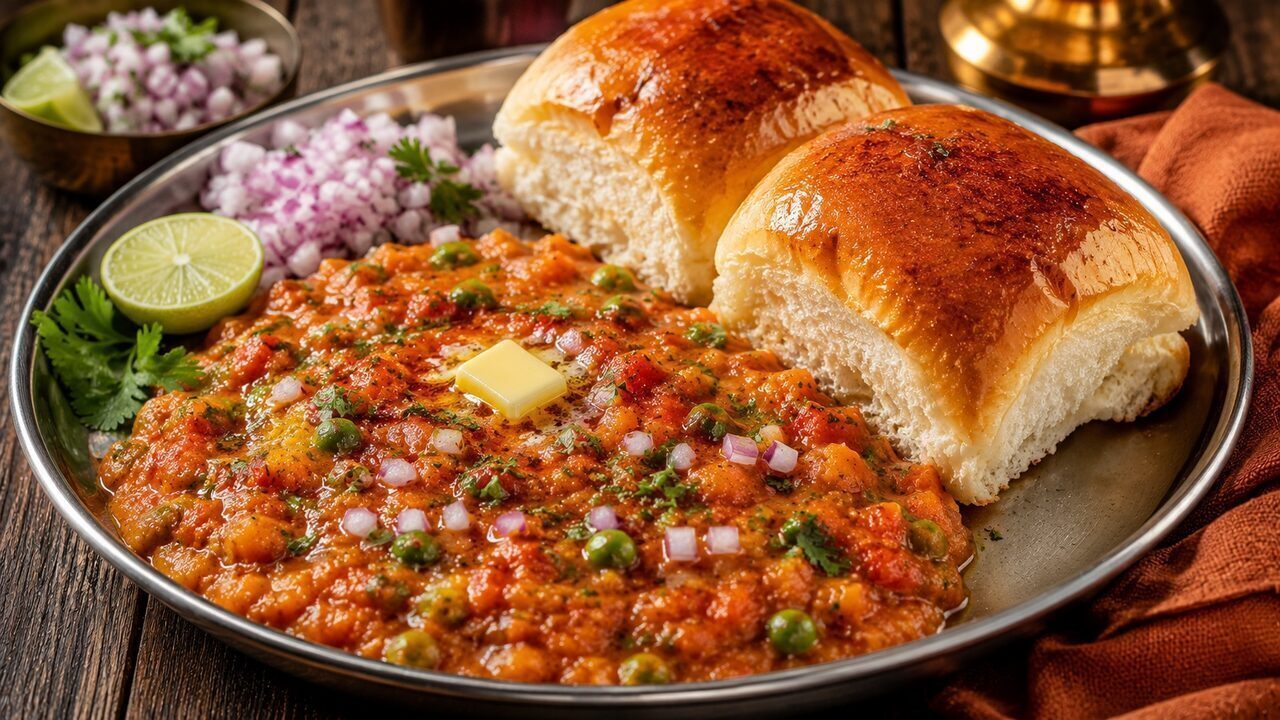
Softly cooked vegetables are crushed directly in a strong tomato-onion-masala. Pav-Bhaji-masala, butter and lemon give the street food its typical taste.
Why this recipe works
At Pav Bhaji, the focus is on consistency: the vegetables are not only stirred, but are repeatedly crushed on the hot plate or in a wide pan. This creates a thick, still slightly structured Bhaji, which can be absorbed with roasted Pav. Onions, coriander and lemon come fresh on the plate and bring contrast to the buttery vegetable mass.
Recipe
Pav Bhaji is Mumbai's spicy vegetable pan made from potatoes, cauliflower, peas, peppers and tomatoes, served with butter-roasted rolls.
Cook potatoes and cauliflower in a little salted water for 12 minutes. Add peas and cook for another 4 minutes until everything is very soft. Drain, collect 300 ml of cooking water.
Heat 30 g of butter and oil in a wide pan. Fry diced onion and pepper for 8 minutes. Add ginger and garlic and stir for 1 minute.
Stir in tomatoes, Pav-Bhaji-Masala, chilli, turmeric and 1 teaspoon of salt. Cook for 10 to 12 minutes until the tomatoes decay and the mixture is clearly concentrated.
Add boiled vegetables and 200 ml of cooking water to the pan. Crucify thoroughly with a potato swab and mix again and again with the masala.
Simmer open for another 8 to 10 minutes and stir frequently. Add cooking water as needed. Add 20 g of butter and season with salt and some lemon juice.
Heat a second pan. Roast rolls with the cut areas in the remaining butter 2 to 3 minutes golden brown; add a pinch of Pav-Bhaji-Masala to the butter as desired.
Arrange Bhaji with a small piece of butter, finely chopped raw onion and coriander. Serve hot Pav rolls and lemon splits right next to it.
Kitchen know-how
Vegetables and masala are joined by repeated stomping. Some small pieces may remain, but the mass should be spreadable and ally.
The mixture typically contains coriander, cumin, chilli, amchur and warm spices. Normal curry powder produces a distinctly different aroma.
Variations
Values are estimates per serving and may vary depending on the ingredients, brands, portion size and preparation method used.
Frequently asked questions
Keep cooking