
Keep fillings dry
Wet fillings make gimbap soft and make it difficult to cut cleanly.
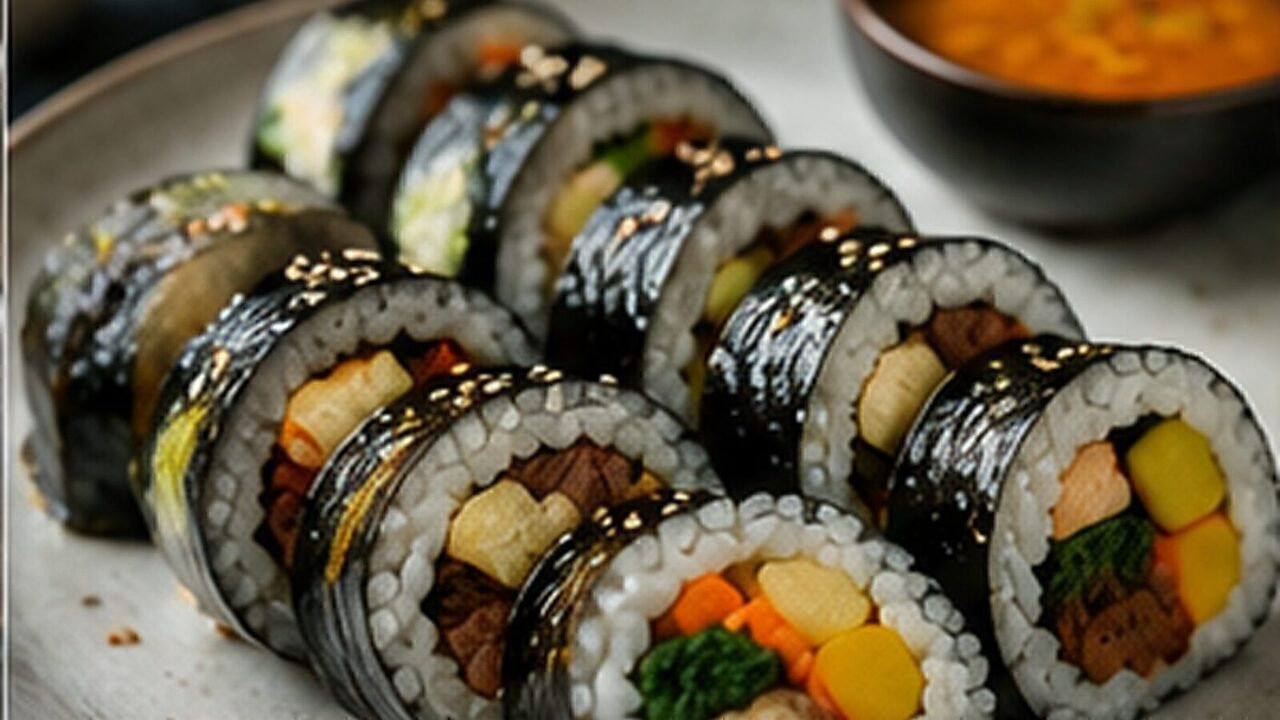
For gimbap, boiled round grain rice is seasoned with sesame oil and salt. Vegetables, omelet, pickled radish and other fillings are prepared in strips and rolled firmly into gim.
Why this recipe works
Gimbap looks like sushi, but tastes different: The rice is seasoned not with vinegar, but with sesame oil and salt. It is important that the fillings are not too moist and the roll is firm, but not squeezed.
Recipe
Gimbap is a Korean rice roll with gim algae leaf, sesame rice, vegetables, egg, danmuji and, if desired, beef or fish cake. The fillings are prepared dry and neatly.
Cook rice, let it evaporate briefly and season warmly with sesame oil, salt and sesame.
Fry the egg as an omelet and cut into strips. Fry the carrot briefly, squeeze the spinach, cut the cucumber and Danmuji.
Place gim on a mat with the shiny side down. Spread rice thinly, put on fillings and roll firmly.
Sprinkle with sesame oil on the outside and sprinkle with sesame.
Cut into slices with a slightly oiled sharp knife and serve promptly.
Kitchen know-how
Wet fillings make gimbap soft and make it difficult to cut cleanly.
The roll should be compact, but the rice must not be crushed.
Gimbap tastes best on the same day, because rice and gim dry out later.
Variations
Values are estimates per serving and may vary depending on the ingredients, brands, portion size and preparation method used.
Frequently asked questions
Keep cooking