
Drain foam
The foam contains dissolved proteins. Regular scooping off ensures a cleaner taste and a smoother surface.
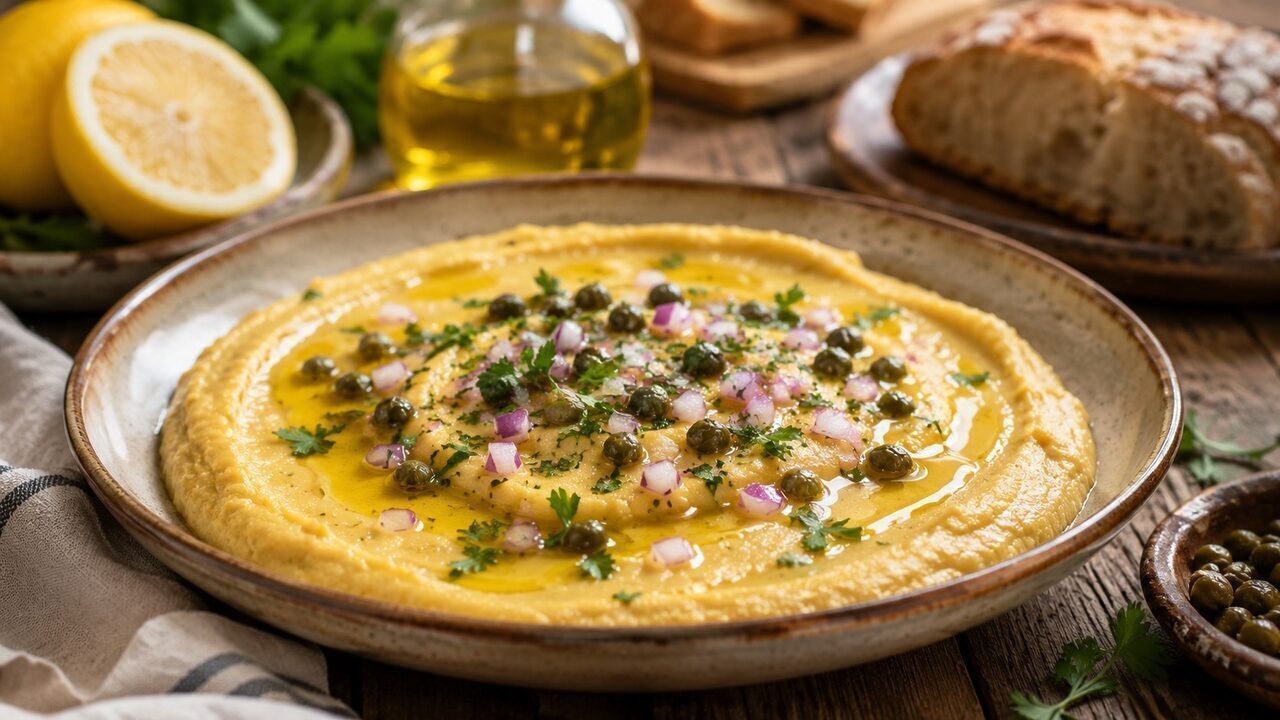
Yellow peel peas are slowly cooked softly without soaking and then puree with olive oil and lemon. A fresh set of capers and onions sets salty and sharp contrasts.
Why this recipe works
Despite its name, Greek Fava is not prepared from thick beans. Yellow peel peas are used; the protected Fava Santorinis comes from a special type of plate pea of the Cyclades. Slow cooking and repeated foaming result in a mild, smooth puree that tastes particularly lukewarmly aromatic.
Recipe
Greek fava is a silky puree of yellow peel peas, onion, olive oil and lemon, served with capers and red onion.
Rinse Fava in a sieve under cold water until the water runs out to a large extent. Soaking is not necessary in case of peeled, halved peas.
Place Fava with white onion, bay leaf and 900 ml of water in a pot. Cook slowly and drain the resulting light foam several times.
Simmer open for 40 to 50 minutes at a small heat. Stir occasionally and add only so much hot water that nothing does. The peas should decay completely.
Remove the onion and bay leaf. Add 40 ml of olive oil, lemon juice, salt and pepper and puree the mixture with a stick blender.
Leave Fava to rest for 10 minutes. It thickens significantly when cooled down; stir in little hot water or extra olive oil if necessary.
Put the lukewarm into a flat bowl. Serve with remaining olive oil, red onion, capers and parsley and with bread.
Kitchen know-how
The foam contains dissolved proteins. Regular scooping off ensures a cleaner taste and a smoother surface.
Fava often appears thin hot and becomes firmer within a few minutes. Therefore, stir in additional liquid only after a short rest period.
Variations
Values are estimates per serving and may vary depending on the ingredients, brands, portion size and preparation method used.
Frequently asked questions
Keep cooking