
Muldes generous oils
Oil not only prevents adhesion, but also allows the uniformly browned, movable outer skin of the balls.
A thin Dashi dough fills the hollows of the Takoyaki pan completely. By gradually turning, standing dough and inlays are formed into a round ball.
Why this recipe works
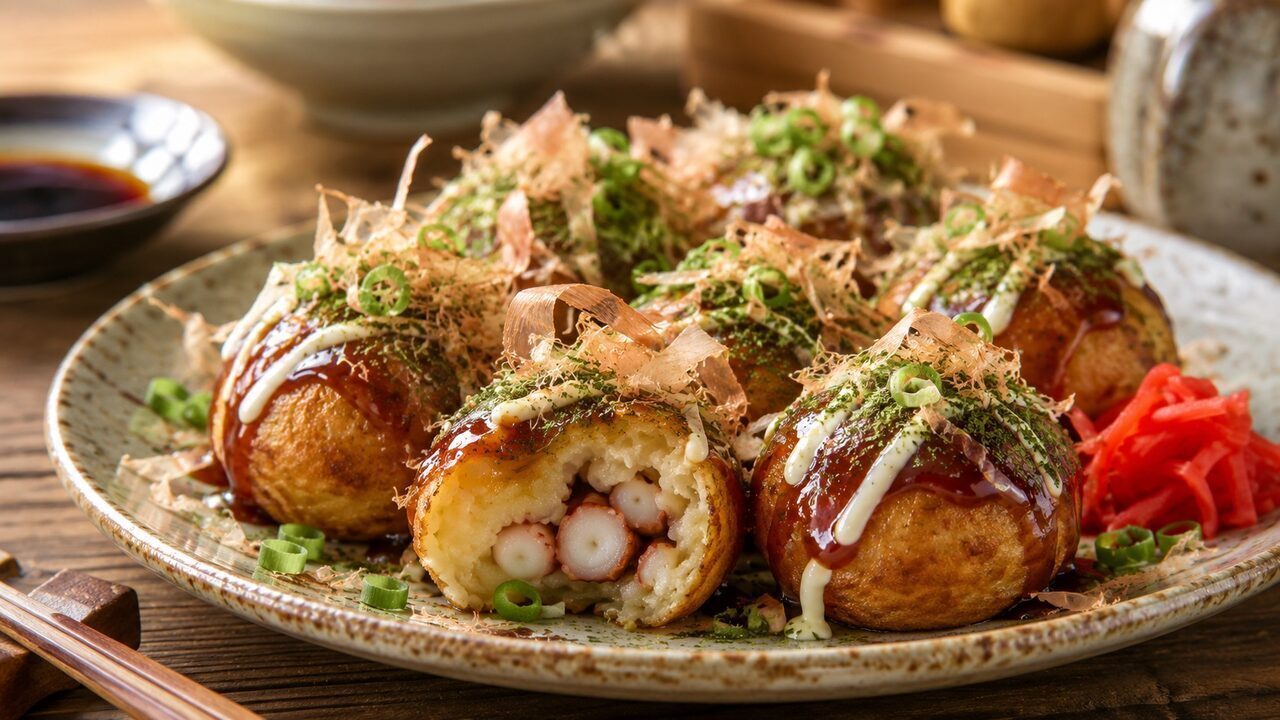
Takoyaki are among the most famous street food dishes from Osaka. Despite the name, they remain much softer inside than a pancake. For the ball shape it takes a takoyaki pan with round hollows and some practice while turning. The octopus is already cooked; so only the dough has to set and develop a golden brown shell.
Recipe
Takoyaki are outside browned, inside creamy-soft dough balls from Osaka with cooked octopus, spring onions, Beni Shoga and crispy Tenkasu.
Mix the flour and baking powder. Mix the eggs, cold Dashi and soy sauce, add the flour briefly and let the liquid dough rest for 10 minutes.
Preheat the Takoyaki pan at medium to high heat. Brush out any pit and the areas in between generously with oil.
Pour the dough to the edge into all the pits. Add a piece of octopus each and sprinkle Tenkasu, Beni Shoga and spring onions over the entire area.
After about 2 minutes divide the set dough between the hollows with two skewers into individual squares. First turn each portion by about 90 degrees.
Push the overhanging dough and loose inlays into the hollows. Turn the balls a bit further until a closed round shape is formed.
Turn Takoyaki for another 5 to 7 minutes and add little oil if needed. They are finished when the outside is browned and stable, but the inside is still soft.
Cover takoyaki immediately with sauce and mayonnaise. Sprinkle with aonori and katsuobushi and allow to cool briefly before the first bite.
Kitchen know-how
Oil not only prevents adhesion, but also allows the uniformly browned, movable outer skin of the balls.
At first turning the dough is still soft. Several small movements absorb excess dough and result in more round takoyaki.
Variations
Values are estimates per serving and may vary depending on the ingredients, brands, portion size and preparation method used.
Frequently asked questions
Keep cooking