
Cook components separately
Tamarinde can slow the softening of lentils. Therefore Toor Dal first cook softly without acidity and first combine with the gardened vegetables.
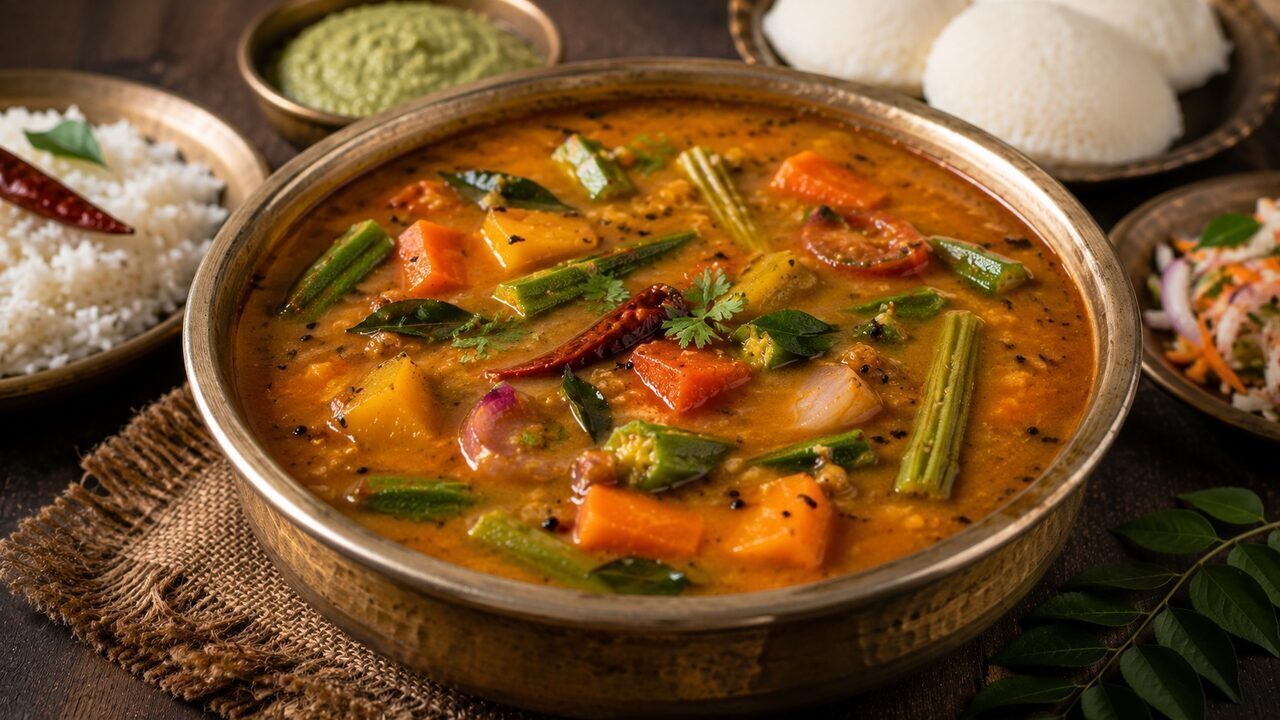
Toor Dal is cooked softly and creamy, while vegetables are cooked separately in Tamarindensud. Only then are both parts joined and finished with freshly roasted spices.
Why this recipe works
Sambar combines creamy lentils, sour tamarinds and vegetables to form a versatile dish. In South India it is served with rice, Idli, Dosa or Vada. The vegetables should be soft, but not completely disintegrate. Tadka comes over at the very end so that mustard seed, curry leaves and Asafoetida do not lose their flavour during long cooking.
Recipe
Sambar is a South Indian lentil-vegetable stew with Toor Dal, Tamarinde, Sambar powder and a fragrant Tadka made of mustard seed and curry leaves.
Rinse lenses in a sieve until the water remains clearly clearer. Boil with 900 ml of water and half of the turmeric and remove the resulting foam.
Cook the Toor Dal covered in a small heat for 30 to 35 minutes until the lentils completely disintegrate. Stir in between and add hot water if needed.
Fill the tamarind paste with 250 ml of hot water, leave for 10 minutes and loosen with your fingers. Press through a sieve; discard the seeds and coarse fibers.
Add carrots, shallots, pumpkin, eggplant, tomatoes, remaining turmeric, sambar powder and tamarind water in a large pot. Cook gently for 12 to 15 minutes.
Add soft dal to the vegetables, season with salt and simmer open for another 8 minutes. Adjust consistency with hot water; Sambar should flow, but not be watery.
Heat ghee in a small pan. Let mustard seeds jump up, then gently add dried chilli and curry leaves. Stir in asafoetida for a short time.
Pour hot Tadka immediately over the Sambar and stir in. Check acidity and balance with little Jaggery only if necessary. Sprinkle with coriander and serve hot.
Kitchen know-how
Tamarinde can slow the softening of lentils. Therefore Toor Dal first cook softly without acidity and first combine with the gardened vegetables.
Add the freshly roasted spices and the hot fat to the sambar immediately. Curry leaves and mustard seed quickly lose scent while waiting.
Variations
Values are estimates per serving and may vary depending on the ingredients, brands, portion size and preparation method used.
Frequently asked questions
Keep cooking