
Warm Forms
Onigiri can be formed better with warm rice than with cold rice.
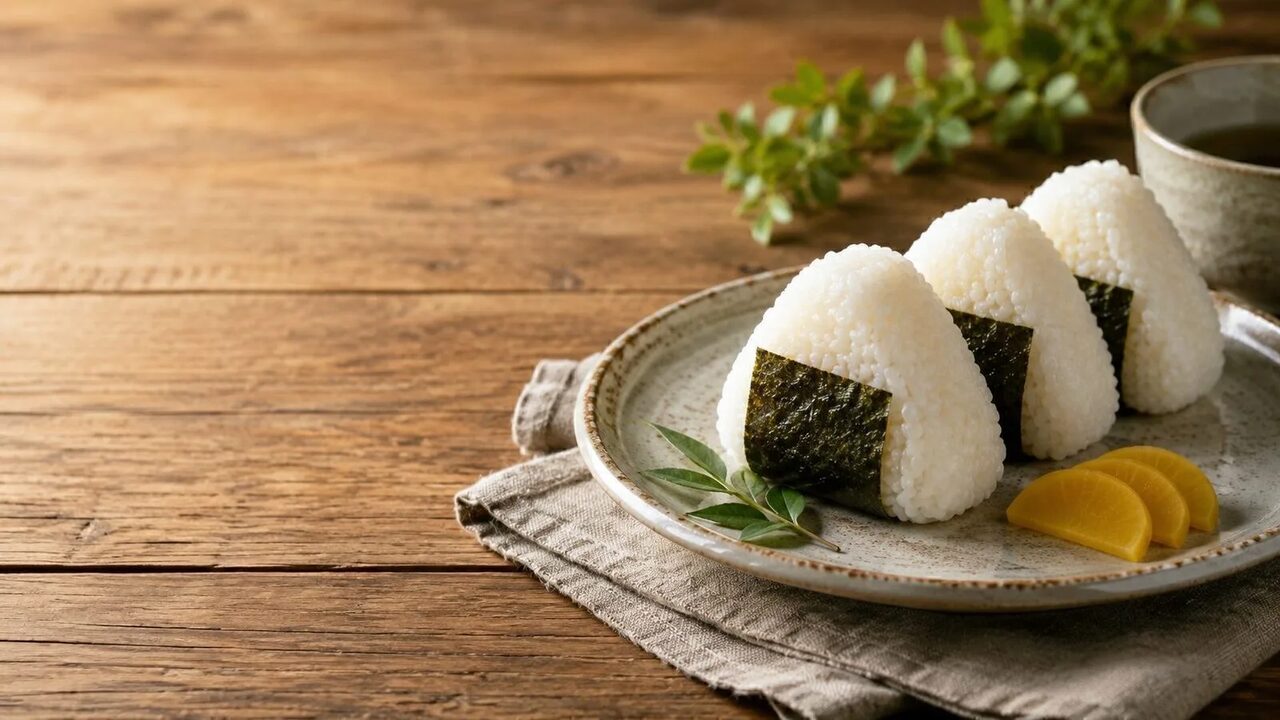
For Onigiri, Japanese round grain rice is cooked and warm formed. Hands are slightly moistened and salted so that the rice is not sticky and the rice balls are discreetly seasoned.
Why this recipe works
Onigiri are not sushi: the rice is not seasoned with vinegar. It is important to have freshly cooked round grain rice, which is warm shaped. The filling is in the middle, Nori remains separate or only comes to the end so that it remains crispy.
Recipe
Onigiri are Japanese rice balls made of short sticky rice, salt and fillings such as salmon, tuna mayo, umeboshi or sesame. Nori comes just before the meal.
Wash rice thoroughly, cook with water and let it rest for 10 minutes. Onigiri are formed with warm rice.
Provide salmon, tuna mayo, umeboshi or another filling. Drain very moist fillings.
Gently moisten hands with water and rub in with a little salt so that the rice does not stick.
Press a portion of rice flat, put filling in the middle and form triangles or balls.
Place Nori only shortly before the meal or serve separately, so that it does not become soft.
Kitchen know-how
Onigiri can be formed better with warm rice than with cold rice.
Water and little salt on the hands prevent gluing and season the rice easily.
Nori stays crisper when it comes to the rice just before the meal.
Variations
Values are estimates per serving and may vary depending on the ingredients, brands, portion size and preparation method used.
Frequently asked questions
Keep cooking