Inflation at 2.9 Percent: Planning Seasonal Grocery Shopping
Preliminary inflation for August stands at 2.9 percent. Here is what the figure says about food prices and how a flexible seasonal meal plan can make grocery shopping easier.
In short: Preliminary inflation for August stands at 2.9 percent. Here is what the figure says about food prices and how a flexible seasonal meal plan can make grocery shopping easier.
What the New Inflation Number Means for Purchasing
Destatis cites energy as an area with a particularly strong price increase: for August, it is expected that there will be an increase of 10.5 percent compared to the same month of the previous year. Core inflation without energy and food is expected to be 2.4 percent. These figures show why no uniform premium on own weekly purchases can be derived from the total. The figures are provisional; this article gives the information level of 6 September 2026.
A flexible menu is worthwhile at the change of season
The seasonal calendar of the Federal Center for Nutrition helps to identify the main offer times of fruit and vegetables. A large seasonal offer can facilitate cheap purchases. However, a price guarantee for a particular business is not this: origin, quality, package size and offers affect the actual price.
Our practical recommendation for September: First decide on the type of dish and first on the vegetable shelf about the exact composition. A vegetable pan, a tin dish or a soup leave more room for manoeuvre than a recipe for which you have to buy several rarely used ingredients. You can find inspiration in our vegetable recipes and autumn recipes.
Three decisions before the grip on the offer
- Does the amount fit? Plan on which days you want to use the food. A large pack is only helpful if you use it.
- Is the basic price cheaper? Compare the price per kilogram or litre for similar products. The large printed packing price alone can deceive when comparing different large packages.
- What's already there? Check pasta, rice, potatoes and broken ingredients before shopping. Then determine which fresh complement is really missing.
One shopping, three different dishes
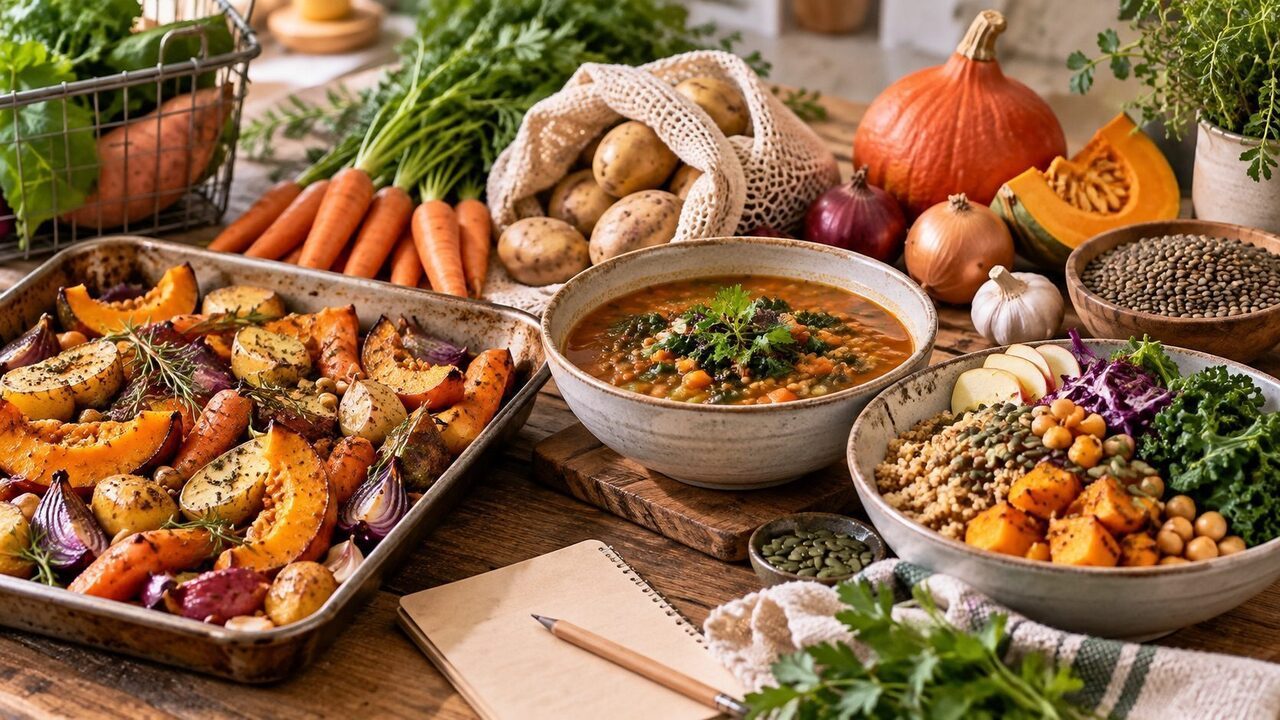
As a planning example you can combine potatoes, carrots, onions and a vegetable from the current offer. For the first evening you plan oven vegetables with a dip. A second part of the raw ingredients will later become soup. For the third day, lentils or beans from the supply add a vegetable pan. These are ideas for a shopping plan, not fully prepared recipes with fixed cooking times.
Choose the quantities according to household size and available stock. If you cook for one person, you don't need the same purchase as a family. Matching recipe instructions offer our categories potatoes, pulses and one-pot dishes.
A fixed euro-saving sum would be unbearable here
Without concrete shop prices, it is impossible to say how much this plan saves. A meaningful personal comparison is the cash bonus: Which purchases actually became meals, which were left and which additional ingredients were needed? This results in a better quantity planning for the next purchase.
The new inflation report provides the economic background. For your own kitchen, a flexible menu, a look at the seasonal calendar and suitable purchase quantities remain the immediately usable starting points.
Sources and status
- Destatis: Consumer price index and inflation rate, provisional August results of 31 August 2026; available on 6 September 2026.
- Bundeszentrum für Ernährung: The seasonal calendar, background to seasonal shopping planning; retrieved on 6 September 2026. (Source)