
Give Ragù time
A short sauce often remains watery. Slow cooking makes lasagna more stable and aromatic.
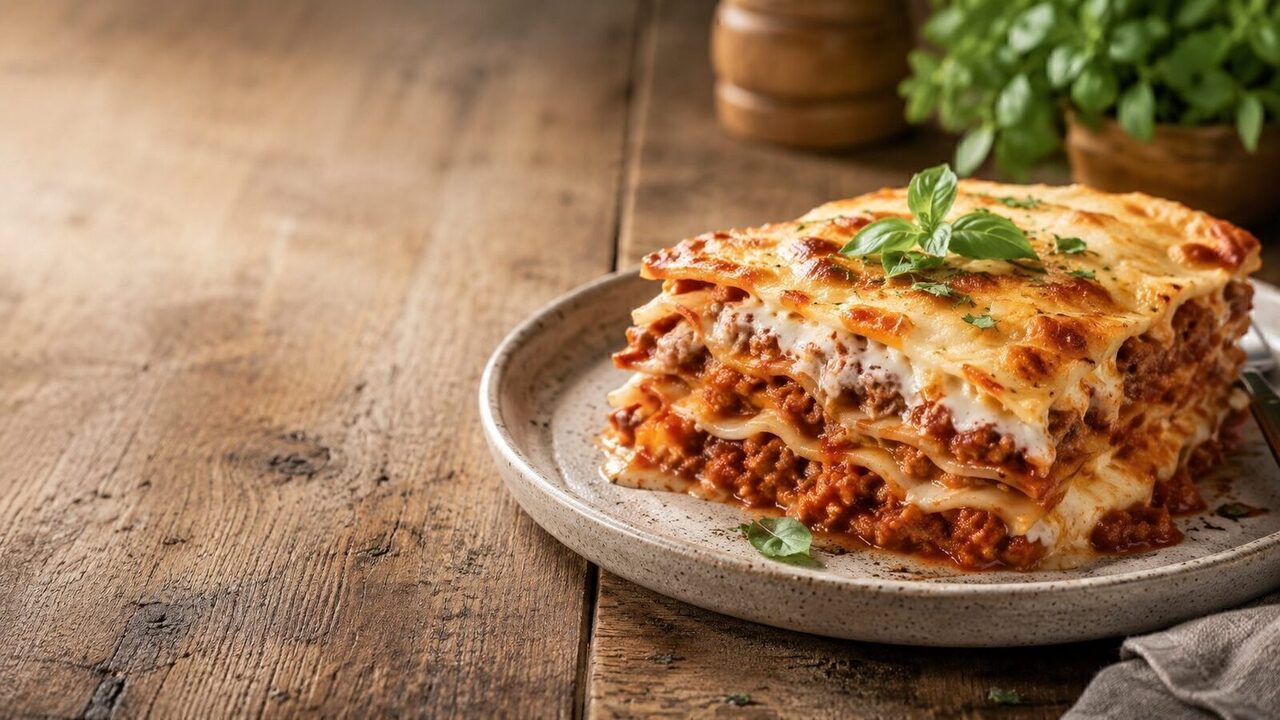
This lasagna recipe works with beef chops, soffritto, tomatoes, some milk, lasagne plates, béchamel and parmesan. The ragù is allowed to simmer so that the sauce does not remain watery and the pasta cooks well in the oven.
Why this recipe works
A good lasagna is not a fast noodle dish. The ragù is slowly reduced, the béchamel should be free of clumps and the shape may rest briefly after baking. Only then does sauce, pasta and cheese combine to form stable, juicy pieces.
Recipe
Lasagne Bolognese needs a slowly cooked ragù, a smooth béchamel and enough rest after baking. So the layers can be cut cleanly.
Sweat onion, carrots and celery in olive oil. Add minced meat and fry crumbly, then fry tomato paste briefly.
Add tomato and 150 ml milk. Simmer the Ragù for 45 to 60 minutes and season with salt and pepper.
Melt butter, stir in flour and sauté briefly. Stir in milk gradually, simmer for 5 minutes and season with salt, pepper and nutmeg.
Put some ragù into shape. Repeat lasagna plates, ragù, béchamel and parmesan until everything is spent. Finish with béchamel and parmesan.
Bake lasagna at 180 degrees top/bottom heat for 35 to 40 minutes. Leave to rest for 10 minutes before cutting.
Kitchen know-how
A short sauce often remains watery. Slow cooking makes lasagna more stable and aromatic.
Stir in milk in portions and stir vigorously so that no lumps are formed.
After 10 minutes of service life, the layers hold together better.
Variations
Values are estimates and may vary depending on the ingredients, brands, portion size and preparation method used.
Frequently asked questions
Keep cooking