
Lower the temperature before the cheese
Pecorino separates into solid lumps and fat at high heat. The connection is most reliable below the boiling point.
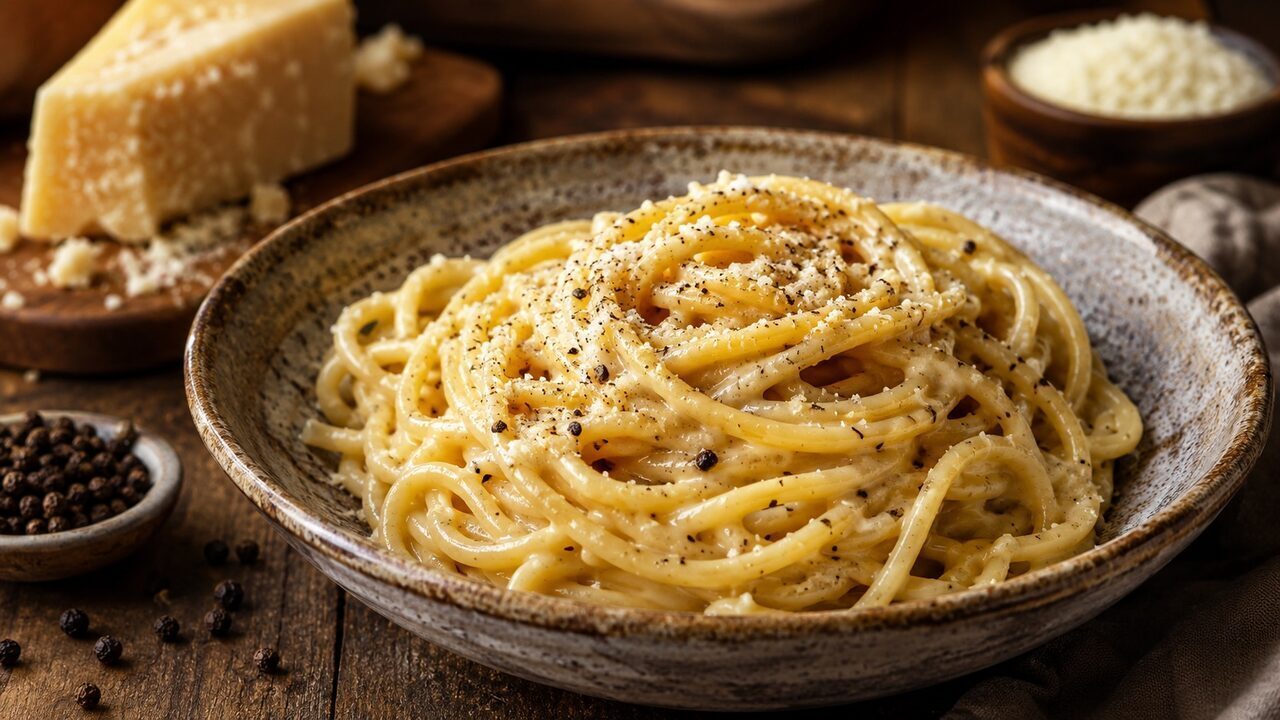
Roasted pepper aromatizes the pasta water, while finely grated Pecorino is stirred with lukewarm water to smooth cream. The compound takes place without direct heat.
Why this recipe works
The short list of ingredients makes Cacio e Pepe technically more demanding, not easier. Too hot water allows Pecorino to clump, too little starch results in a thin sauce. Therefore, the pasta is cooked in little water, almost cooked in the pepper sud and only added to the cheese cream outside the heat.
Recipe
Cacio e Pepe makes pasta, Pecorino Romano, black pepper and starchy cooking water a shiny creamy sauce without cream.
Roast pepper in a large dry pan at medium heat for 60 to 90 seconds until it smells. Pour in two bowls of hot pasta water.
Boil water with salt and add pasta. Stir frequently so that it does not stick together and the water becomes particularly strong.
Lift pasta into the pan about 3 minutes before the end of cooking time with a pliers. Boil almost over medium heat with the addition of cooking water.
Place Pecorino in a bowl. Allow to cool about 140 ml of pasta water to about 55 °C and work in portions with a whisk until a thick smooth cream is formed.
Cook pasta al dente and turn off the stove. Remove pan 60 seconds from the hot plate; the liquid on the ground must no longer boil gushing.
Add the pecorino cream to the pasta and swirl vigorously. Add a teaspoon of lukewarm cooking water until the sauce is smooth and shiny.
Distribute Cacio e Pepe directly on warm plates and sprinkle with some extra pepper. When standing, the sauce thickens quickly.
Kitchen know-how
Pecorino separates into solid lumps and fat at high heat. The connection is most reliable below the boiling point.
A smaller amount of water increases the starch content in the cooking water. This water stabilizes the emulsion of cheese and liquid.
Variations
Values are estimates per serving and may vary depending on the ingredients, brands, portion size and preparation method used.
Frequently asked questions
Keep cooking