
Use small fillets
Small fillets of similar size cook more evenly. Very thick pieces need longer; core temperature is the deciding factor.
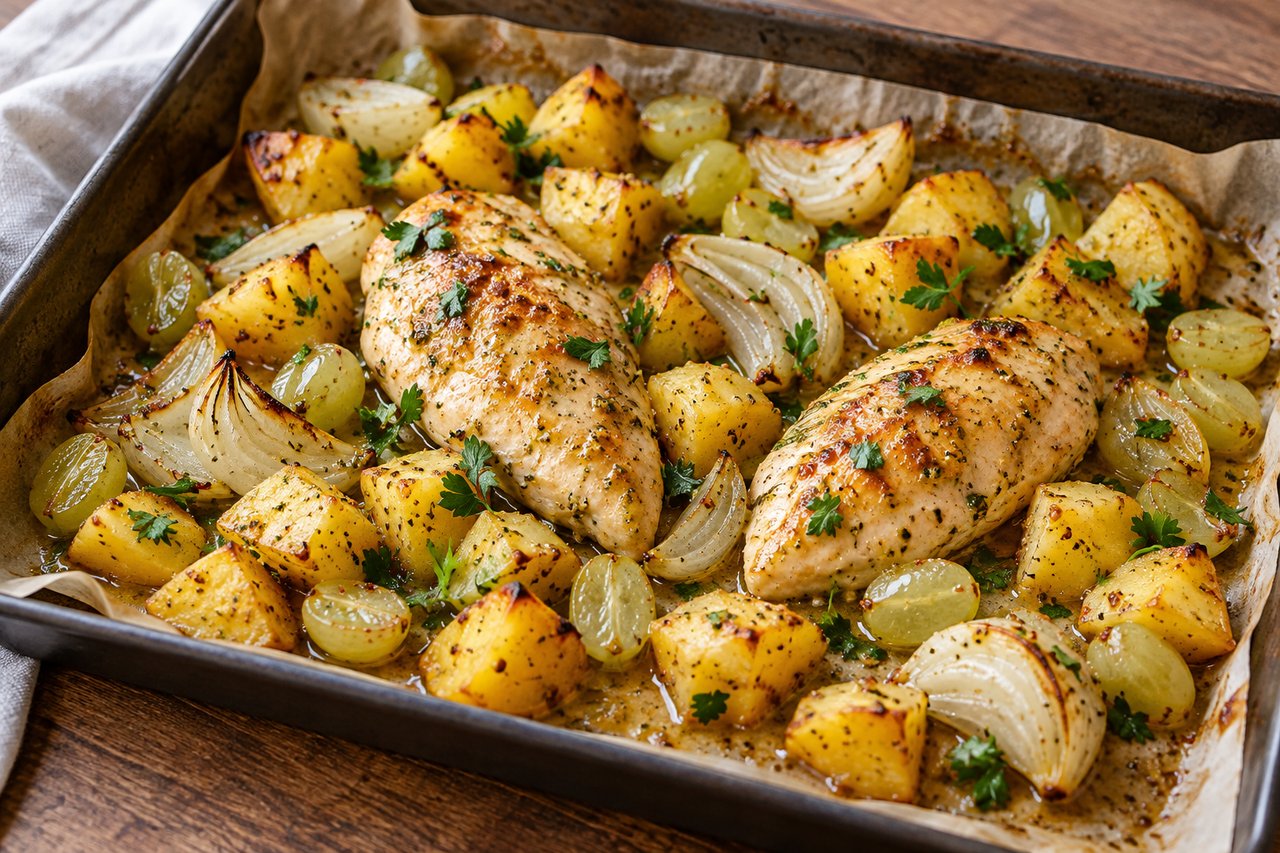
The potatoes get a head start in the oven. Chicken follows, then white grapes towards the end; parsley and roasting juices finish the meal.
Why this recipe works
Grapes also work in warm savoury dishes. Here they add fruitiness to chicken and mild mustard potatoes. Staggered cooking accounts for the different cooking times. Small fillets and a temperature check help ensure the meat is cooked thoroughly.
Recipe
Small chicken fillets, mustard potatoes and juicy grapes cook in stages on a tray for a fruity autumn dinner.
Preheat the oven to 200 °C with conventional top and bottom heat. Cut potatoes into pieces about 2 cm and onion into wedges. Wash and halve grapes. Chop parsley. Pat chicken dry with kitchen paper if needed; do not wash it.
On a parchment-lined tray, mix potatoes and onion with three quarters of the oil, mustard and half the salt. Spread out as flat as possible and bake on the middle shelf for 15 minutes.
Rub chicken with remaining oil, remaining salt and pepper. Turn potatoes, place fillets between them and bake for another 15 minutes.
Scatter grapes between potatoes and bake for about 10 more minutes. The thickest part of the chicken must reach at least 70 °C for 2 minutes; cook longer if needed. Potatoes should be tender when pierced. Remove individual components and keep hot if they finish earlier.
Divide chicken, potatoes, onion and grapes between plates. Spoon over roasting juices and sprinkle with parsley. Serve immediately.
Kitchen know-how
Small fillets of similar size cook more evenly. Very thick pieces need longer; core temperature is the deciding factor.
The halved fruit is roasted towards the end so it retains more structure.
Variations
Values are estimates per serving and may vary depending on the ingredients, brands, portion size and preparation method used.
Frequently asked questions
Keep cooking