
Remove the silverskin
The firm skin pulls together while cooking. Before weighing the fillet, trim away the silverskin as thoroughly as possible.
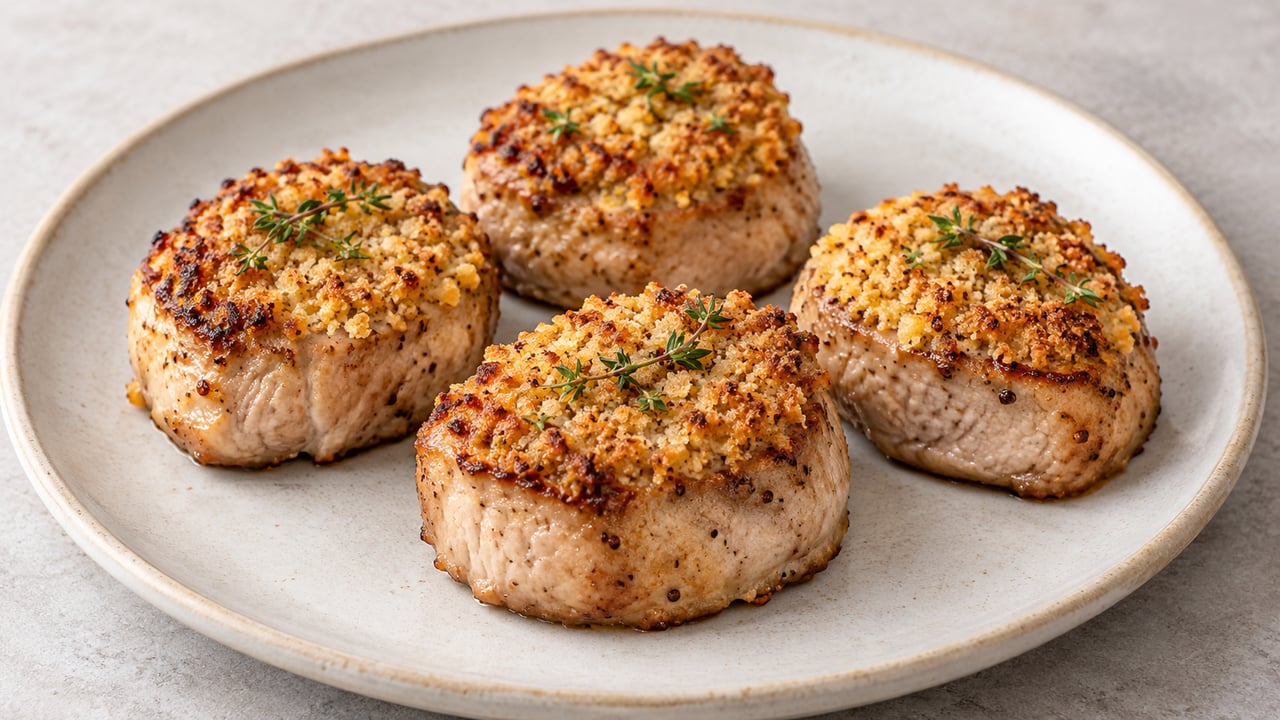
Pork fillet is cut into about two centimetres thick medallions and cooked with a thin crust of mustard, bread and thyme. The meat portions are calculated without side dish.
Why this recipe works
The individual pieces each get their own crust and can be distributed well in the basket. Mustard adheres better to meat that has been patted dry than to a damp surface. A thick breadcrumb topping is not necessary: it would brown outside before the meat center reaches the desired temperature. The recipe is enough for two meat portions.
Recipe
A thin mustard-bread layer comes on the same thick medallions. Fresh thyme seasons the crust without needing a sauce.
Cut the fillet into 2 cm thick pieces, pat dry and season with salt and pepper. Place thin tails separately, as they can cook earlier.
Mix breadcrumbs, olive oil and thyme. Thinly brush the top of each medallion with mustard and slightly press the crumbs on it.
If provided, preheat for 3 minutes to 180 °C. Place medallions in the basket with space between them and cook for about 12 minutes at 180 °C. The crust side remains above; do not turn.
In the thickest medallion, ensure at least 70 °C for 2 minutes and cook longer if necessary. Remove thinner finished pieces earlier. Spread on two plates; vegetables or potatoes are additional side dishes.
Kitchen know-how
The firm skin pulls together while cooking. Before weighing the fillet, trim away the silverskin as thoroughly as possible.
A thick mustard layer can soften the crumbs and slip off when lifting out. Only brush the tops.
Variations
Values are estimates per serving and may vary depending on the ingredients, brands, portion size and preparation method used.
Frequently asked questions
Keep cooking