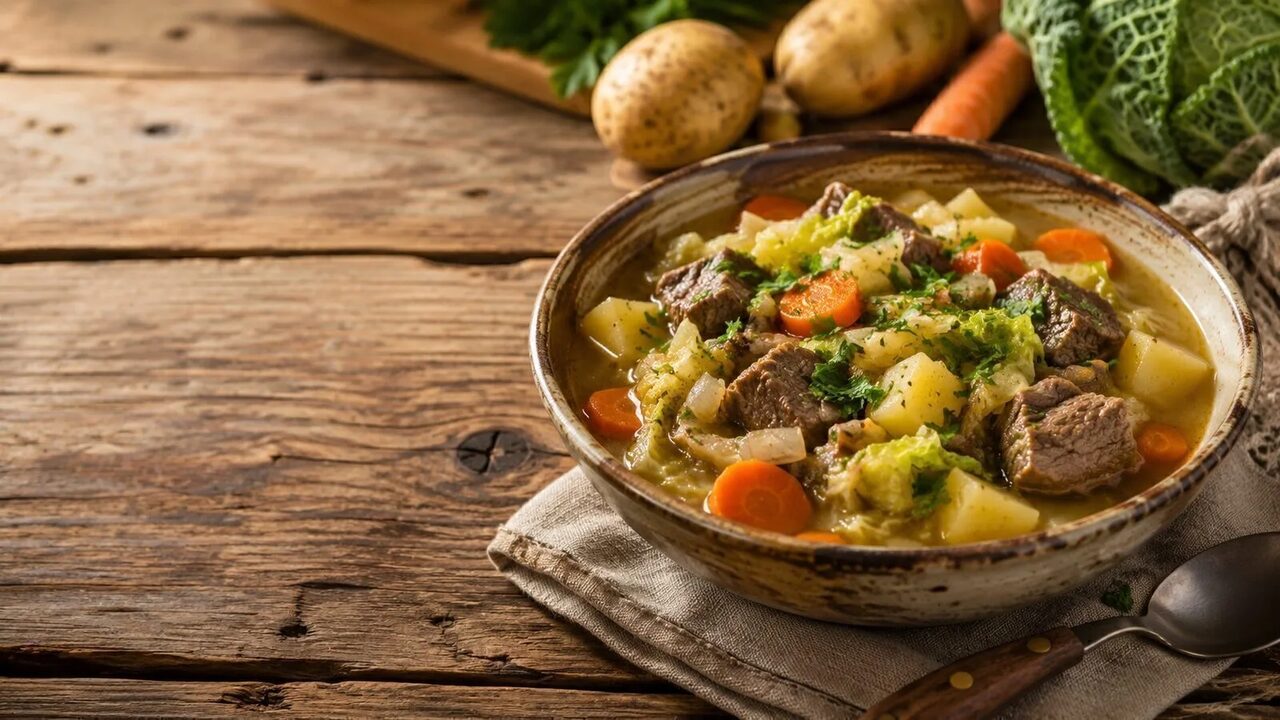
Pichelsteiner stew served homemade
German Recipe

Pichelsteiner stew

Place meat, potatoes and vegetables in a saucepan. Add stock and marjoram. Cover and cook gently until the meat and vegetables are tender. Stir carefully and season to taste.

No ratings yet
Share
Total time 2 hr
Calories 620 kcal
Servings 6 servings
Difficulty Medium
By the Published Updated Editorially approved

Why this recipe works

Pichelstein Stew Stew Step by Step

Add the stock and marjoram. Cover and cook gently until the meat and vegetables are tender. Stir carefully and season to taste.

Lunch One-Pot Recipes Meat German Recipes

Recipe

Pichelsteiner stew

Brown meat in portions. Place meat, potatoes and vegetables in a saucepan.

Ingredients

6 servings

Method

  1. 1

    Roast meat

    Fry meat in portions.

  2. 2

    Layers

    Place meat, potatoes and vegetables in a saucepan.

  3. 3

    Casting

    Add stock and marjoram.

  4. 4

    Cooking

    Cover and cook gently until the meat and vegetables are tender.

  5. 5

    Season to taste

    Stir carefully and season to taste.

Kitchen know-how

Tips for Pichelsteiner stew

Cut meat cubes evenly

Cut the beef and pork into pieces about three centimetres in size and sauté in portions. Uniform cubes will become tender together during the long cooking time.
Layer ingredients loosely in the pot

Fill the meat with potatoes and vegetables, the layering protects the tender savoy cabbage and distributes the leaking meat juice in the pot.

Do not cover completely with broth

Pichelsteiner should be a strong stew and not a thin soup. Covered ingredients also release liquid when cooking.

Variations

How to adapt this recipe

Replace pork with the same amount of beef shoulder. Cooking time can be a little longer; crucially, each piece of meat has become soft.

Replace one third of the meat with lamb shoulder and the savoy cabbage with white cabbage. Juniper and some cumin go with this stronger version.

Nutrition per serving

620kcal
38.0 gCarbohydrates
36.0 gProtein
34.0 gFat

Values are estimates and may vary depending on the ingredients, brands, portion size and preparation method used.

Frequently asked questions

FAQ about Pichelsteiner stew

The stew is particularly associated with the Bavarian Forest and the city of Regen. Typical are several types of meat, potatoes and vegetables from one pot.

Shoulder, shoulder or calf are suitable because connective tissue becomes soft during gentle braising. Very lean short frying pieces would tend to dry out during the long cooking time.

The layers cook in their own steam and retain their structure. Frequent stirring crushes potatoes and savoy cabbage; a single careful lifting at the end is sufficient.

Yes. After cooling quickly, cool overnight and slowly heat the next day. If the stew has thickened, add only a little stock.