Cauliflower Cheaper, Tomatoes Dearer: What the BLE Report Shows
The latest official wholesale report shows a sharp drop in German cauliflower quotations and higher tomato prices. Here is how households can use the figures for flexible September shopping.
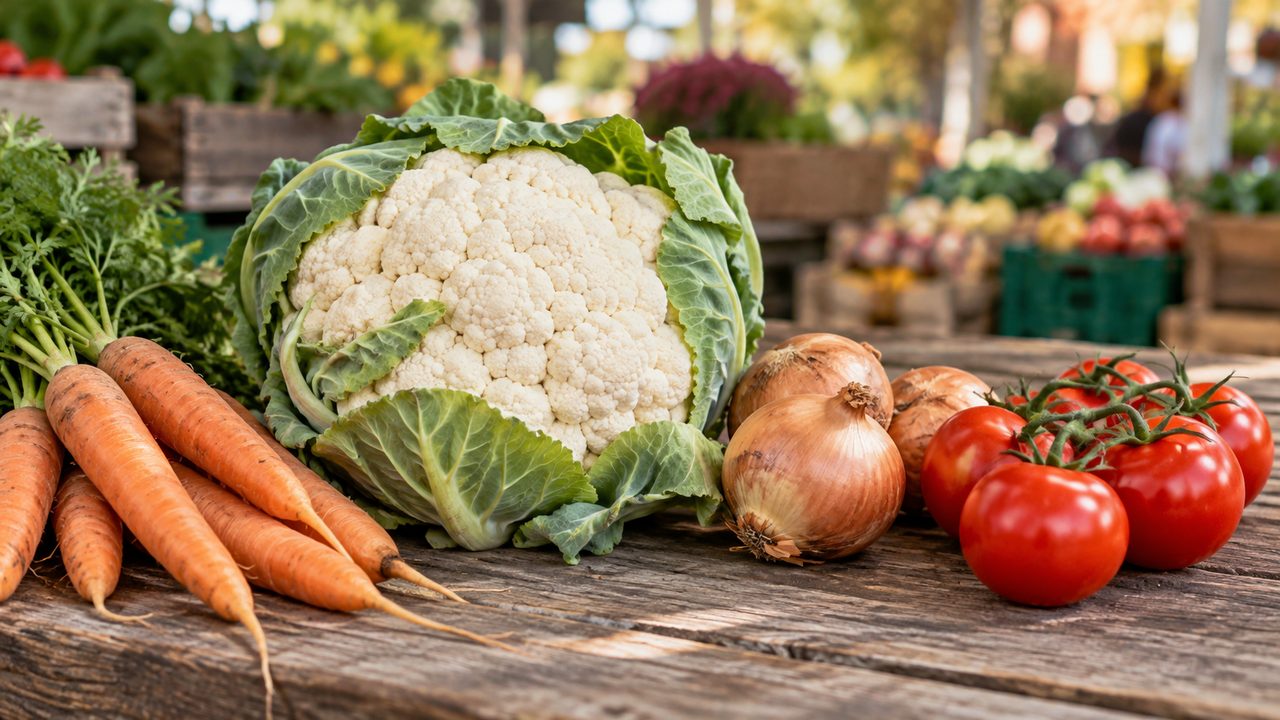
In short: The latest official wholesale report shows a sharp drop in German cauliflower quotations and higher tomato prices. Here is how households can use the figures for flexible September shopping.
What the report actually measures
The BLE monitors four representative wholesale markets in Frankfurt, Hamburg, Munich and Berlin. Its weekly report summarises weighted average prices and compares the current week with the previous week, the previous month and the same week of the previous year. The file for calendar week 36 was updated on 9 September 2026.
The trading level matters: these are wholesale quotations, not supermarket checkout prices. Depending on the product, figures are given in euros per 100 kilograms or euros per 100 items. Transport, grading, packaging, retail margins, regional availability and individual offers all affect the price in shops. A change in the BLE report therefore does not determine a specific retail price or guarantee savings.
Cauliflower fell sharply week on week
For German cauliflower sold in packs of 6, the weighted average fell from 211.94 euros per 100 items in calendar week 35 to 158.41 euros in calendar week 36. That is a calculated decrease of around 25 percent. For packs of 8, the figure dropped from 170.95 to 139.87 euros per 100 items, or roughly 18 percent.
The year-on-year comparison puts the headline into perspective: at 158.41 euros, the current quotation for packs of 6 is almost level with the 158.55 euros recorded in the corresponding week of 2025. The sharp weekly fall mainly shows how quickly the market can move in the short term. It does not prove that cauliflower has become generally or permanently cheaper.
Carrot and onion prices were relatively stable
Loose German carrots averaged 94.18 euros per 100 kilograms in the latest report. The figure was 97.60 euros in the previous week and 93.65 euros a year earlier. For German household onions, the weekly value fell from 69.92 to 63.76 euros per 100 kilograms; the previous year's figure was 60.30 euros.
These figures are less dramatic than the drop in cauliflower, but they are useful for everyday cooking. Carrots and onions work in soups, traybakes, sauces and pan dishes. If the unit price in the shop is right, a few versatile ingredients can form the basis of several meals.
Tomato quotations moved upwards
The BLE average for German vine tomatoes rose from 237.48 to 298.00 euros per 100 kilograms, around 25 percent above the previous week. Compared with 201.67 euros in the corresponding week of 2025, the current quotation was roughly 48 percent higher. German round tomatoes also increased, from 257.92 to 289.63 euros.
This does not mean that every tomato in every supermarket must cost more. Variety, origin, quality, pack size and special offers can alter the picture. The report does, however, give shoppers a reason to plan an alternative: if a dish simply needs moisture and plenty of vegetables, courgettes, carrots, cabbage or tinned tomatoes from the cupboard may also work, depending on the recipe.
How to turn market data into a practical shopping plan
- Choose a type of dish, not one fixed ingredient: Plan a soup, tray of roasted vegetables or vegetable stir-fry, for example. Decide at the shelf which suitable vegetable currently offers the better unit price.
- Compare units and pack sizes: A low pack price is not automatically good value. Compare the price per kilogram or per item for similar products and buy only the amount you are likely to use.
- Plan more than one use: Cauliflower can become roasted vegetables first and soup later. Carrots and onions suit both dishes. This reduces one-off purchases and helps use up leftovers.
- Let the shop price decide: Treat the BLE trend as a guide, not an instruction to buy. A local offer can move in a different direction from the wholesale market.
A flexible three-meal plan
Divide one cauliflower into florets and roast it with carrots for a vegetable dish. Some of the cooked vegetables can become soup with stock the following day. Onions, potatoes or pulses can then provide a third filling meal. You will find more ideas among our autumn recipes, potato recipes and one-pot dishes.
This is a planning method rather than a fixed formula for saving money. Whether it lowers costs depends on the prices in the shop, the size of the household and how well leftovers are used. Checking the fridge and cupboards before shopping is therefore just as important as comparing prices.
Conclusion: check cauliflower prices and stay flexible on tomatoes
The BLE report for calendar week 36 shows a clear short-term contrast: cauliflower was quoted substantially lower on the wholesale markets observed, while German vine tomatoes were considerably higher. Carrots and onions moved more moderately. Anyone aiming to cook seasonally and keep an eye on costs can use this direction as a guide, but should always check the actual unit price in the shop.
The greatest everyday benefit is not a supposed price forecast. It is a meal plan that allows for several suitable vegetables and makes full use of the quantities purchased.
Sources and status
- German Federal Office for Agriculture and Food (BLE): fruit and vegetable market monitoring, methodology and weekly reports; accessed on 10 September 2026.
- BLE/BMLEH statistics: fruit and vegetable price report for calendar week 36/2026, XLSX file updated on 9 September 2026.
- German Federal Centre for Nutrition: the seasonal calendar, background information on planning seasonal purchases.
Author: Kochzauber editorial team. Information and update status: 10 September 2026. All percentages were calculated from the unrounded BLE averages and then rounded. The cover image is an editorial illustration.