BPA in Cans: What the New BfR Review Means
Germany’s BfR has extensively updated its information on bisphenol A. We explain what the EU ban, current transition periods and labels such as “BPA-free” actually mean when shopping.
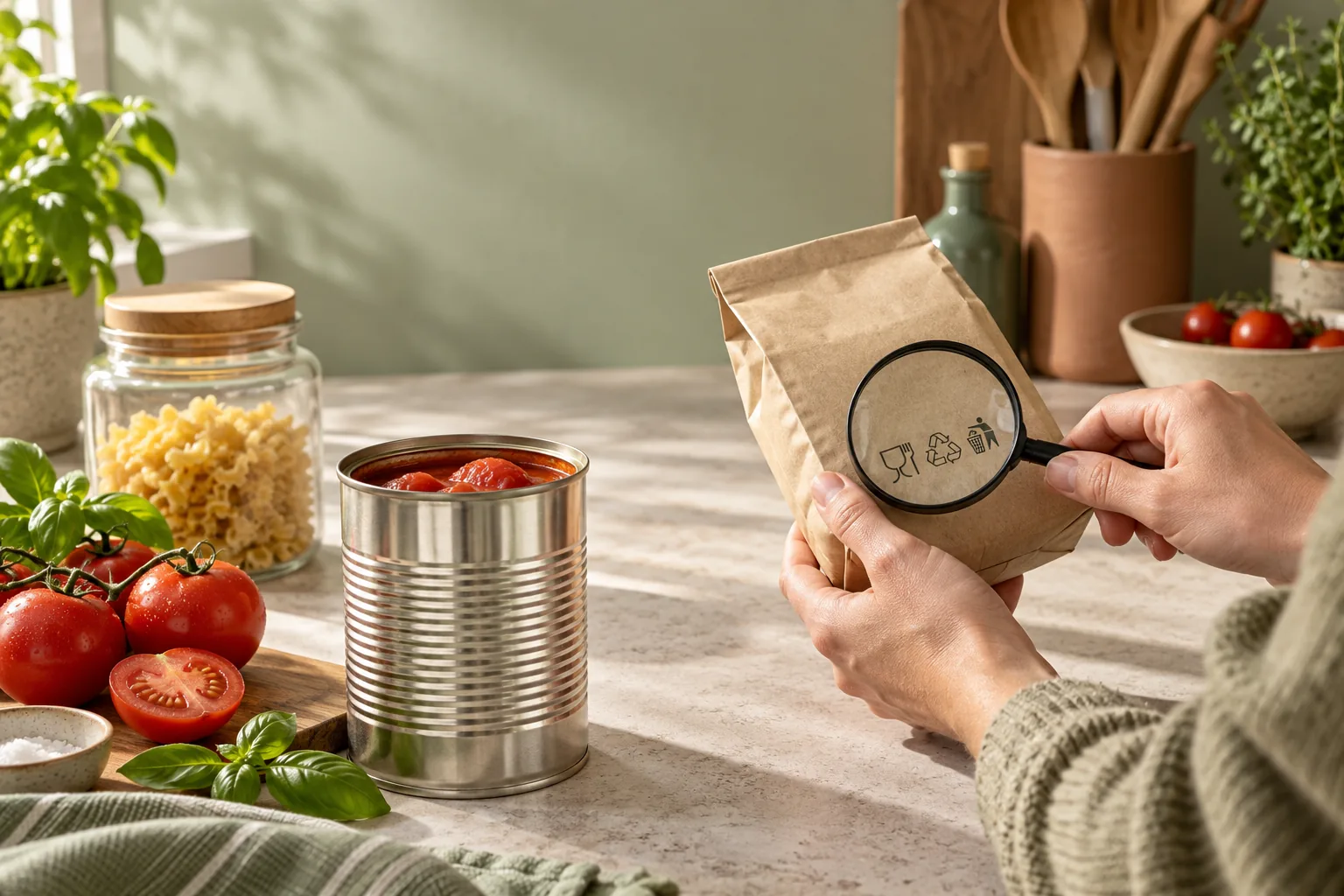
In short: Germany’s BfR has extensively updated its information on bisphenol A. We explain what the EU ban, current transition periods and labels such as “BPA-free” actually mean when shopping.
Why BPA is in food packaging at all
BPA is an industrial chemical used, among other things, for polycarbonate plastics and epoxy resins. Epoxy resins protect the inside of beverage and canned containers from corrosion. In the finished coatings, low BPA residues can remain and pass into food.
According to BfR, nutrition is considered the most important source of intake in all age groups. Older exposure data from the European Food Safety Authority indicate that epoxy resin-coated doses make a significant contribution. At the same time, the BPA load on the population has been decreasing for years, according to the BfR. Both belong to the classification: BPA is not a invented problem, but a single can is also not a cause for acute panic.
The EU ban applies – but not everything disappears immediately
Regulation (EU) 2024/3190 prohibits BPA from producing most of the materials that come into contact with food. In addition to plastics, it includes paints, coatings, adhesives, rubber, silicones and printing inks. There are exceptions and staggered transitions.
The BfR mentions a general transitional period of 18 months and 36 months for certain applications; in some cases a 12-month sales period is added. For individual paints and coatings, the transition period can last up to 20 January 2029. Meanwhile, the rules currently in force must be complied with. Therefore, the correct statement is not "Since 2024, every can has been BPA-free", but: Production is gradually changed.
Why EFSA and BfR specify different benchmarks
The tolerable daily intake, or TDI in short, describes a quantity that a human can take up daily per kilogram of body weight for life according to the respective assessment, without expecting a noticeable health risk. EFSA established a TDI of 0.2 nanograms per kilogram of body weight per day in 2023. This figure was 20,000 times lower than its preliminary value of 2015.
The BfR considers methodology and results of this EFSA evaluation to be inappropriate in several points. According to its own analysis of more than 600 studies, it derives 200 nanograms per kilogram of body weight per day. The difference is therefore not a rounding question, but an open scientific controversy about endpoints, data and transferability.
According to BfR, the first findings of a measurement project funded by the Federal Ministry of Agriculture, Food and Homeland show that for the majority of the population, no health risk can be expected in the BPA intake of food according to the BfR benchmark. There are still uncertainties for children and adolescents. This statement does not resolve the assessment dispute with EFSA.
What "BPA-free" really says
For plastic cans, drinking bottles or dishes, "BPA-free" means that no BPA should be contained. However, this does not automatically say that other bisphenols are missing. The BfR points out that, for example, bisphenol S and bisphenol F are less extensively studied. The further indication "bisphenol-free" excludes the entire group of substances.
The recycling code 7 is also not BPA-proof. Under this collective number, many other plastics are kept alongside polycarbonate. Conversely, there is no special labelling obligation for a can inner coating on BPA basis. A clear examination on the supermarket shelf is therefore often not possible.
Five pragmatic steps in the kitchen
- Changing packaging: Use fresh goods, frozen products, glass or dry foods depending on the dish. This reduces the dependence on a single type of contact material without devaluing durable stocks at a flat rate.
- When it comes to plastic, pay attention to the purpose: Use containers only as intended and note notes on heat, microwave and dishwasher. Glass or stainless steel are possible alternatives if risk of breakage or weight are appropriate.
- "BPA-free" and "bisphenol-free" are not the same. A recycling triangle with number 7 alone does not allow for a safe statement.
- Combining stocks usefully: dry lentils, rice or pasta and frozen vegetables complement canned foods. Our stock recipes, one-pot dishes and soup recipes offer ideas.
- No food waste: An existing, undamaged can need not be disposed of as a precautionary measure because of the updated FAQ. However, deformed, strongly arched or leaky cans do not belong on the plate for reasons of general food safety.
Fresh is an option, not the only rule
If you want to reduce the intake of BPA, you can choose fresh food more often. In September, this can be a plate with potatoes, carrots and cabbage or a vegetable pan. You can find suitable basics in our vegetable recipes, potato recipes and autumn recipes.
Canned foods have advantages at the same time: they are long-lasting, quick to use and can help to prepare a spontaneously balanced meal. A reasonable consequence of the BfR update is therefore a variety of packaging and ingredients – not a rigid prohibition list.
Conclusion: Distinguishing prohibition, transition and risk
The new BfR overview makes three levels visible. First, BPA has problematic properties, and the EU ends its use in most food contact materials. Second, transition periods explain why not every can has been changed. Third, how large a health risk actually is depends on the amount taken; the exact benchmark and current exposure differences in assessments or data are missing.
For purchasing, this means: using fresh, frozen, dry and glass-packed foods in a variety of ways, not overinterpreting labels and not confusing the conversion of the packaging industry with an acute warning against individual products.
Sources and status
- Bundesinstitut für Risikobewertung: Bisphenol A in everyday products: answers to frequently asked questions, extensively updated on 7 September 2026.
- European Union: Regulation (EU) 2024/3190 on bisphenol A and other bisphenols in food contact materials, primary source of legal status.
- European Food Safety Authority: Bisphenol A – scientific assessment and background, background source to EFSA benchmark.
Author: Kochzauber Redaktion. Information and updating status: 8 September 2026. The article serves the general classification and does not replace individual medical advice. The title image is an AI-generated symbol image.