
Keeping the rest
Buckwheat absorbs the water during the rest period. Thus, the dough becomes more supple and tears less when thinly distributed.
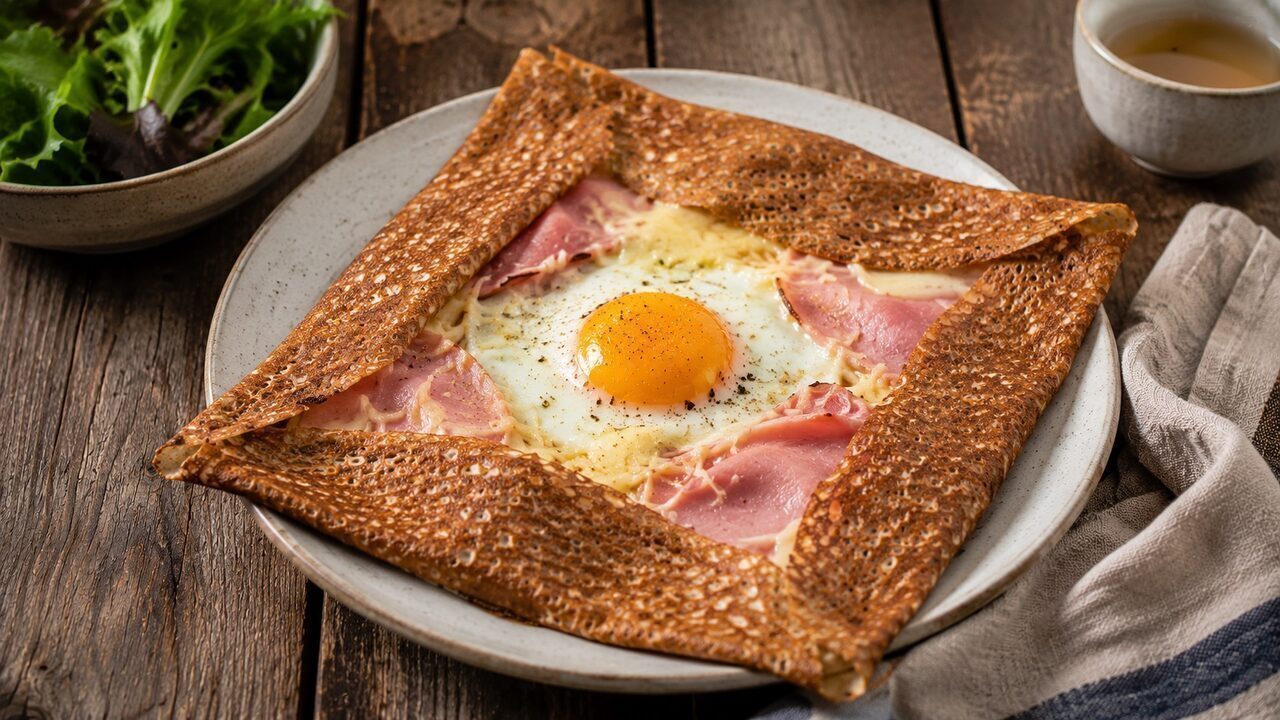
A dough of buckwheat flour, water and salt rests before baking. In the pan, each gallette is thinly removed, covered with egg, ham and cheese and folded on four sides to the middle.
Why this recipe works
Galettes are different from sweet crêpes with buckwheat flour and their hearty character. The dough needs a rest period, so that it can be spread evenly in the hot pan later. In the complète variant, ham, cheese and egg form a complete, uncomplicated meal.
Recipe
The Breton Galette complète fills a thin buckwheat flannel with ham, full-flavoured cheese and an egg with still slightly soft egg yolk.
Mix buckwheat flour and salt. Gradually add the cold water with a whisk until a thin, smooth dough is formed.
Cover the bowl and let the dough rest for 60 minutes at cool room temperature or longer in the refrigerator. Mix well again before baking.
Bring a large coated or well-burned pan to medium high heat and spread thinly with salted butter.
Place a quarter of the dough in the pan and immediately spread very thinly. Bake for about 90 seconds until the underside is browned and the edge dissolves, then turn.
Put some cheese in the middle, put a slice of ham on it and put an egg over it. Carefully spread the egg whites with a pan turner, leave the egg yolks completely. Garnish covered for 3 to 4 minutes.
As soon as the egg white has grown and the cheese has melted, fold four sides of the gallette to the middle, so that the egg yolk remains visible. Sprinkle peppers with chives as desired and serve immediately.
Kitchen know-how
Buckwheat absorbs the water during the rest period. Thus, the dough becomes more supple and tears less when thinly distributed.
Carefully distribute the egg yolks next to the egg yolks and cover the pan. Thus, it stops completely while the egg yolk remains soft if desired.
Variations
Values are estimates per serving and may vary depending on the ingredients, brands, portion size and preparation method used.
Frequently asked questions
Keep cooking