Plant-based cheese: soy–alginate matrix protects cultures in the lab
A new study combines soy protein and alginate into tunable microstructures. They may link texture with bacterial protection — but they are not a finished cheese.
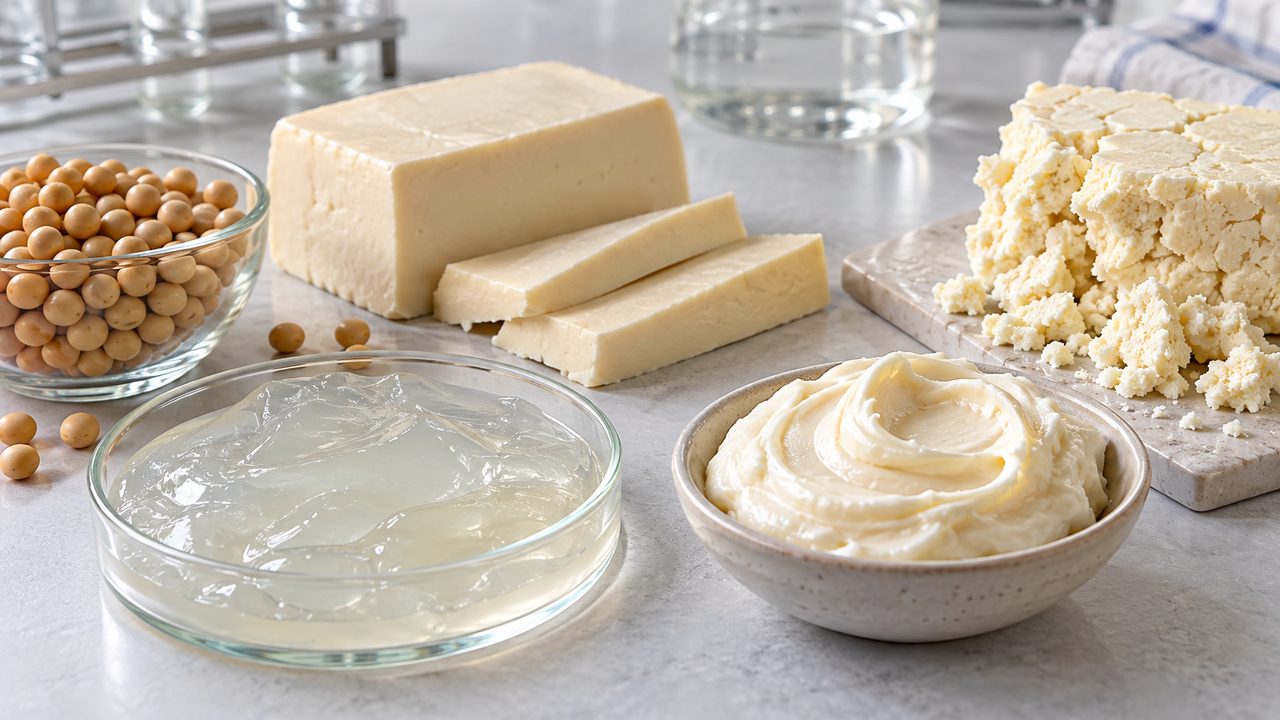
A laboratory study published on 12 October 2026 developed microstructures made with 3.0–6.0% soy protein isolate and 0.5–2.0% sodium alginate. Lactobacillus rhamnosus GG was enclosed in them. The matrix could be tuned between spreadable and crumbly textures and protected the bacteria in simulated digestion tests. It is a development component, not a market-ready food or evidence of a health benefit in people.
What the researchers built
The team created a water-in-oil-in-water double emulsion. Soy protein and alginate formed the shell, while calcium cross-linked the gel. Inside were multiple small regions containing oil, water and bacterial cultures. The aim was to control structure and protection with the same ingredient matrix.
More alginate mainly increased firmness and particle size. Soy protein acted at interfaces and buffered acidity. Together they produced samples ranging from spreadable to coarse and crumbly in appearance. That may be useful for different styles of plant-based cheese alternatives.
Measurable results — with laboratory limits
Median particle size ranged from 98.91 to 334.20 µm depending on the formulation. More alginate made the matrix firmer; combining it with soy protein was associated with high encapsulation and better survival in simulated gastric fluid. Viable cells also remained detectable in the tested samples after 2 months of cold storage.
These values came from instrumental texture testing, microscopy, simulated gastric and intestinal fluids, and laboratory storage. The researchers did not make a complete cheese or test taste in a consumer panel, digestion, tolerance or effects in a clinical trial.
Why this is not yet a clean-label product
Soy protein isolate and sodium alginate perform technical functions. Whether a future product would be perceived as simple or “clean label” depends on the full formulation, processing and labelling. The study did not assess a consumer definition of clean label or compare finished retail products.
The term “probiotic” also cannot be inferred automatically from survival in a laboratory model. Health-related statements have separate evidence requirements. The restrained finding is that the cultures were protected under the chosen model conditions.
What shoppers can check in cheese alternatives
- Ingredients: which protein source, fats, starches, thickeners or gelling agents are included?
- Nutrition table: how much protein, saturated fat and salt does the portion eaten provide?
- Use: does the product melt, spread or grate as the intended dish requires?
- Allergens: soy must be clearly emphasised in the EU; the label is decisive for anyone with an allergy.
Germany's Federal Centre for Nutrition stresses that the nutrient profile of the specific final alternative matters. A plant base does not automatically make a product high in protein, balanced or suitable for everyone.
For now, the everyday value is context
The work shows why the texture of plant-based alternatives depends on more than fat and flavour. Protein–polysaccharide networks can shape mouthfeel and stability at the same time. In the kitchen, however, existing products should still be chosen by label and function.
Suitable ideas appear among Kochzauber's vegetarian dinners and cheese recipes. When using an alternative, recheck melting behaviour and salt in the recipe instead of blindly replacing dairy cheese one for one.
Conclusion: an interesting matrix, not a product promise
The study of 12 October 2026 links soy protein, alginate, texture control and protection of bacterial cultures in one laboratory system. It provides a plausible development path for plant-based cheese alternatives. Scale-up, sensory acceptance, real shelf life, final formulation and any benefit after consumption remain open.
Sources
- Frontiers in Food Science and Technology: original study on soy protein–alginate microcapsules, 12 October 2026
- European Commission: labelling of the 14 main allergens, including soy
- German Federal Centre for Nutrition: nutrient profiles of plant-based alternatives
Author: Kochzauber editorial team. Updated: 14 October 2026. The results come from laboratory and simulation models; clinical effects were not studied.