Sesame traces on work surfaces: mini cartridge passes an initial laboratory test
A new mini cartridge extracts DNA for qPCR detection of sesame in seeds, bakery mixes and on stainless steel. What the prototype does – and why 2.5 micrograms per square centimetre is not a limit.
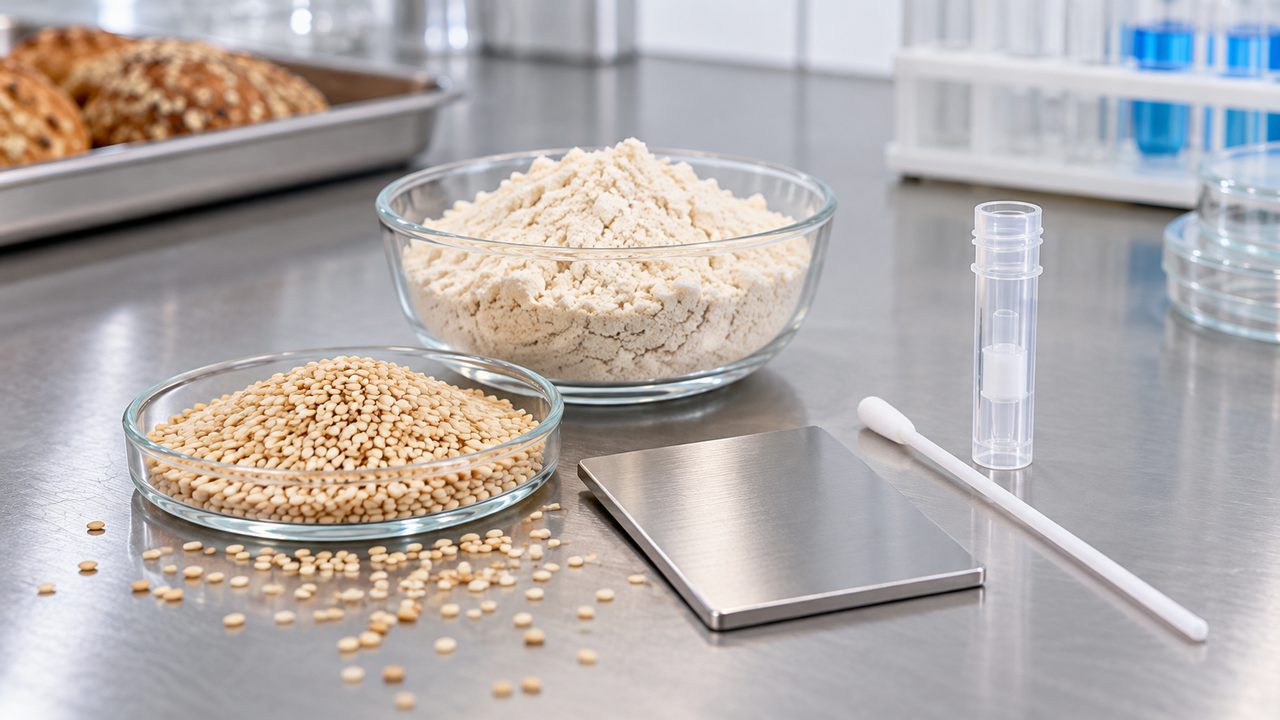
A study published on 10 October 2026 presents a miniaturised cartridge for DNA extraction in allergen testing. The system was trialled for qPCR detection of sesame in seeds, bakery mixes and on stainless-steel surfaces. It is a laboratory prototype with automation potential, not a home-kitchen test and not yet a replacement for validated controls in food businesses.
Why sample preparation is decisive
qPCR can selectively amplify DNA sequences and thereby indicate the origin of material. First, however, DNA must be released from an often complex food sample and separated from interfering components. Fat-rich seeds, composite bakery mixes and residues on surfaces can all make this step difficult.
The new cartridge uses porous glass as its solid phase. The study protocol avoids chaotropic salts, which many extraction methods employ for binding and purification. The aim was a small, simplified preparation unit whose eluate can subsequently be examined with a sesame-specific qPCR assay.
What the experiments showed
Compared with a commercial kit, the prototype produced lower DNA yields of approximately 1 to 4 nanograms per microlitre and purity ratios of 0.8 to 1.2. The extracted DNA could nevertheless be amplified by qPCR. In the bakery mixes studied, the method distinguished sesame-positive samples from negative ones.
For swabs from stainless-steel coupons, the team confirmed sesame at an applied level of 2.5 micrograms per square centimetre. This number is an experimental level, not a legal threshold and, according to the study, not a generally validated detection limit for arbitrary factories, foods or surfaces. Keeping that distinction clear prevents a false assurance of safety.
What the prototype does not yet demonstrate
Four limitations follow from the work:
- The tests cover selected sesame samples and stainless steel, not every allergen, material or cleaning chemical.
- DNA detection indicates material from a species; it does not automatically measure intact allergenic protein or an individual's reaction risk.
- A positive or negative laboratory result alone assesses neither the entire production process nor the effectiveness of every cleaning procedure.
- The peer-reviewed early-access version may still receive editorial changes before the final version of record appears.
Routine use would require validation of robustness, repeatability, controls, matrix effects and defined decision rules for the particular facility. The study therefore describes a practical alternative with potential, not an already universally cleared rapid-test device.
Ingredient declaration and trace warnings are different
In the EU, sesame is one of 14 substances and products that must be clearly declared when used as an ingredient. A voluntary 'may contain' statement instead concerns possible unintended presence. The European Commission stresses that such statements should be risk-based and should not replace good manufacturing practice.
Germany's BfR notes that consumers cannot infer actual presence or quantity safely from either the presence or absence of a precautionary statement. People with a diagnosed allergy should therefore follow their individual agreed plan, read ingredient lists every time and ask the manufacturer or a qualified professional when information is unclear.
Practical value for kitchens and food businesses
In food businesses, a smaller extraction unit may eventually help prepare surface and product samples more efficiently for molecular checks. At home, the value is indirect: separate clean utensils, thorough cleaning and clear ingredient communication matter more than an unavailable laboratory device. Clear recipes from breakfast and one-pot recipes can simplify planning, but every specific ingredient must still be checked when allergies are involved.
Conclusion: promising sample preparation, no zero-risk guarantee
In initial experiments, the mini cartridge supplied amplifiable sesame DNA from different sample types. The combination of a small format and a protocol without chaotropic salts is particularly notable. Real-world validation is the next step. A laboratory result can support hygiene management and labelling, but it replaces neither.
Sources
- npj Science of Food: miniaturised solid-phase cartridge for DNA-based allergen testing, 10 October 2026
- European Commission: allergen labelling and voluntary precautionary statements in the EU
- BfR: questions and answers on allergies and unintended allergen presence
Author: Kochzauber editorial team. Updated: 11 October 2026. The prototype is not a medical test; the experimental level of 2.5 micrograms per square centimetre is not a legal threshold.