Rocket and Salmonella Napoli: what Sweden’s suspected link proves
Swedish investigators link 16 illnesses to Italian rocket. A retained package enabled traceback, but the suspected batch was no longer available for testing.
A report published on 7 October 2026 describes 16 Swedish cases of illness caused by Salmonella Napoli. Interviews and a retained rocket package traced the suspected produce to Italy, but there is no laboratory result from the implicated product.
What is known about the patients
According to information attributed to Sweden’s public health agency, the patients were 8 men and 8 women. Their ages ranged from under 1 to 84, with a median age of 57. These details describe the known cluster; they do not quantify an individual shopper’s risk.
Illness onset was mainly between 17 August and 6 September. Later reports were classified as possible secondary cases or involved people without gastrointestinal symptoms. The investigation therefore concerns a past period, not a new general warning about every packet of rocket.
Why the rocket lead is plausible
Of 12 patients interviewed or covered by questionnaires, 11 had bought rocket from the same supermarket chain. The 1 other person had bought a salad mix containing rocket there. Purchases occurred within a relatively short period, supporting the common supply chain as an investigative lead.
An empty package that one patient had retained for plastics recycling proved particularly useful. Its details enabled the Swedish Food Agency to trace the produce back to Italy. This demonstrates the practical value of lot, origin and package information during outbreak investigations.
Suspicion is not laboratory confirmation
No produce from the suspected batch remained. It could not be tested for Salmonella Napoli or compared genetically with isolates from the patients. The connection rests on interview evidence and traceback, not a positive product sample. That limitation is essential when interpreting the story.
The serotype is uncommon in Sweden; the report refers to 8 notified cases in 2025. Rarity alone does not prove a particular source. Nor does Italian origin mean that rocket from an entire region or every pack currently on sale is affected.
Sensible steps for consumers
- For a specific recall, check the brand, lot, date mark and sales area in full.
- Keep the package until the food has been used, or photograph its identification details in case the product later needs to be traced.
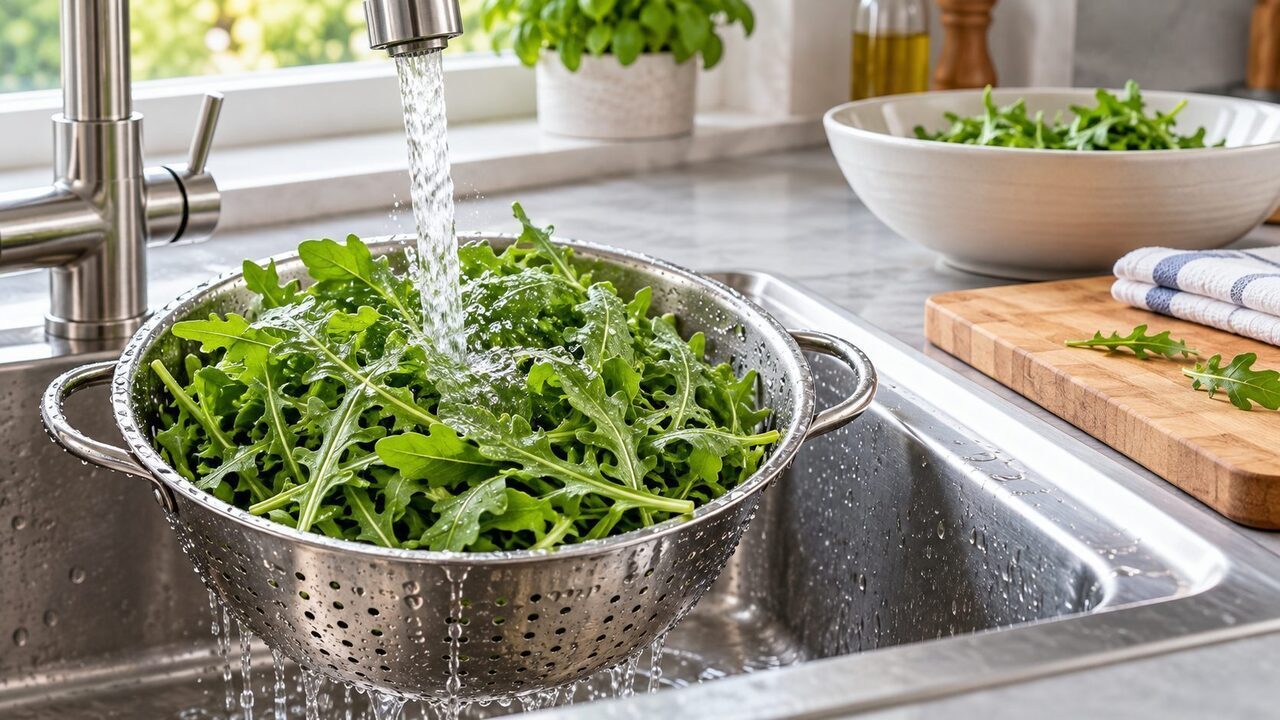
- Wash leafy salads and herbs thoroughly with drinking water and drain them well; washing can reduce contamination but cannot guarantee sterility.
- Keep raw salad ingredients separate from unwashed foods, and clean hands, knives, colanders and worktops between tasks.
Germany’s Federal Institute for Risk Assessment advises particularly vulnerable people to be cautious with pre-cut packaged salads and to prepare fresh, thoroughly washed ingredients shortly before eating. Individual medical advice takes priority.
Conclusion: respond precisely, not indiscriminately
The Swedish cases provide a strong epidemiological lead but no product confirmation. Without specific recall details, the report alone is no reason to discard all rocket. Traceable package information and clean raw-food handling are useful. Find ideas for prompt use among our vegetable recipes and vegetarian dinners.
Sources
- Food Safety News: report on the Swedish Salmonella Napoli outbreak
- Public Health Agency of Sweden: salmonellosis statistics
- German Federal Institute for Risk Assessment: Salmonella prevention FAQ
Author: Kochzauber editorial team. Updated: 8 October 2026. This article does not replace an official recall notice or medical advice.