PFAS in Five Protein Powders: What the Small Study Shows
A study of five plant-based protein supplements reported several groups of contaminants. The findings deserve attention, but the small sample cannot represent every protein powder on the market.
In short: A study of five plant-based protein supplements reported several groups of contaminants. The findings deserve attention, but the small sample cannot represent every protein powder on the market.
What has been studied?
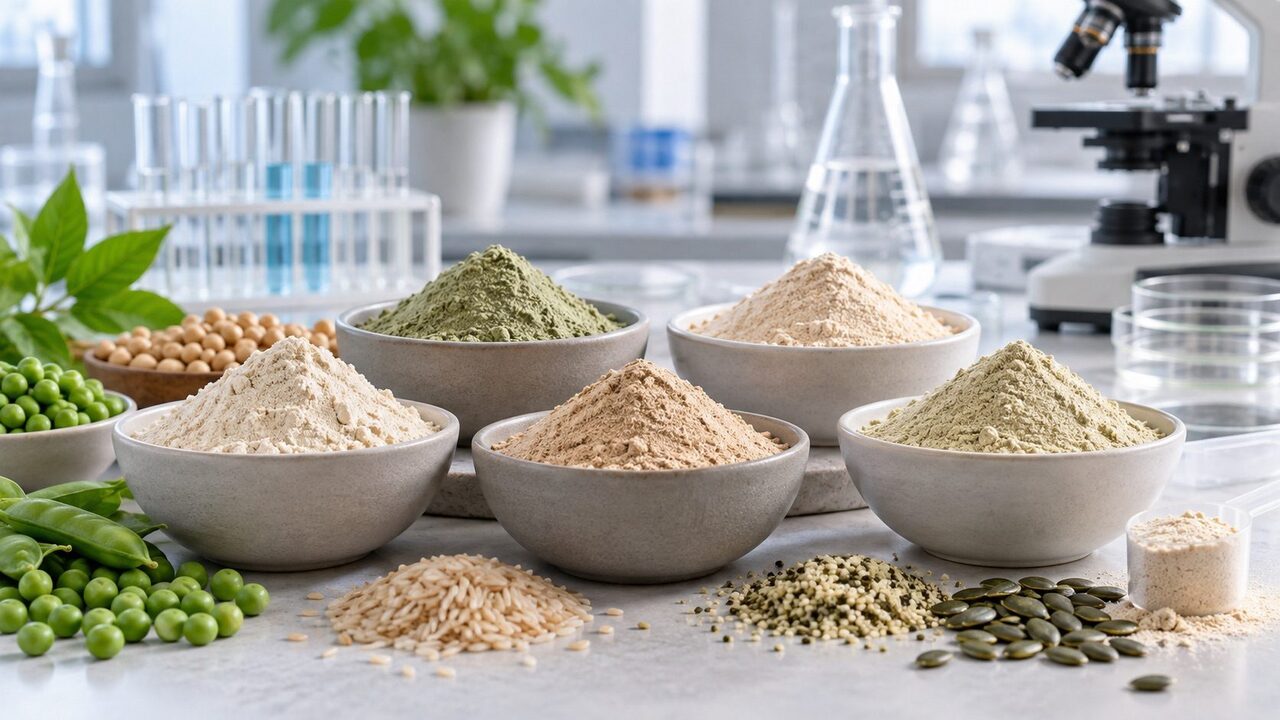
The original work of Sawicki and co-authors looks at protein preparations based on soy, rice, peas, hemp and pumpkin seeds. Several groups of substances were analysed: PFAS, certain mycotoxins, pesticides, polycyclic aromatic hydrocarbons and the substance 5-HMF that was produced during processing. PFAS were detected in all the samples examined and contributed significantly to the modeled risk assessment. (Source)
These groups of substances are not interchangeable with each other. A finding of a compound does not automatically explain the cause of all other findings. Also the protein preparations examined are not the same as unprocessed beans or a portion of lentil stew. Such a transfer would not be covered by the study.
Five products are not market statistics
As the detailed technical report explains, the products came from the retail trade in Olsztyn in Poland. The exposure estimate worked with the assumption that a 70 kilogram adult consumes 30 grams of protein daily. This is a calculation basis, no observed disease rate among buyers.
The small, locally limited sample and the assumptions for inclusion limit the significance. According to the technical report, the availability of the substances in the digestive tract was also not taken into account. The authors demand further investigations with more products. Neither all manufacturers can be evaluated from this data set nor individual types of raw materials can be recommended as the safest choice in general.
A proof and a personal diagnosis are different
The Federal Institute for Risk Assessment describes PFAS as a long-lived substance that can reach through the environment in plant and animal foods. For four specific PFAS there is a health-based group benchmark for the longer-term intake. This does not refer to any sum of all PFAS. Which substances have been measured and which intake is used is therefore essential for the classification.
Our conclusion: The findings should not be reduced. Nor should they predict a personal illness. Whoever uses a protein preparation for medical reasons should discuss changes with the treating specialist. A general report does not replace an individual consultation or a specific official warning about a particular batch.
Which questions help with product comparison
- How concrete is a test promise? Question about investigated substances, date, product or batch and comprehensible results.
- What does the detection cover? An examination of a single pollutant group does not automatically prove the absence of all others.
- What is compared? Do not confuse a list of ingredients or a high protein content with a pollutant test report.
If you want to get to know vegetable dishes independently of protein powders, you will find suggestions in our legume recipes and vegetarian dinners. These recipes are not alternatives tested as non-pollutant. The most important result of the examination remains a quality question: How can raw materials and finished preparations be controlled more systematically and with larger samples? (Source)
Sources and status
- Sawicki et al.: Chemical contaminants in plant-based food supplements: Assessment of PFAS, mycotoxins, pesticides, PAHs and 5-HMF, NFS Journal 43 (August 2026), 100277, DOI 10.1016/j.nfs.2026.100277; abstract and bibliographical information reviewed.
- Food Safety Magazine: Polish Study Finds PFAS in All Tested Commercially Available Plant-Based Protein Supplements, September 4, 2026; details of the sample and limits of the assessment.
- BfR: PFAS in food and the environment, background to risk assessment.
Information stand: 6 September 2026. No own product test; general information, no medical diagnosis.