Fermentation protein in pet food: what the new cat and dog test shows
In a short feeding test, cats and dogs preferred kibble containing microbial protein. The study shows acceptance, not long-term health or relevance to human food.
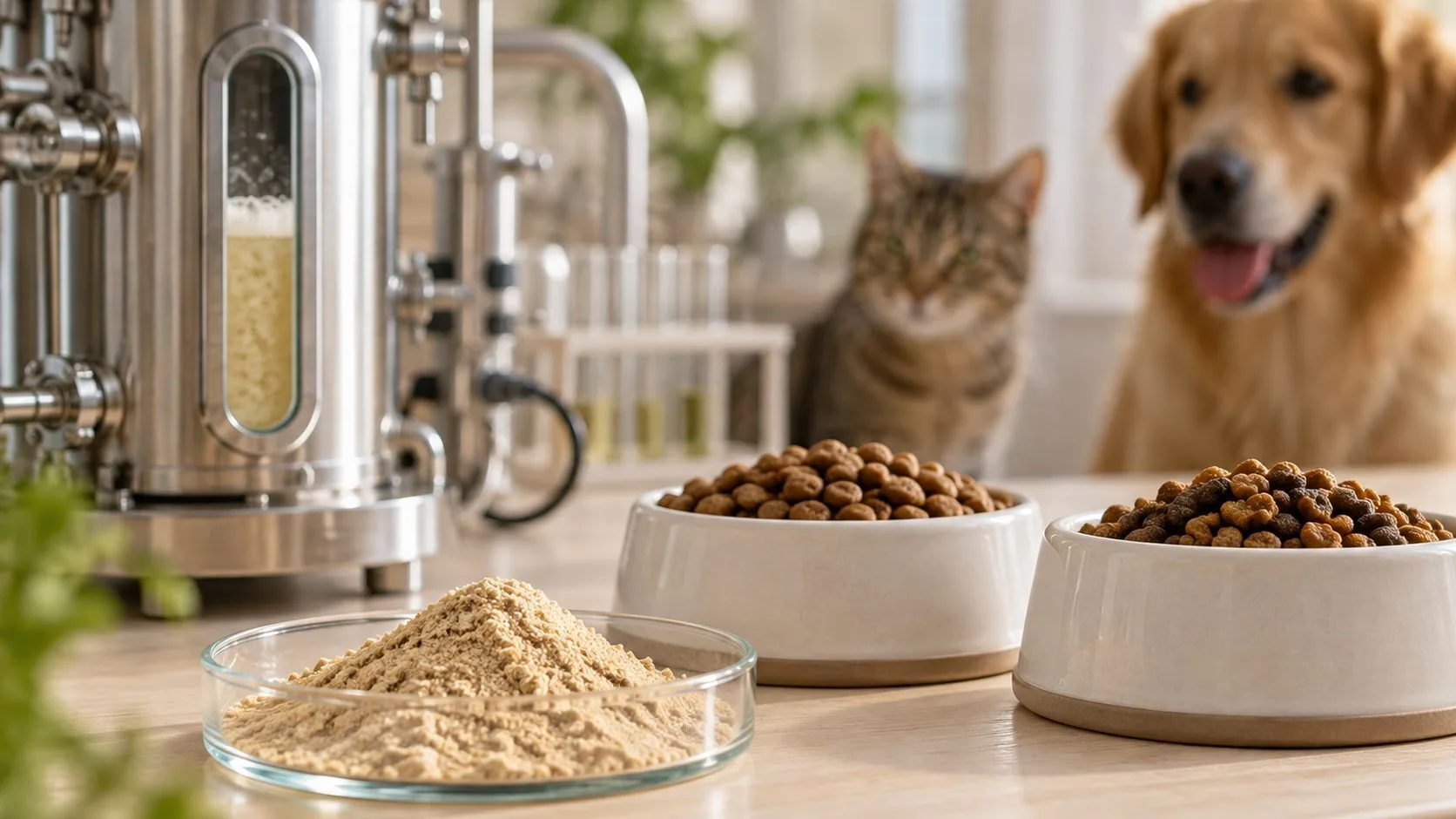
In short: a study published in PLOS One on 23 September 2026 tested dry food containing fermentation-derived microbial protein in 30 dogs and 30 cats. Across four meals on two days, both species ate a higher share of the experimental food and chose it first more often. This is an interesting signal for alternative protein sources in pet food, but it does not demonstrate long-term tolerance, better health or suitability as food for humans.
How the trial was designed
Each animal received two bowls at the same time. One contained conventional dry food with animal proteins; the other held a closely matched formulation in which microbial protein replaced some animal ingredients. The new component made up 10 percent of the experimental diet, replacing all fish meal and part of the poultry meal. The animals were fed at home rather than in laboratory housing.
The study was deliberately short: four meals over two days. Measures included first approach, first food chosen and quantity consumed. Such a palatability test asks which food is spontaneously preferred. It is not designed to assess growth, blood measurements, digestion over months or rare adverse effects.
Which results were reported
For dogs, about 72 percent of the amount consumed came from the microbial-protein food, compared with 50 percent for the control food. For cats, the corresponding figures were 51 and 34 percent. Both species also approached the experimental diet first more often. The results support the conclusion that the ingredient did not harm short-term palatability and was actually preferred in this test.
The percentages must not be read as nutrition or health scores. They describe intake and choice within this specific experiment. Different formulations, animal groups, adaptation effects or longer periods may produce different results.
What microbial protein means here
Microbial protein is obtained from the biomass of microorganisms grown in controlled fermentation systems. Depending on the process, bacteria, yeasts or fungi may be used. That distinguishes this source from both animal protein and pea, soy or potato protein. “Fermented” describes the manufacturing route; it is not automatically a quality or health claim.
The technology interests manufacturers because it could add another source alongside fish meal and poultry meal. Whether it saves resources or emissions has to be assessed with complete production data, energy sources and suitable comparison systems. The current work was a palatability study, not a life-cycle assessment.
Four limitations that headlines must retain
- Small group: the study included 30 dogs and 30 cats, not the full diversity of ages, breeds and health conditions.
- Short period: four meals on two days show preference, not long-term nutrition.
- Competing interest: both authors work for the company that makes the protein ingredient and funded the study.
- No conclusion about humans: a pet-food trial is not a safety or efficacy test for human foods or supplements.
Why transparent funding matters
The authors disclose that they are employed by the manufacturer MicroHarvest and that the company funded the work. According to the paper, the feeding trial and statistical analysis were carried out by an independent research organisation, while an external laboratory analysed the experimental diets. This separation improves traceability but does not remove the competing interest.
What pet owners can take from it today
The study is not a reason to replace an established food immediately. Complete pet foods must provide all required nutrients, suit the species and life stage, be individually tolerated and be fed in an appropriate quantity. New foods should be introduced gradually; veterinary advice is appropriate for illness or special diets.
Separate rules and nutrition questions apply to people. Anyone looking for plant proteins for their own kitchen can continue with our pulse recipes and vegetable recipes. These internal links are cooking ideas, not an extrapolation from the pet-food trial.
Conclusion: good short-term acceptance, open long-term questions
The microbial protein passed a taste test with cats and dogs in a small, controlled real-life setting. That clears an important early hurdle for a new pet-food ingredient. Long-term tolerance, nutritional effects, results from larger independent studies and the environmental performance of production remain open. The distinction between acceptance and full evaluation is exactly what makes this news relevant.
Sources and update
- Motta de Matos and Cruz: Microbial Protein as a novel ingredient in pet food: A food preference study in dogs and cats, PLOS One, published 23 September 2026.
- PLOS via EurekAlert: Kibble with microbial proteins appeals to cats and dogs in new study, research release dated 23 September 2026.
- European Pet Food Industry Federation: Nutritional Guidelines, reference for complete and complementary pet food.
- European Food Safety Authority: Animal feed, background on feed safety assessment in the EU.
Author: Kochzauber editorial team. Information updated: 25 September 2026. This article explains a short pet-food trial and is not advice for human nutrition. The header image is an editorial symbolic image.