Iodised Salt in Plant-Based Cooking: Season Wisely
Using iodised salt and limiting overall salt intake are compatible goals. Learn how to read ingredient labels and add variety with herbs, spices and other flavourings.
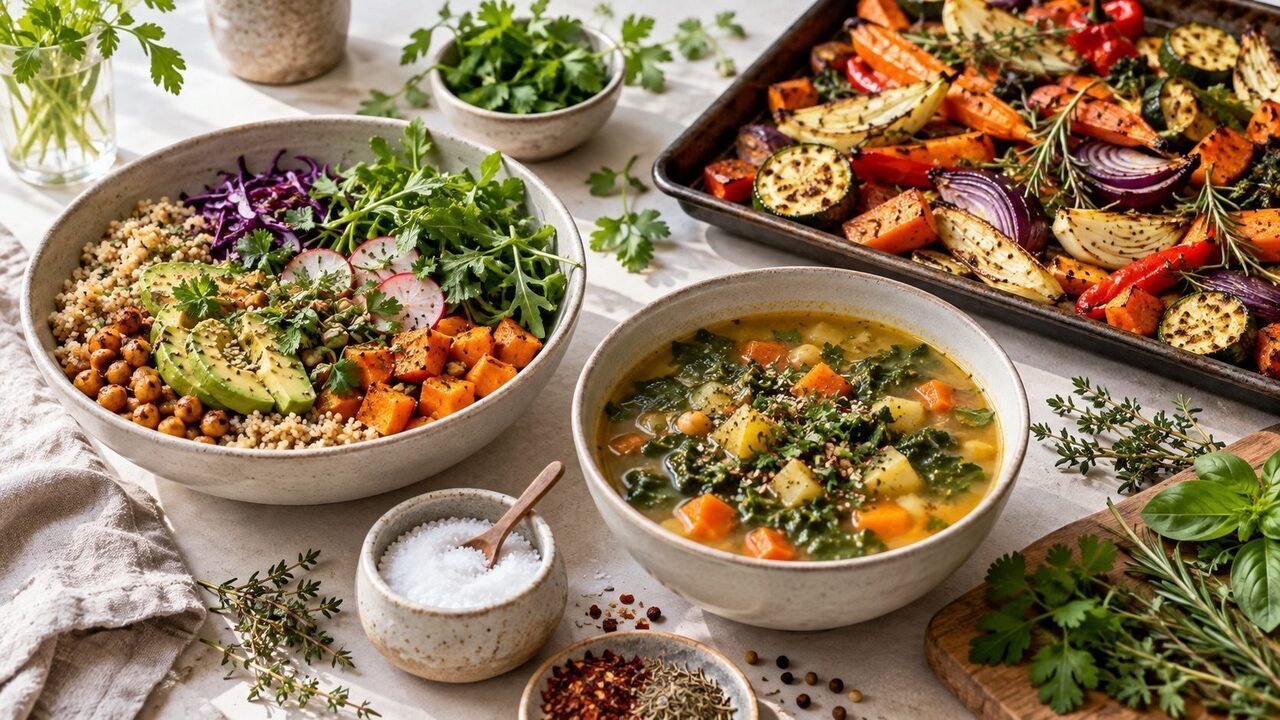
In short: Using iodised salt and limiting overall salt intake are compatible goals. Learn how to read ingredient labels and add variety with herbs, spices and other flavourings.
Why the little word "iodine" counts
According to BZfE, sea salt, primordial salt or other non-iodine special salts are not an equivalent substitute for iodine salt as a source of iodine. The view of the name is therefore more helpful than a decision according to colour, grain or promise of origin. Also in the case of packaged foods, the list of ingredients can show whether iodised salt has been used.
This information can be requested for bread offered by the baker or other loose foods. However, choosing a product with iodine salt does not automatically make it salt-poor. Ingredients list and nutritional information answer two different questions: What has been used, and how much salt does the finished food contain?
Eating vegetable also means: Co-planing nutrient sources
The German Society for Nutrition highlights iodine as a particularly important nutrient in vegan nutrition. Common sources of fish and dairy products fall away. Iodine salt, so that produced foods and products enriched with iodine can contribute to the supply. A plant drink does not automatically contain iodine just because it is intended as a milk substitute. (Source)
The consequence is not a general recommendation for food complements. If the iodine supply via food is not sufficient, the DGE recommends a medically coordinated complement. In case of thyroid diseases or uncertainty about personal care, the question also belongs to a professional consultation. This article offers general kitchen orientation, no individual dosage recommendation.
Build up taste before the salt shaker is on
The BZfE recommends that you try herbs or spices first and use them in a targeted way. Our proposal to try it out: divide a cooked vegetable portion onto two small bowls, still with a restrained seasoning. Complete parsley and some lemon juice, once cumin and paprika. Then taste sparingly with iodine salt.
For a soup, you can only add herbs in a small portion of the sample. In a dip, the same comparison with chives or dill is possible. These are taste exercises, not calculated salt-poor recipes. How much salt a dish contains in total also depends on broth, cheese, sauces and other ingredients used.
A short routine for the next purchase
- Check supply: Is the salt used actually iodined?
- Read two details: Search for iodine salt in the list of ingredients and compare the salinity of similar products in the nutrition table.
- Plan a spice idea: Buy a herb or spice for a dish that is already on the menu.
You can find inspiration with our pods and vegetarian dinners. The recipe selection does not replace any testing of the respective ingredients. The decisive factor is the small, repeatable habit: consciously select, taste and do not confuse iodine salt with a call for higher salt consumption. (Source)
Sources and status
- BZfE: Salt, stated update date September 4, 2026. The date indicates a page update, not a new legal requirement.
- DGE: Questions and answers on vegan nutrition, in particular section 3.4 on iodine supply; background source.
Sources retrieved on 6 September 2026.