Food prices under pressure: which staples really help you save
New guidance from Tufts experts shows how households respond to higher prices. The useful tools are comparison, flexible meals and realistic quantities, not costly specialty foods.
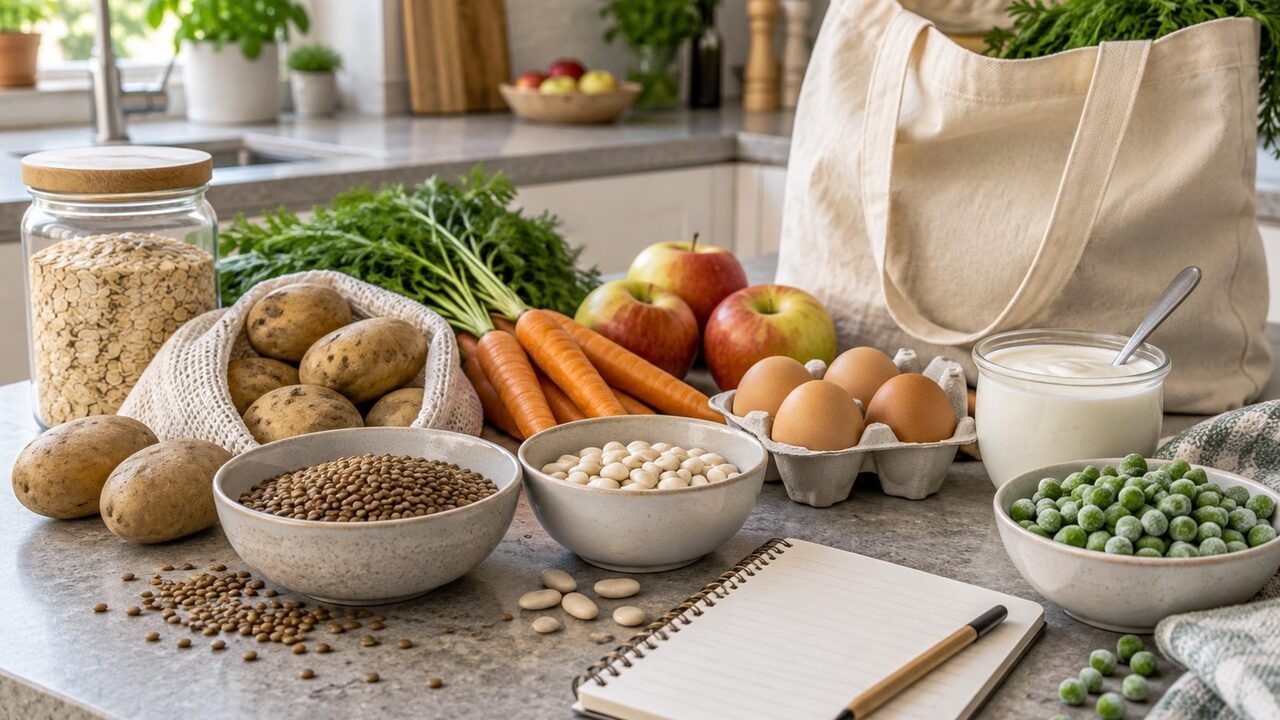
In short: on 24 September 2026, Tufts University experts put current food-price pressures into context. Their central point is that households do not simply buy less: they change shops, food categories and pack sizes. Nutrient-rich staples such as pulses, eggs, dairy foods, fruit and vegetables can offer good value. This is not new German price data, but it is a useful prompt for a sound shopping plan.
What is genuinely new in the latest guidance
The release is not a basket of German retail prices and does not predict the next grocery bill. It brings together views from specialists in food economics, consumer behaviour and social protection. One observation matters in particular: price rises affect households differently. People who must spend a larger share of their income on food have less room to switch stores, build stocks or shop in several places.
That does not produce one universal shopping list. A low-priced food is economical only when it suits household size, storage space and meals that will actually be cooked. The practical value lies in the method: compare prices for the usable quantity, keep dishes flexible and do not confuse nutrition with expensive wellness claims.
Why simple staples are often the stronger base
The Tufts experts mention pulses, dairy foods, fruit, vegetables and eggs among examples of nutrient-rich basics. That does not mean every version is cheap everywhere. Dried lentils may cost little per serving but need cooking time. Frozen vegetables keep well, while fresh seasonal produce can be cheaper when supplies are plentiful. Plain yogurt works in many meals, but a large tub saves money only if it is finished in time.
Affordable cooking therefore grows from compatible building blocks rather than one supposed bargain food. Potatoes, oats, pulses, eggs and changing vegetables can become soups, tray bakes, skillet meals and breakfasts. Browse our pulse recipes, potato recipes and one-pot recipes for adaptable ideas.
Four checks before buying
- Compare unit prices: for similar products, the price per kilogram or litre is more informative than the prominent pack price.
- Consider the edible amount: peels, bones, spoilage and unused leftovers change the real cost per portion.
- Allow for preparation time: dried food may be cheaper, but a cooked canned option can prevent waste on a busy day.
- Decide how it will be used: a promotion is useful only when at least one meal and a realistic plan for leftovers are clear.
Turning one shop into several meals
A resilient weekly plan starts with types of dishes rather than fixed ingredients. Plan a soup, a tray bake and a skillet meal, for example. At the shop, choose among potatoes, carrots, cabbage, courgettes or another suitable vegetable according to unit price and quality. Pulses or eggs can complete the dish, while oats, rice or bread cover other meals.
The order matters: check cupboards first, then the time available for cooking and only then promotions. This avoids a supposedly cheap bulk purchase that requires extra ingredients. Someone cooking for one may get better real value from a smaller pack with a higher unit price if it prevents food from spoiling.
Seasonal does not automatically mean cheap
The seasonal calendar from Germany’s Federal Centre for Nutrition shows when fruit and vegetables are typically available from domestic production or storage. Abundant supply can favour lower prices, but it does not guarantee them. Weather, quality, origin, stage of trade and local promotions also shape the shelf price. Seasonal knowledge is a useful filter, not a price promise.
What the claim that healthy food is always expensive misses
Special powders, individually wrapped snacks and promoted trend products are not required for balanced cooking. At the same time, a low price alone is not a quality verdict. It is more practical to assemble meals from several food groups and look for a suitable affordable option within each one. Individual dietary needs, allergies and medical instructions always take priority.
Conclusion: savings begin with use, not the promotion sign
The new Tufts guidance supports a practical principle: households respond to price pressure with several strategies at once. In the kitchen, flexible staples, unit-price checks, suitable pack sizes and planned leftovers are more dependable than blanket rankings. Only your receipt, together with what was actually eaten, can show the real saving.
Sources and update
- Tufts University via Newswise: Why Food Prices Keep Rising and Who Pays the Highest Price, published 24 September 2026.
- Tufts University: Food Prices for Nutrition, methods and data on the affordability of nutritious diets.
- German Federal Centre for Nutrition: seasonal calendar, background on availability and shopping plans.
- German Federal Statistical Office: consumer price index and inflation rate, the authoritative German price statistics.
Author: Kochzauber editorial team. Information updated: 25 September 2026. This article does not promise a fixed saving and is not individual nutrition advice. The header image is an editorial symbolic image.