Fermented hemp seed in a cultured dairy drink: what the study really shows
A new laboratory study tests three lactic acid bacteria for a hemp seed product and uses the selected version in a cultured dairy drink. Sensory quality and stability limit the amount.
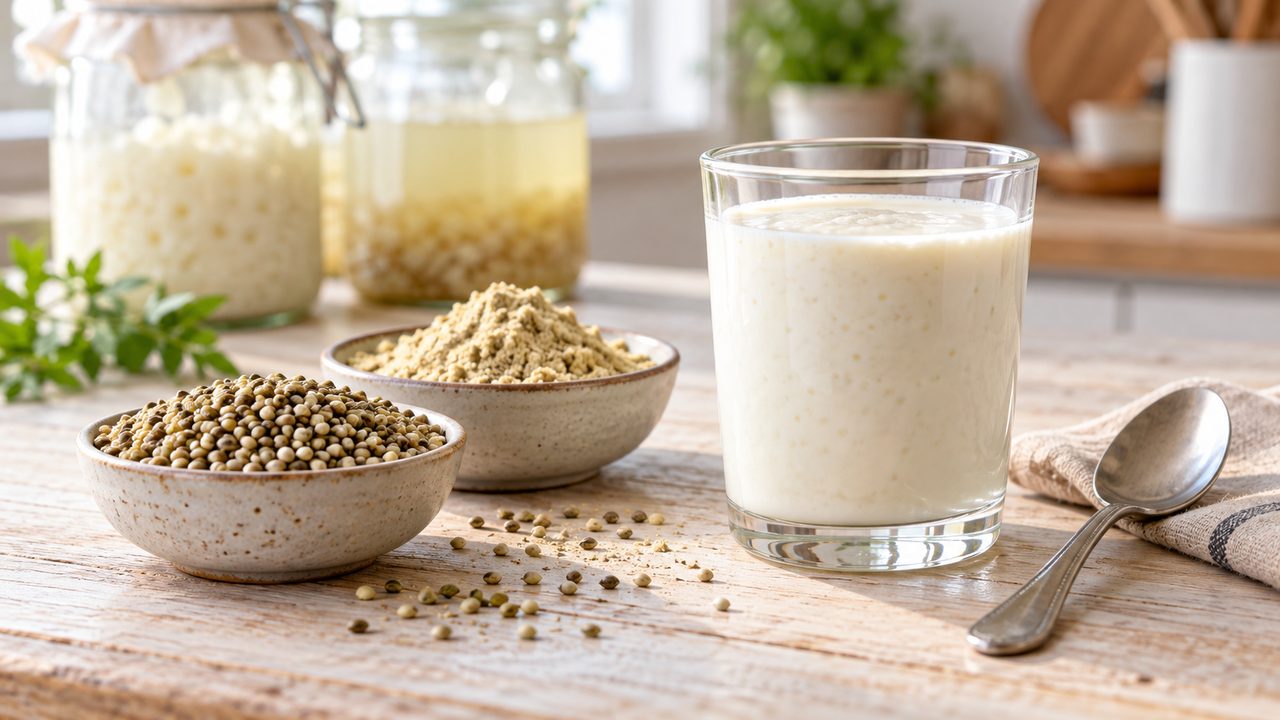
A study published on 9 October 2026 examines a fermented hemp seed product as an ingredient in a cultured dairy drink. Three lactic acid bacteria were compared, after which the selected freeze-dried version was added to the drink at different levels. The work demonstrates technological possibilities and sensory limits, but no health effect in people and no finished retail product.
Three cultures, different results
Lacticaseibacillus paracasei, Lactiplantibacillus plantarum and Limosilactobacillus fermentum were tested. Bacterial counts rose during the first 48 h and stabilised after 72 h. L. paracasei showed the highest viability: 1.38 × 10^9 colony-forming units per gram after fermentation and 9.02 × 10^8 after freeze-drying.
The strains did not change the starting material in the same way. Acidification, water binding, measured phenolic content and antioxidant activity in the laboratory varied by culture. L. fermentum showed the highest bile-acid binding in the assay, while the L. paracasei and L. plantarum versions led on other laboratory indicators. Such in-vitro values do not demonstrate an effect after consumption.
Why L. paracasei was selected for the drink
For further product development, the researchers chose the version fermented with L. paracasei. Its high bacterial viability, together with high values for phenolic compounds and selected radical-scavenging assays, guided the decision. The freeze-dried product was then stirred into a fermented milk drink and assessed for composition, colour, liquid separation and sensory acceptance.
As the addition increased, measured phenolic compounds and antioxidant activity rose. At the same time, the drink became darker and released more whey, a phenomenon known as syneresis. The version containing 4 g/100 g received the best sensory ratings. More of a functional ingredient was therefore not automatically better: taste, appearance and physical stability imposed practical limits.
What laboratory values do not establish
Bile binding, cholesterol binding and radical-scavenging assays measure behaviour in a laboratory system. They do not show that the drink lowers blood cholesterol or prevents disease. Suitable human trials with a defined product, intake and comparison group would be needed. A viable culture count after production also does not automatically prove a probiotic effect throughout shelf life or in the human gut.
In the European Union, health claims must be scientifically assessed and authorised. The Commission maintains a public register of authorised and non-authorised claims. Terms such as antioxidant or functional should therefore not be read as health promises when only laboratory analyses of an ingredient are available. The study itself is formulation and feasibility work.
Hemp is not the same as CBD
- Hemp seeds do not naturally contain cannabinoids, but contamination of their surface can occur during harvesting and processing.
- Hemp seeds, hemp seed oil and hemp seed flour differ legally and chemically from extracts made from leaves or flowers.
- Germany’s BfR recommends a product-specific assessment of THC intake and points to applicable maximum levels.
- A reference to hemp seed or hemp protein is not a reference to CBD and does not establish a psychoactive effect.
BfR reports 25-35% oil and 20-25% protein in hemp seeds, while also stressing possible THC contamination from unsuitable harvesting or processing. Consumers should therefore choose clearly labelled food from a reliable producer. The new drink study assessed the technological properties of one hemp seed product and is not a general safety clearance for every hemp-containing item.
Conclusion: an interesting building block, not yet a health drink
Fermentation made the hemp seed product technologically workable, and 4 g/100 g delivered the best sensory compromise in this formulation. Shelf life, microbiology, cannabinoid control, nutrition, scale-up and permitted claims still need review before a market-ready product. In everyday cooking, hemp seeds can be an optional ingredient, not necessarily a cure-all – alongside vegetables or in a vegetarian dinner.
Sources
- Applied Sciences: fermented hemp seed product in a cultured dairy drink
- German Federal Institute for Risk Assessment: context for hemp-containing foods
- European Commission: rules for nutrition and health claims
Author: Kochzauber editorial team. Updated: 10 October 2026. Laboratory and sensory results do not support conclusions about health effects in people.