EU duties on pea protein: what the new rule means for food
The EU has imposed definitive anti-dumping duties on certain pea protein from China. The measure supports European producers but does not predict supermarket prices.
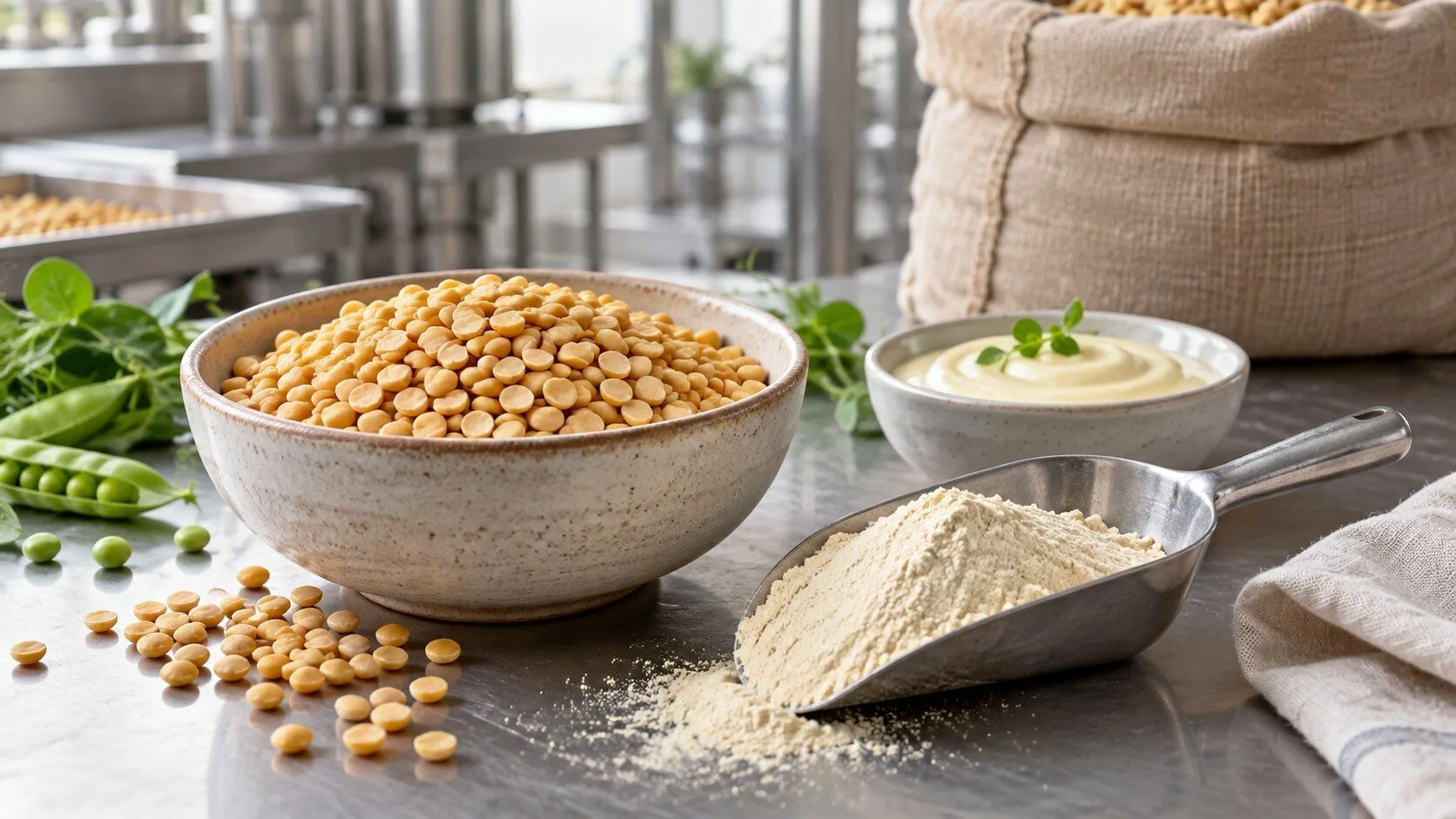
In short: On 25 September 2026, the European Commission announced definitive anti-dumping duties of 40.5 to 67.1 percent on certain pea protein from China. The measure will apply for five years; provisional duties had been in place since 29 April 2026. The ingredient is important in plant-based foods and animal feed. The decision changes import costs, but it proves neither an immediate increase in retail prices nor a change in the recipe or nutritional value of any specific product.
What the EU decided
Implementing Regulation (EU) 2026/2101 sets a definitive rate of 40.5 or 67.1 percent, depending on the producer, on the net free-at-Union-frontier price before duty. It follows an investigation that concluded that dumped Chinese imports injured the European industry. The Commission values the EU pea-protein market at about EUR 175 million. Amounts secured under the provisional measure will be collected definitively, while amounts above the new rates are to be released.
Which goods are actually covered
The rule does not cover every pea or every tin of peas. It applies to pea protein from China containing more than 65 percent protein on a dry-weight basis, in solid or liquid form and whether textured or not. The investigation examined the period from 1 July 2024 to 30 June 2025. Whole pulses, green peas and ordinary canned peas are therefore not automatically subject to this duty.
What anti-dumping duties are meant to do
Anti-dumping measures are trade-policy instruments. They are intended to offset a price disadvantage when an investigation finds that imported goods are sold under dumping conditions and injure a domestic industry. They are not a quality assessment of the protein, an environmental certification or a judgement on whether a food is nutritionally advisable. Chinese origin alone makes no individual ingredient safer or less safe.
Why this does not equal a supermarket price
The duty is calculated at the import stage. Between that value and the price of a drink, powder or meat alternative are the ingredient share, processing, energy, packaging, logistics, contracts, retail margin and tax. Producers can also use other suppliers, recipes or existing stocks. It would therefore be misleading to turn 40.5 to 67.1 percent into an identical increase for a finished product.
Four questions for comparing products
- Ingredient or finished food? A duty on one raw material is not the same as the price of the whole product.
- How much pea protein? The ingredient list shows whether it is central to the recipe or only a small component.
- What is the full nutrition profile? Protein, salt, fat and the other values belong together; plant-based is not a complete nutritional verdict.
- Which alternative fits? Beans, lentils and whole peas can supply protein in home cooking, but they are not technologically identical to isolated pea protein.
What does not change in the kitchen
Whole pulses remain a versatile food group for home cooking. Find ideas in our pulse recipes and vegetarian dinners. When buying a processed product, compare its unit price, portion size, ingredient list and nutrition declaration. The trade measure provides context, but it does not replace reading the label of the actual item.
Limits of the announcement
The Commission states the duty rates and its trade-policy reasoning, but it provides no forecast for individual brands or German retail shelves. Nor does a market value of EUR 175 million predict future demand. The measure can influence supply chains and costing, yet the direction, timing and size of any consumer-price effect depend on many decisions along the chain.
Conclusion: a significant intervention, not automatic inflation
The definitive duties are relevant news for a growing plant-protein ingredient. In the EU assessment, they protect European production from dumped imports. The measured consumer conclusion is that some products may be affected, but they need not rise in price by the same proportion. Unit price, formulation, nutrition and intended use remain the more reliable shopping criteria.
Sources and update
- European Commission: Commission acts against imports of pea protein from China, published 25 September 2026.
- EUR-Lex: Implementing Regulation (EU) 2026/2101, definitive anti-dumping measure.
- EUR-Lex: Implementing Regulation (EU) 2026/916, provisional measure and investigation framework.
- European Commission: Trade defence, background on anti-dumping procedures.
Author: Kochzauber editorial team. Information updated on 26 September 2026. This article explains a trade measure and makes no price forecast. The cover is an editorial symbolic image.