Fermented algae protein seasoning: what Chara corallina might offer
Researchers have made a fermented seasoning powder from the freshwater alga Chara corallina. Its profile opens a new route for plant proteins, but it is not yet a recommendation for consumption.
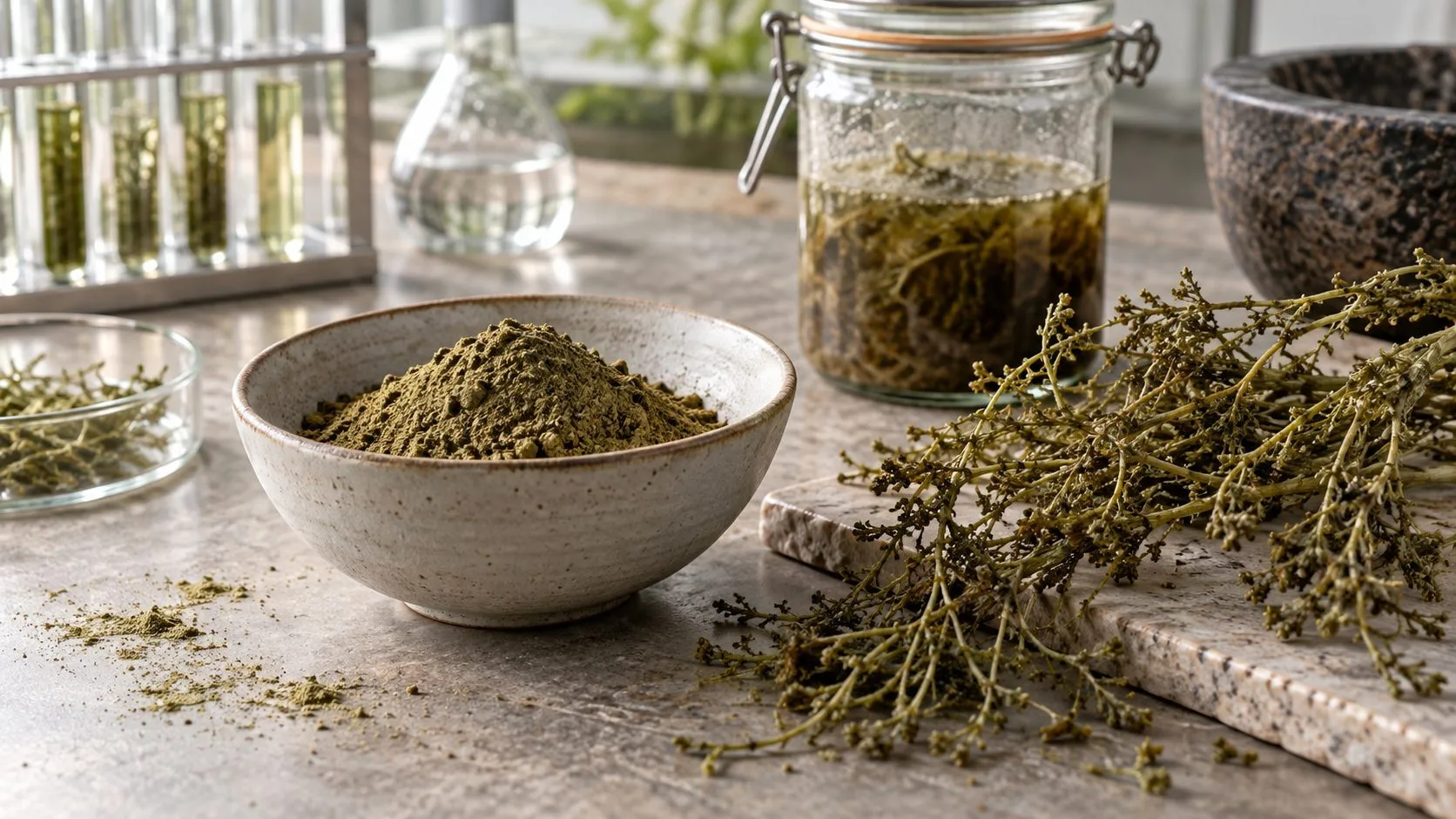
In short: A study published on 27 September 2026 fermented dried Chara corallina algae with Aspergillus sojae using koji and moromi processes, then freeze-dried the resulting seasoning. The starting alga contained 17.3 % protein. Its amino-acid profile and flavour changed in the powder. That makes this freshwater alga an interesting research candidate, but not a generally authorised food or a proven health ingredient.
From algal material to seasoning powder
The researchers dried the branching algae, fermented them under open conditions and produced a powdered seasoning. Koji and moromi are familiar from fermented condiment production. The approach aims to develop protein and flavour together: protein content alone is not enough, because solubility, amino acids and umami perception also matter for a future food application.
How the amino-acid profile changed
Tryptophan was especially notable at 16.09 % in the reported amino-acid profile; it was almost undetectable in the unfermented material. Aspartic acid, glutamic acid and cysteine also increased, while methionine was absent. That gap shows why one raw material does not automatically provide a balanced protein. Digestibility, serving size, preparation and comparison foods would also be needed for a nutritional assessment.
Umami is interesting, but this was not a consumer test
According to the study, the amino-acid changes came with stronger umami and less sweetness. That may be technically useful in seasoning or savoury formulations. An instrumental or small laboratory assessment does not replace a broad sensory study with consumers. Bitterness, aroma, colour, dosage and stability in real foods remain important questions.
How to interpret the cell experiments
Cell cultures were tested at concentrations of 3.90–500 μg mL−1, with measured viability above 90 %. Other assays reported antioxidant and immune-related responses in cell models. Such results identify mechanisms for further investigation. They do not demonstrate an effect after eating, establish a dose for people or support claims about mood, immunity or disease prevention.
Four open issues before food use
- Safety: possible contaminants, undesirable substances, allergy risks and batch variation need assessment.
- Nutrition: methionine was absent; protein quality and digestibility were not evaluated as complete human nutrition.
- Production: open fermentation and freeze-drying must become controllable, hygienic and scalable.
- Law: a new algal ingredient cannot be marketed in the EU solely because a paper has been published.
Why novel-food status matters
Foods not consumed to a significant degree in the EU before 15 May 1997 may fall under novel-food rules. This can include new sources such as algae or innovative production processes. The European Commission’s non-binding Novel Food Status Catalogue is only an orientation tool; suppliers must demonstrate marketability. The study itself is not an authorisation for Chara corallina or its powder.
What is sensible to take into the kitchen today
The powder is not a do-it-yourself recommendation: wild freshwater algae can be misidentified or contaminated, and open fermentation needs safe processes. The transferable idea is to combine familiar protein sources with fermented seasonings. Practical options are available in Kochzauber’s pulse recipes and vegetarian dinners.
Conclusion: an intriguing prototype with many tests ahead
The work shows that fermentation can turn a little-studied freshwater alga into an umami-rich seasoning powder with a changed amino-acid profile. A real food still needs robust evidence on safety, digestibility, sensory quality, production and legal status. The novelty lies in the prototype and research direction, not in a finished superfood.
Sources and update
- PubMed: Nutrient-rich algal innovation: exploring the amino acid profile, flavor, antioxidant, immunomodulatory, and cytotoxic properties of Chara corallina protein sauce powder, abstract and bibliographic record, published 27 September 2026.
- Journal of the Science of Food and Agriculture: original paper on production and laboratory characterisation.
- EFSA: Novel foods, context on new food sources and safety assessment.
- European Commission: Novel Food Status Catalogue, non-binding orientation on the status of individual foods.
Author: Kochzauber editorial team. Information updated on 29 September 2026. This article explains laboratory research and is not consumption, health or foraging advice. The cover is an editorial symbolic image.