New Packaging Research: What ‘Biodegradable’ Does Not Yet Promise
A new research project aims to develop high-performance, microplastic-free and biodegradable multilayer packaging. It remains a research goal, while today’s waste-sorting rules still apply.
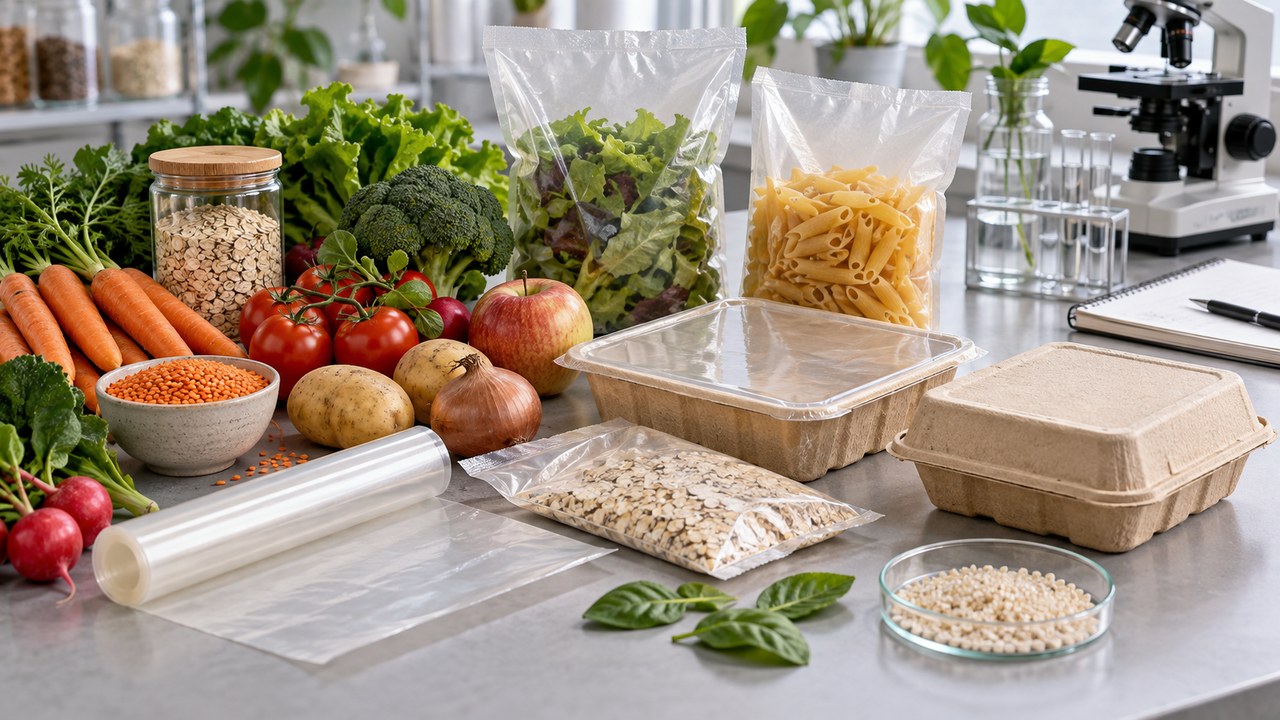
In short: Michigan State University announced a new $540,000 research project on biodegradable food packaging on 14 September 2026. The team aims to use machine learning to identify material combinations for thermoplastic multilayer films that are high-performing, affordable, microplastic-free and biodegradable under industrial conditions. The conditional language matters: this is a two-year development project, not packaging that has already been validated for supermarket use.
Multilayer materials are common in food packaging because a single layer rarely performs every task. One layer may keep out oxygen, another may block moisture, while a third provides strength or a reliable seal. Those combinations often make recycling more difficult. The new project seeks to take these competing requirements into account systematically from the material-selection stage.
What the research team plans to do
The project is led by Muhammad Rabnawaz at Michigan State University. Christopher Saffron from the same university and Tengfei Luo from the University of Notre Dame are also involved. Funding comes from the US National Science Foundation and covers two years.
First, a model will screen possible polymer and layer combinations for their chemical and physical properties. Promising candidates will then be produced and tested for barrier performance, mechanical strength and processability. The researchers subsequently plan to examine degradation under industrial composting conditions and assess the life cycle and commercial viability. Testing with companies is not planned until a later phase.
This approach may accelerate development, but it does not yet demonstrate an environmental benefit. A computational model proposes candidates; the actual packaging must still perform in the laboratory, during production, with real foods and at the end of its useful life. “Microplastic-free” is likewise a project objective that would need to be confirmed with suitable measurement methods.
Biobased and biodegradable mean different things
Germany’s Federal Environment Agency warns about a common confusion: “biobased” describes the source of a material, while “biodegradable” describes its behaviour under specified conditions. A plastic made from renewable raw materials may be difficult to biodegrade. Conversely, a biodegradable plastic may be made partly or entirely from fossil raw materials.
“Compostable” also requires a precise condition. Industrial composting plants use controlled temperatures, moisture, oxygen supply and processing times. Passing an industrial test does not automatically mean that the same film will disappear quickly in a home compost heap or in the environment. It certainly does not permit littering.
Where this packaging belongs in Germany today
Consumers should follow current disposal rules, not the material vision of a research project. In Germany, empty sales packaging made from biodegradable plastic generally belongs in the yellow recycling bin or yellow bag, unless local instructions say otherwise. It does not belong in the organic-waste bin or on a home compost heap.
The reason is practical: organic-waste facilities must identify and remove contaminants quickly. Staff and sorting technology often cannot reliably distinguish approved biodegradable packaging from conventional plastic. Actual processing times may also be shorter than the period a material needs to degrade fully. Local waste regulations remain binding.
- Yellow bin or yellow bag: empty sales packaging, even if it is labelled “biodegradable”.
- Organic-waste bin: kitchen and garden waste in accordance with the local collection service’s rules; do not add packaging on your own initiative.
- Home compost: only suitable organic matter; a label for industrial composting is not sufficient.
- Residual waste: heavily soiled objects or non-packaging items in accordance with local instructions.
Why shelf life belongs in the environmental assessment
Food packaging is not only waste; it also protects its contents. If a weaker barrier makes bread dry out faster, allows nuts to oxidise or causes vegetables to spoil, the additional food waste may cancel out a material advantage. Oxygen and water-vapour barriers, seal integrity, temperature resistance and mechanical stability are therefore central test criteria.
A fair life-cycle assessment must consider raw materials, production, transport, product protection, actual disposal routes and possible degradation by-products together. The team has announced a life-cycle analysis, but no results are available in the project announcement. Claims such as “environmentally friendly” or “plastic-free” would therefore be premature.
What consumers can influence now
In everyday life, the waste hierarchy is more useful than a single green buzzword. Avoid unnecessary packaging, use reusable systems where they make sense, buy only the food you need, and empty and sort packaging correctly. These steps work regardless of which new polymer may reach the market later.
“Unpackaged” is not an absolute goal either. Suitable packaging can extend the shelf life of perishable food. Someone who plans and uses vegetables completely will often achieve more than someone who buys supposedly perfect packaging and throws away the contents. Kochzauber’s one-pot recipes and ingredients sections offer ideas for using leftovers.
How future products should be assessed
If the project produces a marketable material, transparent evidence will be needed. Under which standardised conditions does it degrade, and how long does that take? Are persistent particles created? Which infrastructure will accept it? How reliably does it protect different foods? And how does its overall footprint compare with recyclable mono-materials or reusable packaging?
Clear labelling is equally important. Consumers should not have to infer from symbols whether a bag belongs in a collection system, residual waste or an industrial facility. New chemistry only solves the wider system problem if sorting, facilities and communication are developed alongside it.
Conclusion: an interesting approach, but not yet disposal guidance
The new project combines computer-assisted material screening with laboratory testing, industrial composting and life-cycle analysis. This is technically interesting because it aims to consider function, degradation and economics together. The announcement does not yet establish which material combination, if any, will meet all the requirements.
The news therefore changes nothing about shopping or waste sorting today. Biodegradable does not automatically mean biobased, home-compostable or environmentally superior. Until robust data and approved products are available, correct disposal, buying according to need and preventing food waste remain the most reliable points of reference.
Sources and status
- Michigan State University: MSU scientist receives $540K grant from National Science Foundation to advance biodegradable packaging, published on 14 September 2026.
- German Federal Environment Agency: Biobased and biodegradable plastics, definitions, assessment and disposal guidance.
- German Federal Environment Agency: Questions and answers about packaging and packaging waste, background on the German packaging and disposal system.
Author: Kochzauber editorial team. Information and last updated: 15 September 2026. This article describes an announced research project, not commercially available packaging that has already been validated. The cover image is an editorial illustration.