
Leave the mass to rest
Cold, quilled wood pulp can be formed more cleanly and remains more stable when roasting than a freshly mixed, still soft mass.
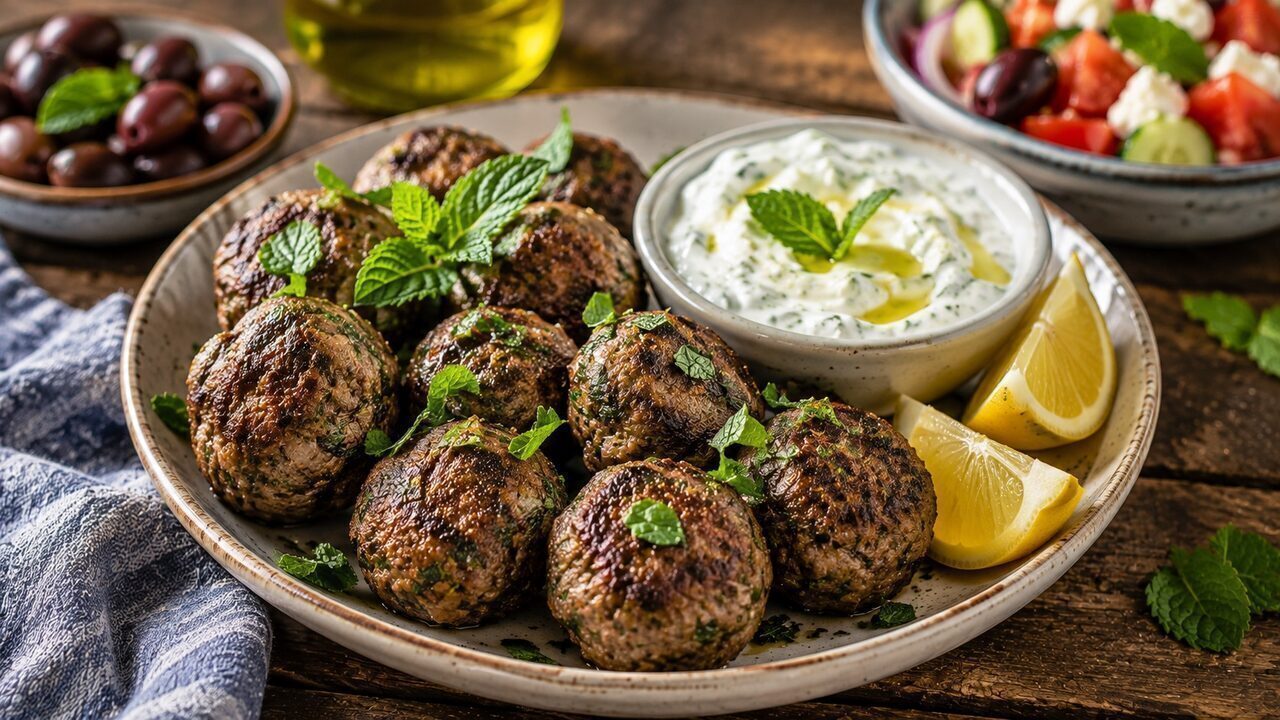
The minced meat mass rests before the mould, so that bread, egg and herbs bind well. Small balls are thinly floured and fried in olive oil all around until they have a strong crust.
Why this recipe works
Keftedakia are eaten as a warm meze, part of a larger table or with salad and potatoes as a main dish. Mint gives them their unmistakable fresh touch. The soaked bread keeps the balls loose, while a short rest period prevents them from falling apart when roasting.
Recipe
Greek Keftedakia are small, juicy minced meat balls with soaked bread, onion, garlic, parsley, mint and oregano.
Pour bread with milk and soak for 5 minutes. Then press vigorously and finely chop with your fingers.
Knead both minced meats with bread, onion, garlic, egg, parsley, mint, oregano, vinegar, salt and pepper for 3 to 4 minutes.
Cover the bowl and let the chopper rest in the refrigerator for 30 minutes, making it firmer and the herbs spread their aroma.
Form about 24 walnut-sized balls with slightly oiled hands. Just before roasting, turn thinly into flour and knock off excess flour.
Bring olive oil in a wide pan to medium to medium high heat. Fry Keftedakia portions around for 7 to 9 minutes until they are golden brown and fully cooked.
Drain briefly on a grid over kitchen paper. Serve hot or lukewarm with lemon wedges, tzatziki and a fresh salad.
Kitchen know-how
Cold, quilled wood pulp can be formed more cleanly and remains more stable when roasting than a freshly mixed, still soft mass.
There must be room between the balls so that they fry instead of frying in the leaking juice. Several small portions give the better crust.
Variations
Values are estimates per serving and may vary depending on the ingredients, brands, portion size and preparation method used.
Frequently asked questions
Keep cooking