
Frying at low temperature
Too hot fat browns milk sugar quickly, while the core remains raw. A thermometer reliably keeps the temperature between 145 and 150 °C.
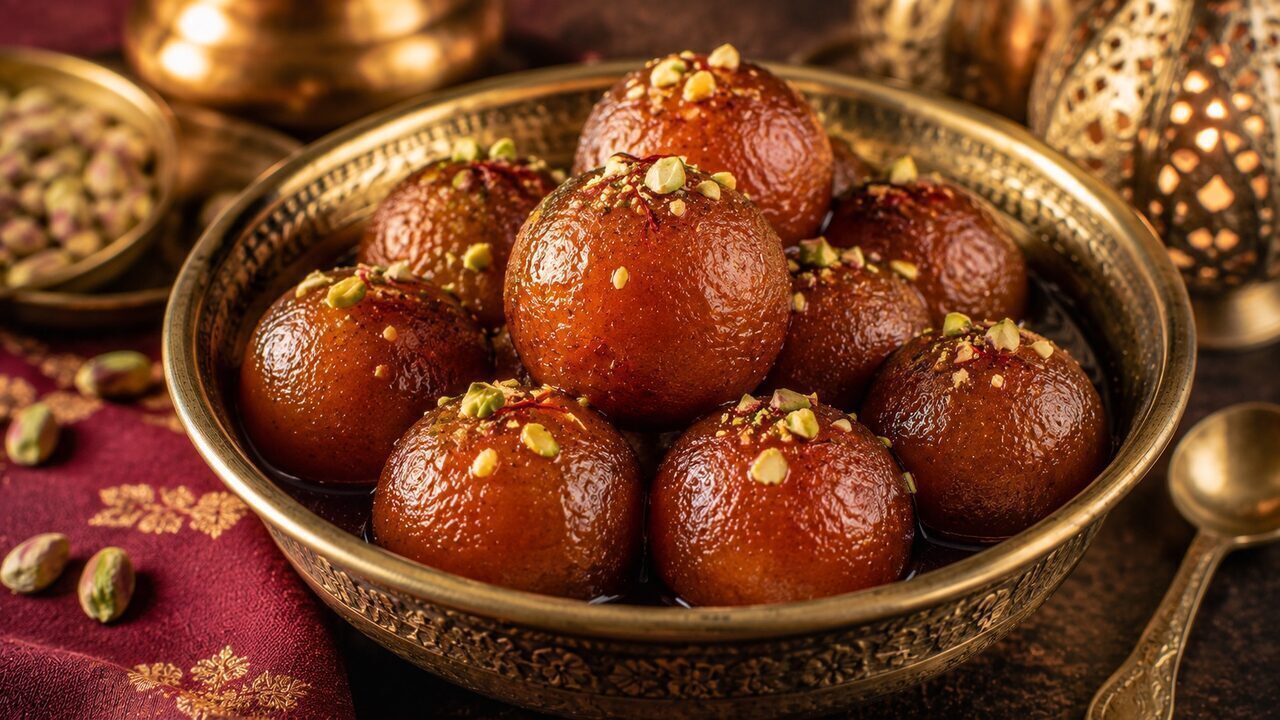
A soft dough of whole milk powder, flour, ghee and milk is formed without cracks and baked at a moderate temperature. Warm syrup then pulls into the middle.
Why this recipe works
Traditional Gulab Jamun are often produced with Khoya, heavily boiled milk solids. Whole milk powder is a well-available alternative for the home. The same points remain decisive: the dough is brought together only briefly, the balls must be smooth and the frying fat must not become too hot. So they cook to the middle before the surface becomes dark.
Recipe
Gulab Jamun are slowly golden brown fried milkballs, which are placed warm in a sugar syrup scented with cardamom, rose and lemon.
Cook sugar, water and cardamom until the sugar is dissolved. Cook gently for 5 minutes, stir in lemon juice and remove from the stove. Add rose water after a short cooling.
Mix the milk powder, flour and baking powder thoroughly so that the baking powder is evenly distributed. Work in ghee with the fingertips.
Gradually add 90 ml of milk and combine the mixture without strong kneading to form a soft, slightly sticky dough. Leave to rest covered for 10 minutes.
Check the dough and add the remaining milk drop by drop only if necessary. Roll 20 equally large, completely smooth balls with slightly greased hands without visible cracks.
Heat oil in a high pot to 145 to 150 °C. A sample should rise slowly and brown evenly; if it rises immediately dark, the fat is too hot.
Bake Gulab Jamun in three portions for 7 to 9 minutes each. Gently move with a slotted spoon so that they become uniformly dark gold.
Heat syrup to about 55 to 60 °C. Drain hot balls for 2 minutes, then put in the warm syrup and leave to be covered for at least 90 minutes.
Prepare Gulab Jamun lukewarm or at room temperature with a little syrup and sprinkle with pistachios. Before serving, check if they are crossed to the middle.
Kitchen know-how
Too hot fat browns milk sugar quickly, while the core remains raw. A thermometer reliably keeps the temperature between 145 and 150 °C.
Even fine cracks open when frying. If the dough is crumbly, add a few drops of milk and roll each ball again smoothly.
Variations
Values are estimates per serving and may vary depending on the ingredients, brands, portion size and preparation method used.
Frequently asked questions
Keep cooking