
Control Temperature Precisely
Above about 85 °C the egg yolk can stand. A digital thermometer is more reliable here than a rigid cooking time.
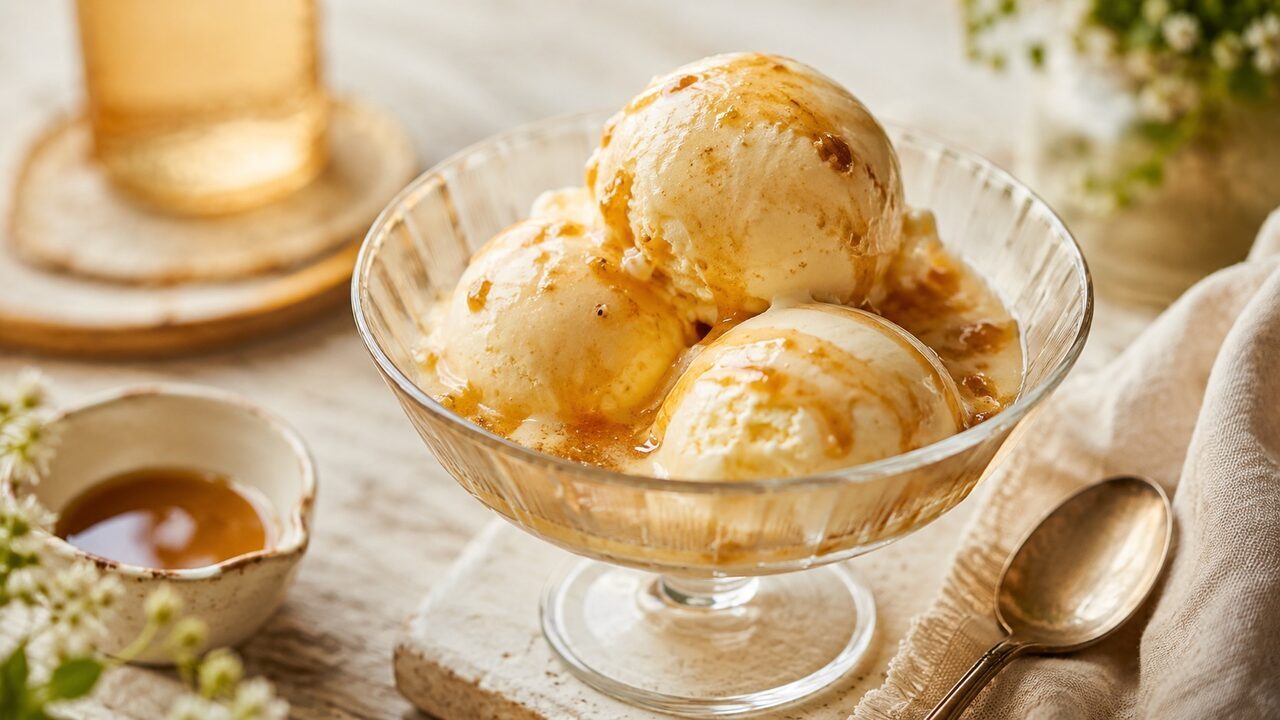
For butter ice cream, butter, whole milk, cream, egg yolk, sugar and vanilla are processed into an ice base. The butter is first browned, then finely emulsified in the cooked cream and frozen after thoroughly cooling in the ice machine.
Why this recipe works
browned butter tastes intense and must be evenly combined with the milk-egg-yellow base. Pull the cream to the rose at a gentle heat up to 82 to 84 °C without having to boil it. A stick blender finely distributes the butter fat, while several hours of cooling stabilize the mass. Only the completely cold base comes into the ice machine; after that the ice cream in the freezer gets its potable firmness.
Recipe
This butter ice cream gets a nutty aroma through browned butter. A boiled egg yolk cream ensures a smooth, creamy consistency.
Melt butter in a light pot over medium heat. Heat until foaming, turn the milk ingredients golden brown and smell nutty. Pour immediately into a heat-resistant bowl so that it does not darken.
Heat milk with 150 ml cream, vanilla paste and salt in a saucepan until the mixture is clearly steaming. Do not fry. Stir egg yolk and sugar in a bowl smooth but not foamy.
Add a third of the hot milk to the egg yolk while stirring constantly. Pour everything back into the pot and stir with a silicone spatula at low to medium heat until the cream reaches 82 to 84 °C and thinly covers the spatula.
Remove the cream from the stove. Add browned butter and the remaining 100 ml of cold cream and emulsify for about 30 seconds with the blender. Pour into a bowl through a fine sieve, cover directly and cool completely for at least 4 hours.
Stir the chilled mixture briefly, then churn it in an ice cream maker for 25 to 35 minutes according to the manufacturer's instructions. Transfer it to a shallow, pre-chilled container and freeze for another 2 hours for a firmer consistency. Let it soften for 5 minutes before scooping.
Kitchen know-how
Above about 85 °C the egg yolk can stand. A digital thermometer is more reliable here than a rigid cooking time.
Place the bowl in an ice water bath after passing. A cold base freezes faster and forms smaller ice crystals.
Variations
Values are estimates per serving and may vary depending on the ingredients, brands, portion size and preparation method used.
Frequently asked questions
Keep cooking