
Cool the marinade completely
A warm marinade raises the temperature of the raw meat. Cool the cooked marinade completely and keep the beef, marinade and container refrigerated throughout the three days.
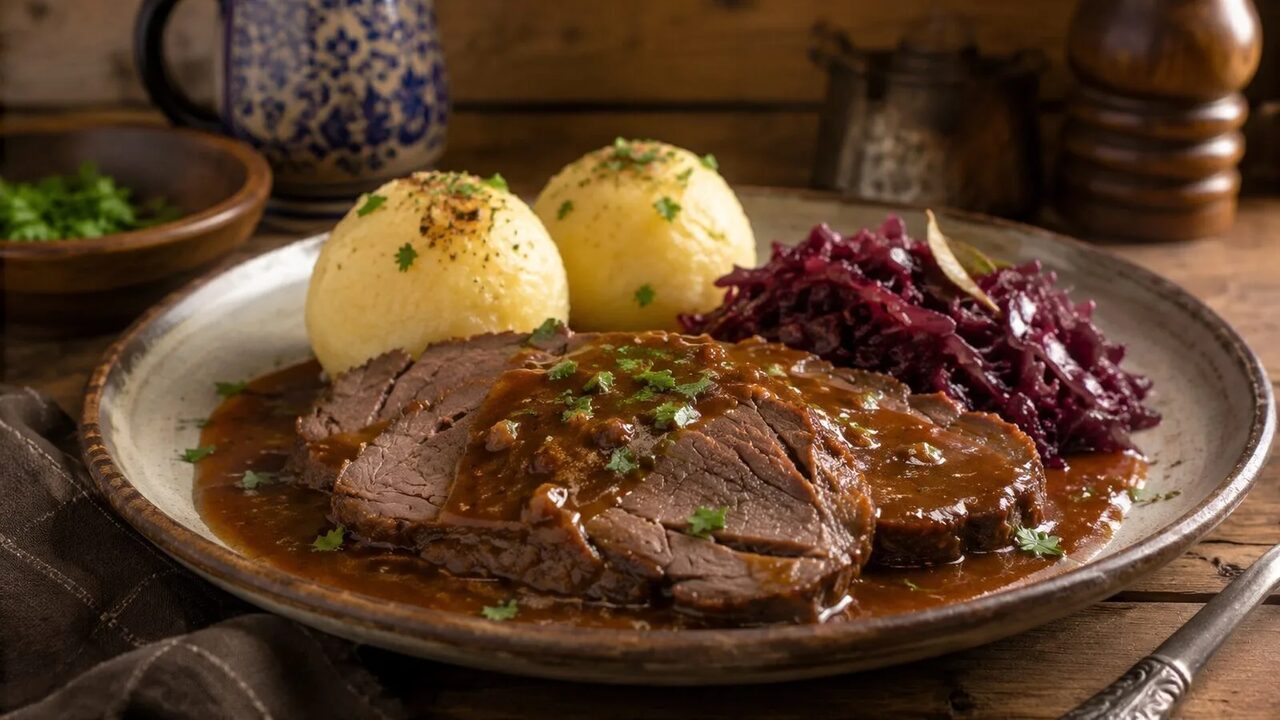
This Rhenish Sauerbraten combines tender braised beef with a rich sweet-and-sour sauce. The cold marinade needs three days; once the meat has been seared, most of the work on cooking day happens gently in the oven.
Why this recipe works
Sauerbraten relies on an aromatic cold marinade and patient braising rather than complicated technique. The beef remains fully submerged in red wine, vinegar, vegetables and spices for three days. Drying it thoroughly before searing allows a deeply browned crust to form. It then cooks gently in the oven until the connective tissue becomes tender. Aachen Printen gingerbread thickens the strained sauce, while raisins and a little sugar beet syrup soften the acidity without masking the flavour of the beef.
Recipe
Rhenish Sauerbraten is marinated for three days in red wine, vinegar, root vegetables and spices. The beef is then braised slowly and served with a balanced sauce made with Printen gingerbread and raisins.
Bring the red wine, red wine vinegar and water to the boil with the onions, carrots, celeriac and spices. Simmer gently for 5 minutes, then cool completely to refrigerator temperature. Never pour warm marinade over the raw meat.
Place the beef in a close-fitting, acid-resistant glass, stainless-steel or food-safe plastic container. Cover completely with the cold marinade and vegetables. Seal and refrigerate for 72 hours, turning the meat once a day with clean utensils and keeping it fully submerged.
On cooking day, lift the beef out of the marinade. Strain and reserve the liquid as well as the vegetables. Pat the meat thoroughly dry on every side, then season it with salt. Preheat the oven to 160°C conventional heat.
Heat the clarified butter in a heavy ovenproof casserole. Sear the beef on all sides for 10 to 12 minutes until deep brown, including the narrow ends, then remove it. A dry surface and sufficient heat are essential for a richly flavoured sauce.
Brown the drained vegetables in the cooking fat for 8 to 10 minutes. Stir in the tomato paste and cook for 1 minute. Deglaze with 500 ml of the reserved marinade, scrape up the browned residue and boil vigorously for 2 minutes. Add the beef stock and return the meat to the casserole; the liquid should reach about halfway up the joint.
Cover the casserole and place it on the middle shelf. Braise the beef for 2 1/2 to 3 hours, turning it halfway through. After 2 1/2 hours, test it with a meat fork: the fork should slide in without much resistance. Cook for a further 15 to 30 minutes if necessary.
Lift out the roast, cover and leave it to rest for 15 minutes. Strain the braising liquid through a fine sieve into a saucepan and skim off excess fat. Stir in 60 g of crumbled Printen and the raisins, simmer gently for 10 minutes and check the consistency. Add more Printen only if needed. Balance the sweet-and-sour flavour with a little sugar beet syrup, salt and pepper. Slice the meat across the grain and warm it briefly in the hot sauce.
Kitchen know-how
A warm marinade raises the temperature of the raw meat. Cool the cooked marinade completely and keep the beef, marinade and container refrigerated throughout the three days.
Wet meat steams and remains grey. Pat the surface thoroughly dry, heat the casserole well and turn the beef only after a brown crust has formed.
Printen and raisins already add sweetness. Add sugar beet syrup only after reducing the sauce, one teaspoon at a time. A good Sauerbraten sauce should taste rich and sweet-and-sour, not like a dessert.
Variations
Values are estimates per serving and may vary depending on the ingredients, brands, portion size and preparation method used.
Frequently asked questions
Keep cooking