Saving Food: Why the Shopping List Matters More Than a Leftovers Recipe
Ahead of Germany’s food-waste action week, attention is turning to planning before shopping. A simple routine makes supplies visible, leftovers safer and meals cheaper.
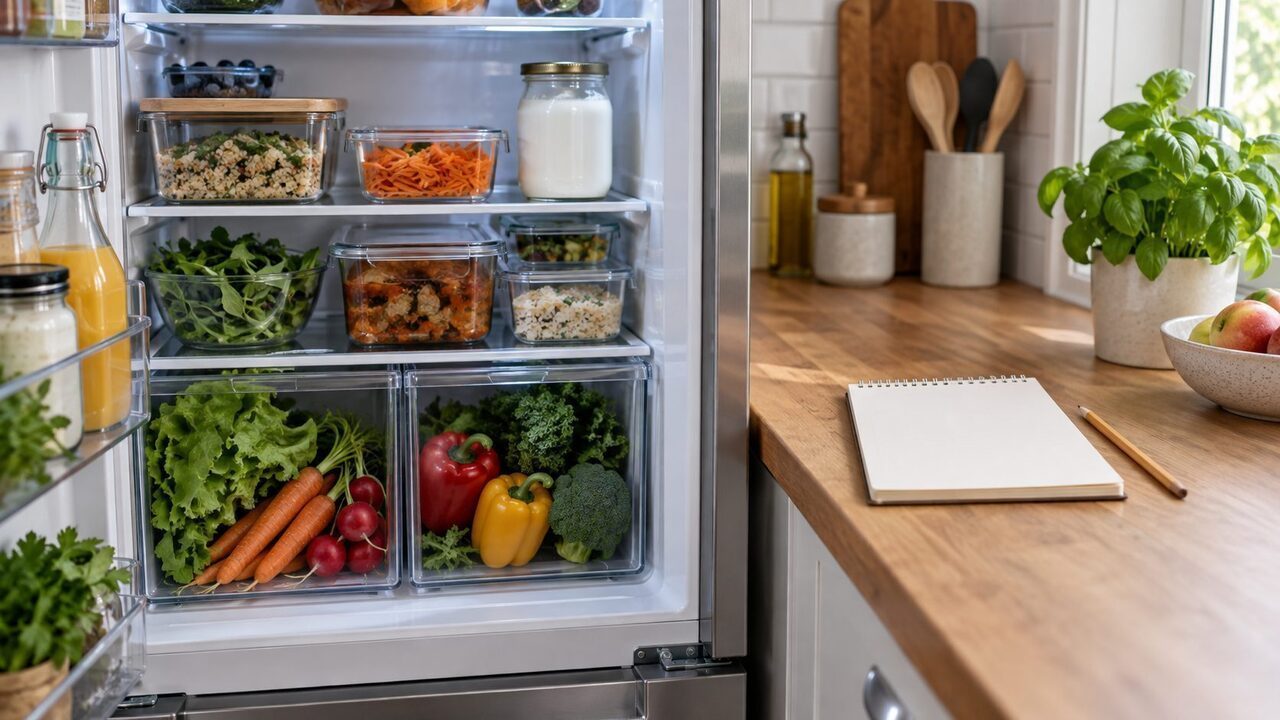
In short: Ahead of Germany’s food-waste action week, attention is turning to planning before shopping. A simple routine makes supplies visible, leftovers safer and meals cheaper.
The nationwide action week runs from 29 September to 6 October 2026. More than 50 workshops, school activities, information stands and digital formats have been announced. The motto "Everything on the note!" is particularly good for households who want to save: not the cheapest kilo price helps if a part of the large package ends up in the garbage later.
The new advice starts before the supermarket
Many mistakes in purchasing are due to uncertainty. Are there still tomatoes? Is the rice enough? Is the open yoghurt still good? Those who go without looking into the fridge, freezer and storage cabinet easily buy twice as much. The consumer advice centre therefore recommends a short fridge date and a shopping list that can also be kept digitally in the Notes app.
The approach is non-spectacular but practical: a limited list of spontaneous purchases is not complete, but it makes the actual demand visible. Loose goods or smaller packages can be more economical for small households, although the unit price is higher. What is really eaten is decisive.
A ten-minute routine before shopping
- Bringing open products forward: First examine broken milk products, slices, vegetables and cooked leftovers.
- There are three levels of urgency: Use today, planning this week and stable supply as a system.
- Set two meals out of the existing one: only then complement the missing ingredients. This is not planned for seven rigid days, although dates may change.
- Keep a flexible meal schedule: soup, oven vegetables, pan, omelette or bowl can accommodate different small quantities.
- Write down quantities realistically: not just paprika, but a pepper or 500 grams.
For a flexible meal, building ideas help: a filling base such as potatoes, rice or noodles, vegetables, a source of protein, and a sauce or broth. (Recipes for ingredients; Soup; one-pot dishes)
Assess bulk packs and special offers realistically
The unit price per kilogram or liter makes comparison easier, but it doesn't answer how much a household consumes. A cheap three-pack of pepper is more expensive than a loose one if you spoil two of them unused. The same goes for XXL yoghurt, bread, herbs or salad.
Before tackling bulk packaging, three questions will help: Is there already a concrete plan for the whole quantity? Can a part freeze without a major loss of quality? Does the storage time match the actual consumption? Only when at least one of these strategies is realistic will the lower base price likely become a saving.
Do not confuse the best-before date with the use-by date
The minimum shelf-life is a guarantee of quality for the unopened and properly stored product. After expiry, a food is not automatically spoiled. The consumer centres recommend a sense check for suitable products: look, smell, feel and taste carefully. Mould, unusual fermentation, lubricating surfaces or a clear odor are warning signs.
Otherwise, the date of consumption with the formulation to consume up to is very easy. It indicates very easily perishable foodstuffs where there may be a microbiological risk after expiry. Such products should not be eaten after the date; a sense check is not sufficient here. An MHD is also valid only if stored correctly and often says little about residual durability after opening.
Saving leftovers also means cooling them safely
The Federal Institute for Risk Assessment recommends cooling hot food for storage to below seven degrees Celsius within a few hours. Larger quantities cool in multiple flat containers faster than in a deep pot.
When heating, the BfR keeps a temperature of at least 70 degrees Celsius for two minutes at all locations; in the microwave, it is important to stir so that no cold zones remain. Suspicious foods are not reliably safe by reheating again because some bacteria can form heat-stable toxins.
Five types of leftovers and the next useful step
- Any but perfect vegetables: to clean and for soup, sauce, oven vegetables or pan yarn.
- Cooked noodles or rice: quickly cool, date and plan ahead for a fully heated pan.
- Small quantities of cheese or fresh cheese: incorporated into a paste, sauce or oven vegetables, provided that the smell and appearance are flawless.
- Ripe fruit: processed into compost, pancakes or baked goods; completely discarded melted fruit.
- Too much soup or sauce: cool quickly in suitable portions and eat or freeze early, depending on the dish.
A small label with content and date prevents the saved rest from being forgotten again in the fridge or freezer. The principle "first in, first out" works best when food to be consumed is visible in the front.
How to interpret food-waste figures correctly
The current consumer advice centre Communication lists 78 kilograms of food waste per person and year, thus taking up an older official calculation for 2020. New data from the Federal Centre for Nutrition lists about 74.5 kilograms based on later data. Both sizes also include non-eatable ingredients such as bowls or bones. They are therefore not a measure of how many kilograms of edible food each household inevitably throws away.
For everyday life, the exact difference is less important than the recurring causes: too much bought, stored incorrectly, forgotten, or cooked too much.
Conclusion: Plan, store and use food safely
The new action week does not provide a secret rest trick. Its most useful impulse is the sequence: first look at stocks, then plan meals roughly, then shop according to need. So fewer leftovers are generated, and the remaining can be targeted.
Additionally, keeping MHD and consumption dates apart, cooling quickly and heating up leftovers completely, combines economics with food safety. A good shopping cart is not just a memory aid, but the beginning of a small, resilient kitchen routine.
Sources and status
- consumer advice centre NRW: Everything on the sheet Why food rescue is already starting before the supermarket shelf, press release of 16 September 2026. (Everything on the note Why food rescue starts even before the supermarket shelf)
- Federal Centre for Nutrition: using leftovers: tips for every day, background on planning, storage and current waste quantities. (Use leftovers: Tips for each day)
- consumer advice centre: tips on food shelf life and storage, sense check and difference between MHD and consumption date. (Suggestions on the durability and storage of food)
- Federal Institute for Risk Assessment: Food infections in households, instructions for cooling, storage and heating. (Foodborne infections in households)
Author: Kochzauber editorial team. Information and update status: 17 September 2026. The post links the current action report with official food safety notices. The title image is an editorial icon.