Sacha inchi oil in the lab: high ALA, but no proof of health effects
A new analysis finds 49.61% alpha-linolenic acid in cold-pressed sacha inchi oil. What that means for labels, kitchen use and health claims.
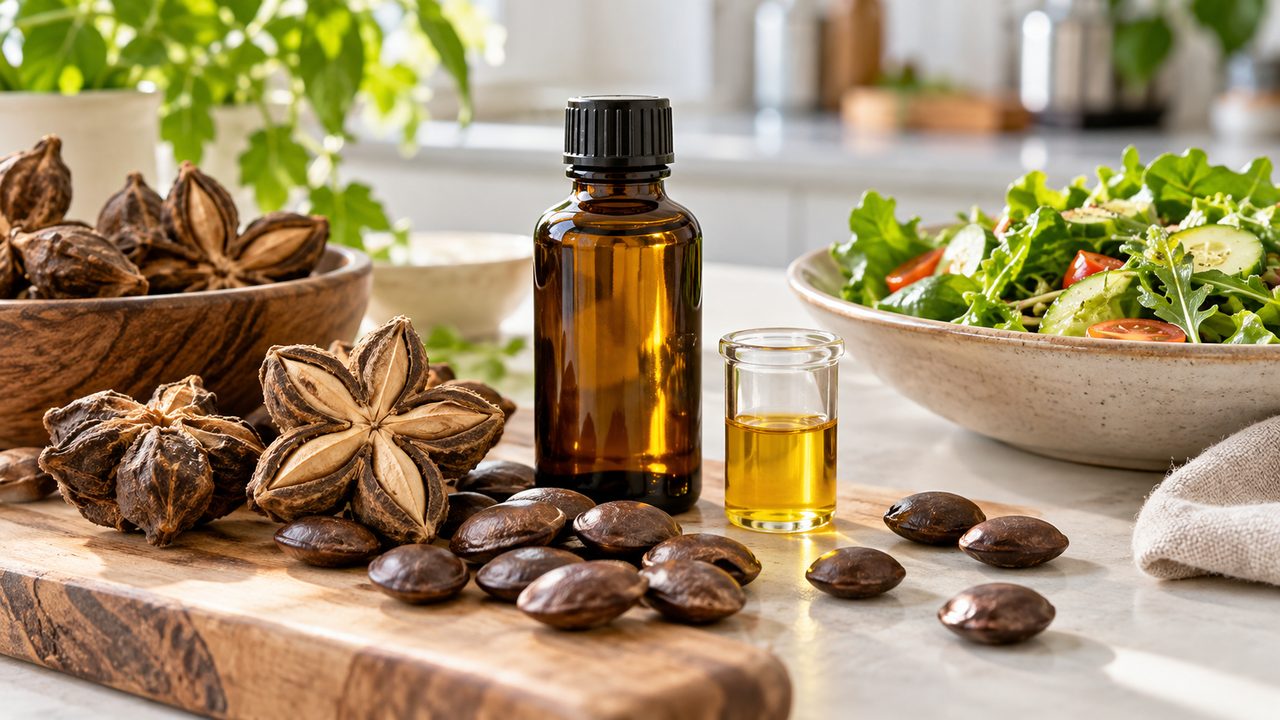
A laboratory study published on 11 October 2026 describes the composition of a cold-pressed sacha inchi oil. Alpha-linolenic acid, or ALA, accounted for 49.61% of measured fatty acids, while polyunsaturated fatty acids accounted for 84.25% in total. The figures make the oil analytically interesting, but they are neither a comparison of all market products nor evidence of a health effect in people.
What the new analysis measured
Sacha inchi, botanically Plukenetia volubilis, produces oil-rich seeds. The team combined quality indicators with gas chromatography, liquid chromatography and nuclear magnetic resonance. Alongside an ALA share of 49.61%, it measured 84.25% polyunsaturated fatty acids and an omega-6-to-omega-3 ratio of 0.70:1.
Total tocopherol content was 492.685 mg/kg. Such figures describe the sample under the methods used. Variety, cultivation, harvest, pressing, filtration and storage may alter other batches. One study oil is therefore not a guaranteed target value for every retail bottle.
ALA is omega-3, but it is not the same as EPA and DHA
Alpha-linolenic acid is an essential plant omega-3 fatty acid. The body can convert it into the long-chain fatty acids EPA and DHA, but this conversion is limited. The German Nutrition Society therefore clearly distinguishes ALA-rich plant oils from direct sources of EPA and DHA.
The phrase “high in omega-3” should not be read as meaning that every ALA oil supplies the same amount or effect as fish or microalgae oil. During pregnancy, breastfeeding and childhood, or where supply is medically relevant, individual advice matters more than a promise attached to an exotic oil.
Why cell experiments do not support a health claim
The study also used test-tube radical-scavenging assays and examined effects in a mouse macrophage cell line. Such models help explore biological mechanisms. They do not show how much oil a person would need to eat, how its components are digested or whether a disease risk changes.
Terms such as “antioxidant” or “anti-inflammatory” therefore cannot be turned into a treatment or prevention promise for the bottle. Robust health claims require suitable human studies and legal authorisation in the EU. The new work is a characterisation, not a clinical trial.
Cold-pressed means aromatic and more delicate
Polyunsaturated fatty acids are more sensitive to heat, light and oxygen. Germany's consumer advice centre broadly recommends aromatic cold-pressed oils for cold dishes and storage in a dark, cool place with the bottle tightly closed. The specific maker's directions should decide whether an oil is suitable for high-heat frying.
Sacha inchi oil is therefore better suited to small amounts in dressings, dips or on finished dishes unless its label says otherwise. A bitter, sharp or rancid smell signals quality loss. A small bottle can be cheaper despite a higher price per litre if it is fully used after opening.
A sensible buying check without a superfood premium
Four questions help before purchase: is it clearly labelled as an edible oil? Are pressing method, origin, best-before date and storage advice clear? Does the label provide credible nutrition or fatty-acid information? Does the bottle size match realistic use? A high price does not prove a better composition.
Accessible ALA alternatives also matter. The German Nutrition Society names rapeseed, walnut, linseed and soybean oils. Kochzauber offers ideas under recipes by ingredient and vegetable dishes. Flavour, purpose, price and likely use may guide the choice just as much as one laboratory number.
Conclusion: interesting composition, sober use
The sacha inchi oil studied contained high levels of ALA and tocopherols. The paper still provides data for one sample plus laboratory and cell tests, not evidence of health effects in people. Anyone buying it should assess it as a delicate edible oil: read the label, use it appropriately, store it cool and dark, and expect no cure.
Sources
- Scientific Reports: analysis of cold-pressed sacha inchi oil, published 11 October 2026
- German Nutrition Society: prefer plant oils
- German Nutrition Society: ALA, EPA and DHA in vegan diets
- German consumer advice centre: selecting, heating and storing edible oils
Author: Kochzauber editorial team. Updated: 12 October 2026. The study characterises one oil sample and cell models; it demonstrates no treatment, prevention or individual health effect.