Rapeseed protein from press cake: drying changes its best use
A pilot study compares spray- and freeze-dried rapeseed protein. The basic protein structure stayed similar, while particle size, colour and binding changed.
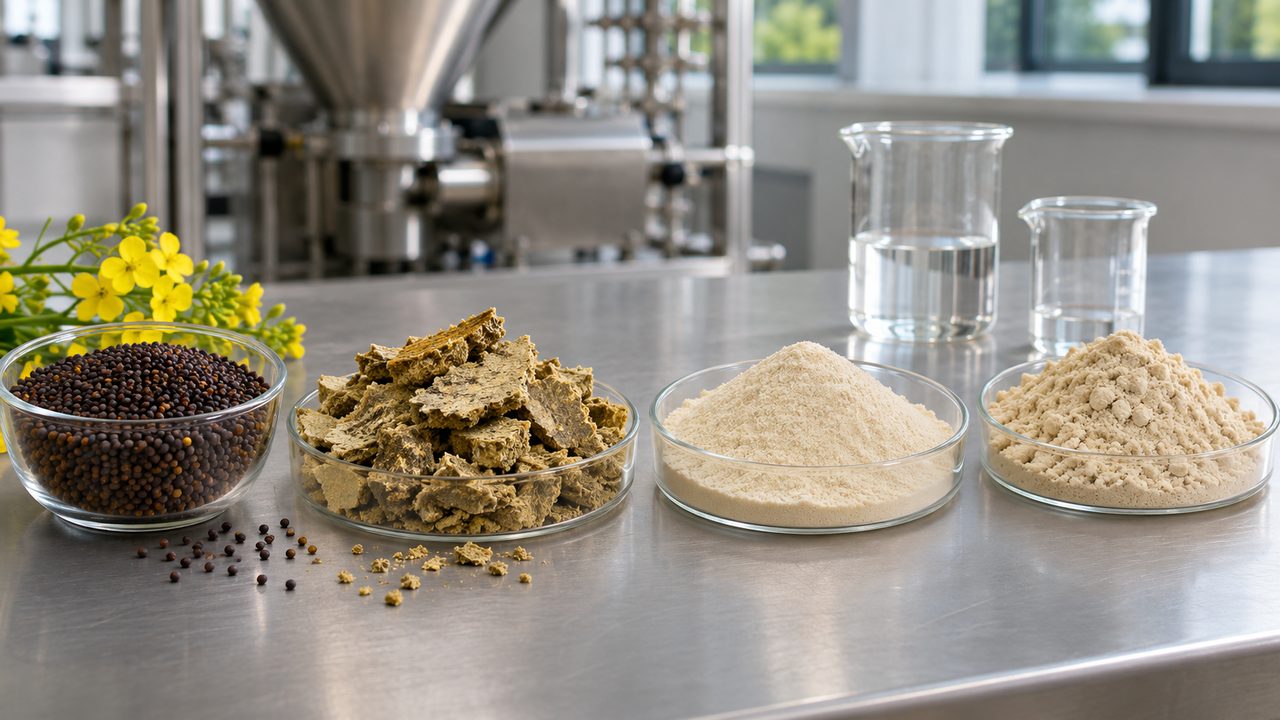
A study published on 17 November 2026 moves rapeseed protein closer to realistic processing. A concentrate containing about 53% protein was spray- or freeze-dried at pilot scale. Drying mainly changed physical powder properties, not the basic protein structures measured.
Turning an oil side stream into a functional ingredient
The starting material was cold-pressed, dehulled rapeseed press cake from an oil mill. About 100 kg was extracted in a pilot plant using alkaline conditions and ethanol, then the protein-rich phase was divided. Both powders therefore came from the same extraction batch, allowing a more focused comparison of drying effects.
That is more realistic than a bench-only experiment, but it is not series production. The study used one production batch. The concentrate is also not equivalent to ground press cake, rapeseed meal or a generic retail protein powder. Extraction, purification and drying determine composition and functionality.
Moisture, colour and particle size diverged
Freeze-drying left 2.7% residual moisture, compared with 7.1% after spray-drying. The freeze-dried powder formed coarser, bimodally distributed particles with a mean value of 61.5 µm, versus 22.6 µm for the spray-dried material. Spray-drying also produced the lighter powder.
SDS-PAGE, infrared spectroscopy and the apparent isoelectric point around pH 3.5 showed no relevant differences. This does not exclude every possible modification. It means the selected methods, under these conditions, did not reveal a clear shift in the protein patterns examined.
Binding and solubility serve different targets
The freeze-dried concentrate held 13% more water and 137% more oil. The spray-dried powder was more soluble at pH 3–4. Foaming, emulsifying performance and the lowest gel concentration of 17% did not differ significantly. Drying is therefore not a simple ranking; the right choice depends on the intended product.
A creamy or fat-binding matrix may need different properties from an acidic drink or a fine pale powder. The study did not test a finished meat or dairy alternative. Its 3-hour emulsion assay was not a long-term storage test either.
What is still needed before a food product
- Repeat the findings with independent production batches.
- Measure residual ethanol, glucosinolates and oxidative stability.
- Test flavour, bitterness, colour and storage in a finished product.
- Check the authorised specification and allergen labelling of the exact ingredient.
Rapeseed protein is authorised in the EU as a novel food ingredient under defined conditions. That does not automatically make every rapeseed concentrate marketable. For everyday cooking, our pulse recipes and recipes by ingredient remain more accessible protein options.
Conclusion: processing is part of ingredient function
Both drying routes preserved similar basic protein patterns in this experiment. Freeze-drying improved water and oil holding, while spray-drying produced a lighter, finer powder with better acidic solubility. The best route can only be chosen for a specific recipe, together with safety, flavour, cost and shelf life.
Sources and context
- Foods: pilot study of spray- and freeze-drying rapeseed protein, published 17 November 2026
- European Commission: authorisations under the former Novel Food regulation
- EU Implementing Decision 2014/424/EU authorising rapeseed protein
Author: Kochzauber editorial team. Updated: 19 November 2026. This article interprets one pilot batch and is not a product or health assessment.