Pomelo peel in active packaging film: a strawberry test with firm limits
A new laboratory study combines chitosan, cellulose, pomelo peel oil and cinnamaldehyde. The film slowed spoilage in a warm test but is not market packaging.
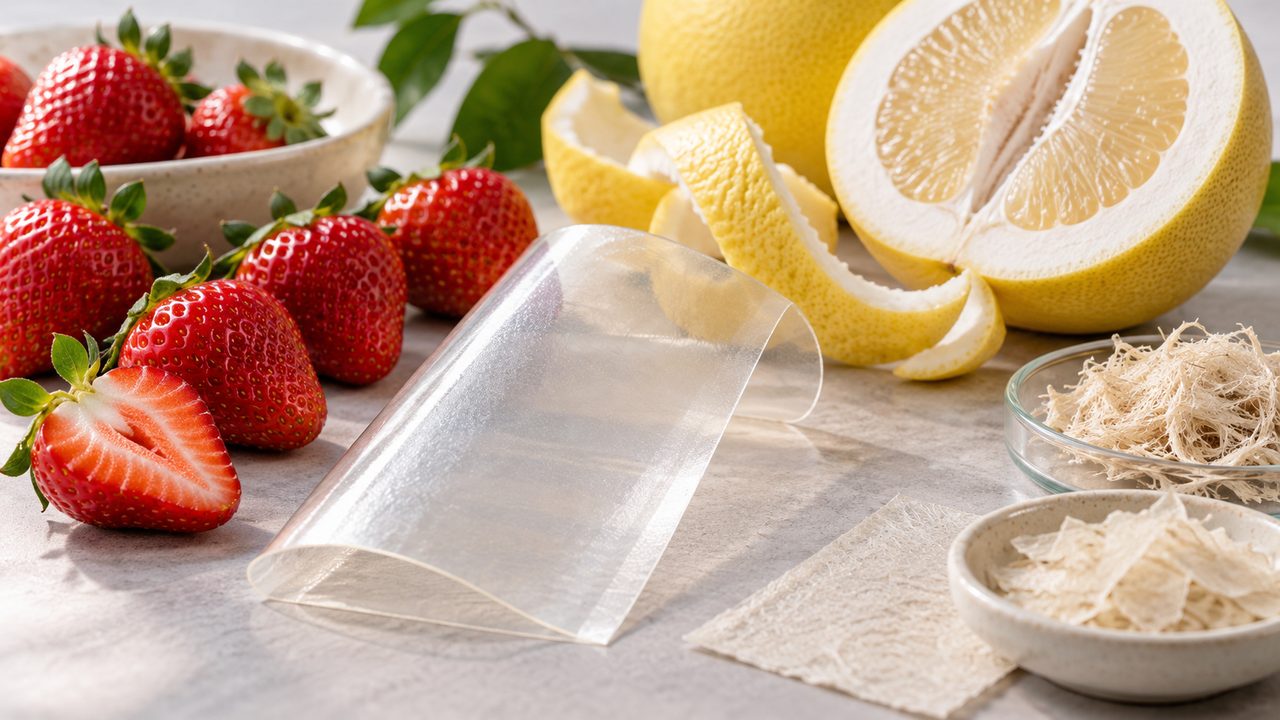
A study published on 13 October 2026 describes an active chitosan film containing carboxylated cellulose nanocrystals, pomelo peel oil and cinnamaldehyde. The two aromatic components were combined at a 1:1 ratio; the researchers selected an oil-to-water ratio of 1:50 for the emulsion. Strawberries were tested at 27 ± 4 °C for 5 days. The results are striking but apply only to this experimental setup.
How the film is constructed
Chitosan formed the film matrix. Carboxylated cellulose nanocrystals stabilised a Pickering emulsion in which pomelo peel oil and cinnamaldehyde were dispersed. The combination was intended to provide a barrier and antimicrobial action at the same time. Pomelo peel thus served as a source material from a side stream.
The researchers examined emulsion stability, mechanical properties, UV shielding, water-vapour permeability and activity against selected bacteria. They also assessed odour: the citrus aroma was intended to soften the pungent note of cinnamaldehyde.
What happened in the strawberry test
The selected film with a 30% emulsion share showed 0% visible decay after 5 days; the commercial PVC film used as the control showed 100%. The active film also reduced weight loss and delayed softening under the conditions studied.
In a soil-burial test lasting 21 days, the samples visibly degraded. This is a laboratory indication of degradability, not a complete assessment for home compost, industrial composting or behaviour in real waste streams.
Why the comparison cannot be generalised
Warm storage accelerates strawberry spoilage and makes differences visible quickly. Commercial supply chains, however, typically use refrigeration alongside changing humidity, transport stresses and different pack geometries. One warm test therefore cannot establish how long the film would work in a supermarket or fridge.
Safety and migration must also be assessed for the finished food-contact material. The EU requires packaging not to transfer substances to food in amounts that unacceptably affect health, composition, taste or smell.
PFAS-free is not established by this study
The formulation lists chitosan, cellulose nanocrystals, pomelo peel oil and cinnamaldehyde. The paper does not, however, report comprehensive PFAS testing or assess a production-ready packaging system. A bio-based ingredient list therefore does not automatically substantiate a “PFAS-free” claim.
For shoppers, specific manufacturer information, food-contact compliance, intended use and disposal instructions matter more than green imagery. “Bio-based”, “biodegradable”, “compostable” and “PFAS-free” describe different properties.
What households can do now
- Keep strawberries cool, dry and unwashed; remove damaged fruit early.
- Buy only the amount that will be eaten or processed promptly.
- Sort packaging according to local disposal guidance and do not equate material claims.
- For reusable containers, choose clean surfaces that can dry thoroughly.
Ideas for using fruit quickly are available among Kochzauber's fruit recipes and recipes by ingredient. These steps work now; the new film remains a research approach.
Conclusion: promising prototype, open practical questions
The study of 13 October 2026 shows that an active film made from several bio-based components can slow strawberry spoilage in a demanding warm test. Before a market assessment, evidence is still needed for chilled supply chains, migration, scale-up, costs, disposal and independent replication. A PFAS-free retail product has not been demonstrated.
Sources
- Foods: original study of a chitosan–cellulose film with pomelo peel oil, 13 October 2026
- European Commission: safety and traceability rules for food packaging
- EUR-Lex: EU Regulation 2025/40 on packaging and packaging waste
Author: Kochzauber editorial team. Updated: 14 October 2026. The film is a laboratory prototype; market readiness, PFAS-free status and everyday shelf life are unproven.