PFHxA in food-contact paper: the EU limits now in force
Additional EU limits for PFHxA in food-contact paper and board apply from 10 October. What this REACH stage covers and why “PFAS-free” needs context.
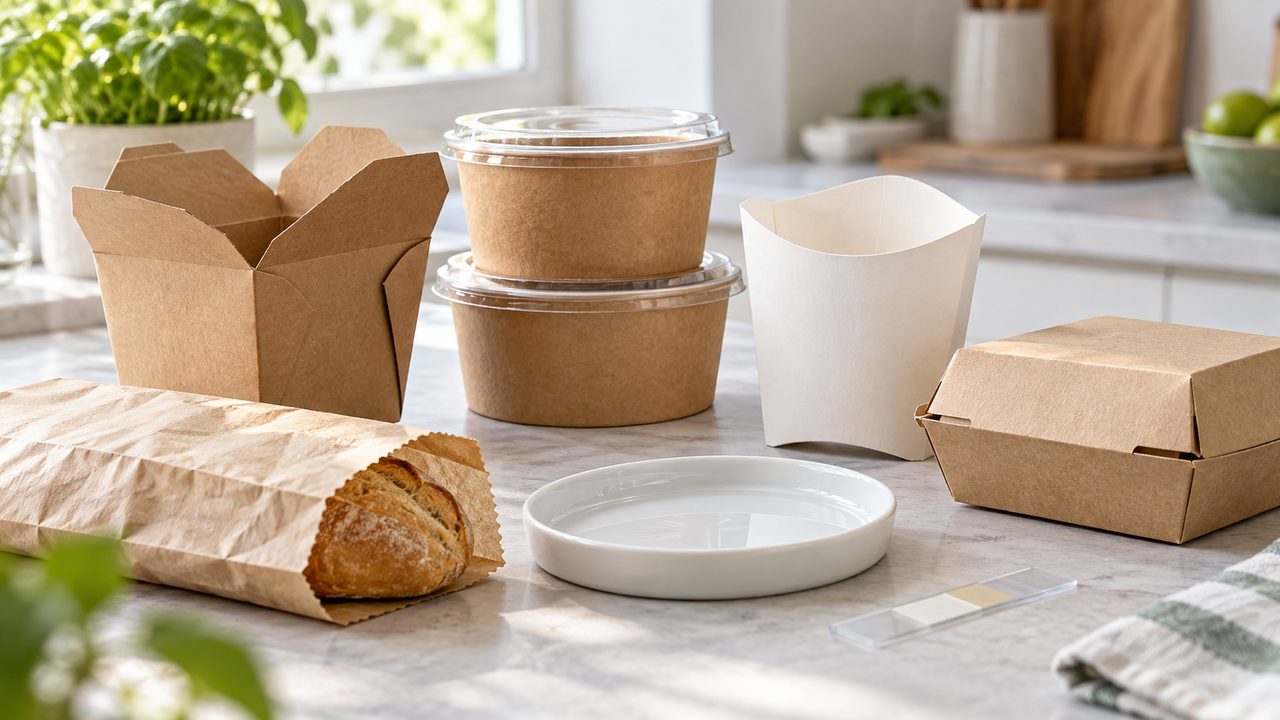
A further stage of European PFAS regulation has applied since 10 October 2026: food-contact paper and board may contain PFHxA, its salts and related substances only below specified concentrations. The new REACH restriction complements the EU Packaging Regulation's broader PFAS limits, which have applied since August. For consumers, the key is not to confuse the two sets of rules with a blanket proof of absolute zero.
What has specifically been restricted since 10 October
REACH sets two thresholds for homogeneous material: 25 ppb for the sum of PFHxA and its salts and 1,000 ppb for the sum of PFHxA-related substances. The scope includes paper and board used as food-contact material under the European framework regulation. At or above those values, the affected materials may not be placed on the market or used.
PFHxA means perfluorohexanoic acid. The rule therefore concerns a defined subgroup within the very large PFAS family. It does not say that every paper product must now test completely free of every fluorinated compound. For manufacturers and authorities, the precise substance definition in the legal text matters.
Why other PFAS limits apply at the same time
The EU Packaging Regulation has already applied to food-contact packaging since 12 August 2026. It sets 25 ppb for any PFAS measured by targeted analysis, 250 ppb for the sum of PFAS measured by targeted analysis and 50 ppm for total PFAS, including polymeric PFAS. Its measurement approaches and legal scope are not identical to the new PFHxA stage.
Supply chains therefore have to consider several requirements together. A material cannot be assessed as comprehensively compliant merely because one PFHxA test is cited. Conversely, a total-fluorine signal does not establish without further examination how much of it actually comes from PFAS.
Which packaging types are commonly in focus
PFAS have been used in specialty papers to repel water and grease. Germany's Environment Agency mentions packaging for hot or fatty foods, butter wrappers, burger boxes and certain baking papers. According to the agency, such treatments generally play no role in the highest-volume standard papers.
The new limit does not mean that every existing paper bag is affected. Material, coating, manufacturing route and intended use differ. Consumers cannot determine compliance reliably from colour, smoothness or a water drop; conformity assessment belongs in the supply chain and market-surveillance system.
What “PFAS-free” on packaging can tell you
A voluntary “PFAS-free” statement may be useful, but it is imprecise without testing context. The substance scope, detection limit, method and material tested all matter. “Not detected” means that a substance was below the method's detection limit; it is not automatically the same as an absolute chemical zero.
A specific question is therefore worthwhile: does the statement cover intentionally added PFAS, selected individual substances or an analysis of the finished material? Credible suppliers can explain the test standard and scope. Green colouring, a leaf icon or the word “natural” does not replace that information.
Practical handling in the kitchen
The regulation is not a reason to discard food in intact packaging as a precaution. Packaging should be used for its intended purpose and according to the maker's directions. Anyone wishing to reduce packaging can choose unpackaged staples or suitable reusable containers without treating that choice as a blanket safety guarantee.
For meal planning, Kochzauber's recipes by ingredient and vegetable recipes offer simple ways to use staples completely. This reduces unnecessary packaging and food waste regardless of the coating used by one product.
Conclusion: a stricter limit, not a simple zero label
The PFHxA stage applying since 10 October is a concrete additional part of EU chemicals regulation. It does not automatically make food-contact paper and board “PFAS-free”, but it sets verifiable thresholds for a defined substance group. Consumers can best prioritise specific evidence over vague environmental claims and use packaging as intended.
Sources
- EUR-Lex: Regulation (EU) 2024/2462 with REACH entry 79
- ECHA: current conditions of the PFHxA restriction
- European Commission: Packaging Regulation PFAS limits since 12 August 2026
- German Environment Agency: PFAS use in the paper industry
Author: Kochzauber editorial team. Updated: 12 October 2026. This article explains published EU rules and is not a legal conformity assessment of an individual product.